

Welcome to Monday Morning Quarterback, a new feature, or at least where some of my commentary and observations will now appear. I’ll take a look in the rear view mirror. Today, a rather benign topic to start.
The world changed by a strange virus. Nothing was “normal” about this virus, it wasn’t just the flu. The spread of this virus was shockingly fast, but not as quickly as the fear. Little was known about it as the bodies began piling up in makeshift morgues.
The virus that causes COVID-19 is in a family of viruses called Coronaviridae.
It’s five years since emergency measures were taken in the United States as the pandemic spread and the death toll surged. Life is different, COVID-19 forever changed the world. COVID-19 also hardened the division between those who wanted to follow the direction for distancing, masks, remote learning and work, and vaccination; and those who didn’t believe the science, or in governmental mandates. The COVID (dropping the 19 going forward) debate didn’t begin the mistrust, it afforded a platform for a growing pushback and division.
I visited the office of my doctor recently, and the first thing I notice in the lobby of the medical building was the absence of the station with masks, hand sanitizers and information about disease control. I had thought that station was permanent after having been there for years. That one sign was if the pandemic had been a bad dream. It was much worse than that.
Life has now settled into a new normal. Life does that, finding that equilibrium, however different than before, adapting and moving on. After 9/11, after the global recession of 2008-09, and now the after the pandemic, we are here.
What’s changed? A lot.
Here are a few things that are different because of COVID. In no way is this a complete list, and some may disagree with items on my list.
Health
According to the Institute for Health Metrics and Evaluation, Covid killed 16 million people. That’s a pretty big deal. It wasn’t just the elderly and ill who died. Healthy people fell ill and died from the respiratory complications. Global life expectancy declined by 1.6 years between 2019 and 2020, after years of big progress.
The impact of long COVID is still unknown but the effects include respiratory, cardiovascular and immune system issues. Brain fog and other neurological symptoms are being associated with the coronavirus. The virus proved to be formidable as it mutated and challenged medical scientists to meet the ongoing threat.
Despite the availability of vaccine boosters and taking common sense measures, the anti-vax movement is strong, as was the opposition to some of the mandated measures employed during the pandemic. Instead of the pandemic rallying people, like many emergencies do, it divided the public even further. Since then, some elected bodies have passed measures restricting the powers of public health officials during a public health emergency. The battle between those wanting government sanctioned limits on freedoms, and those wanting personal liberties to be the call of individuals and parents, will grow even more fierce, with public health stranded in the middle. Despite wiping out a variety of diseases in the 20th century, measles and other diseases have returned. The internet is both a curse and a blessing for “informational” resources.
One thing the coronavirus did was to show how quickly health officials, drug manufacturers and government could develop, test and distribute medicines to vulnerable populations. The speed and coordination was amazing, and lifesaving.
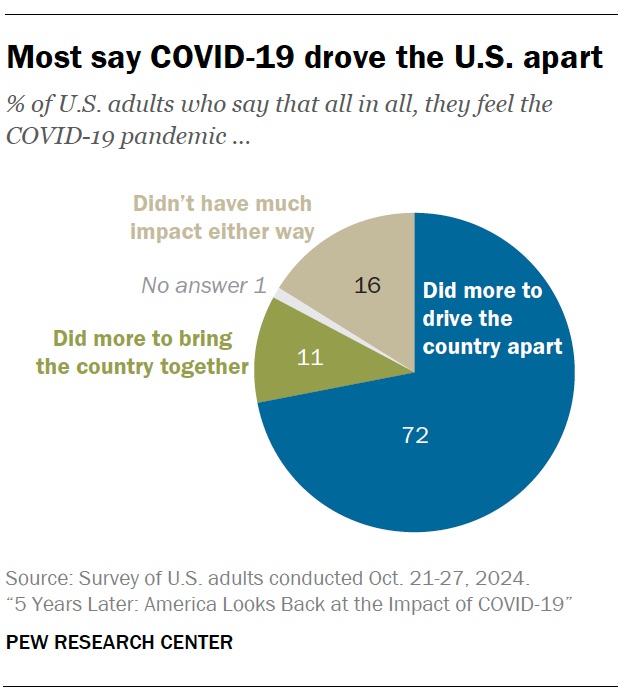
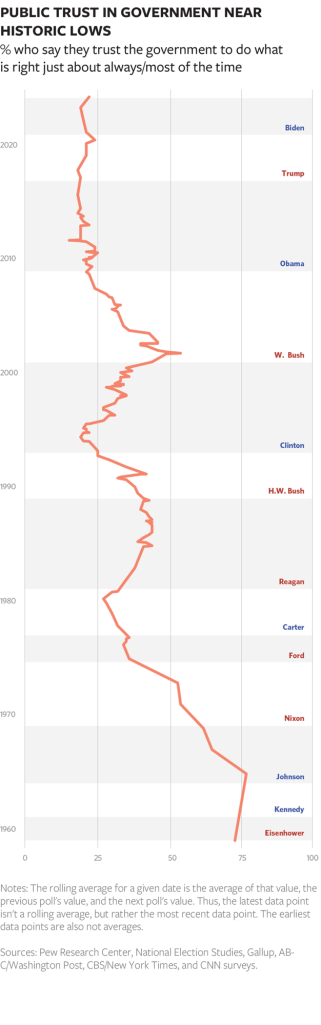
Trust in government seemed to erode further, if that’s remotely possible.
Employment
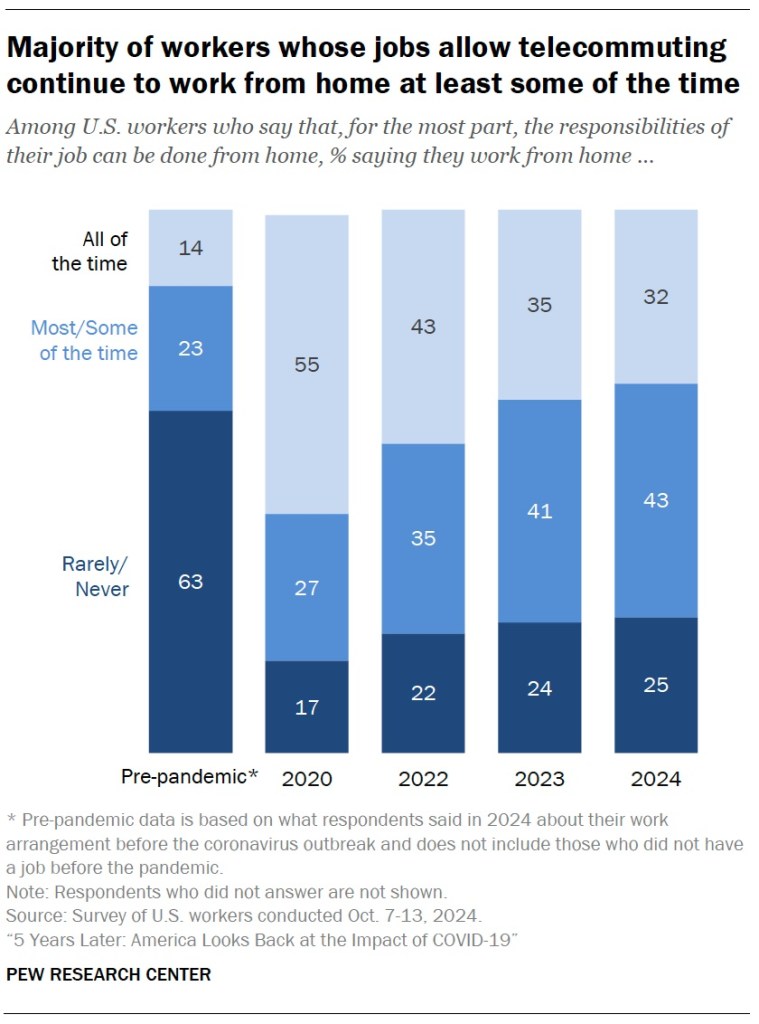
The two big issues: working remotely, and unemployment. A lot of workers who began telecommuting, are still doing it, at least part of the time. My wife taught school remotely for a year; I’m amazed at how virtual learning worked. I had the option to work from home in my job, but I chose to help keep the organization running from our main location. It as an eerie, lonesome experience.
Unemployment hit a lot of businesses hard, workers and owners alike relied on funds from the CARES Act, which helped, but didn’t make everyone whole. Right now, the U.S. unemployment average is about 4.3 percent, similar to pre-COVID.
Reported today, in the first half of 2025, companies announced 744,308 job cuts nationwide, the highest tally since the first six months of 2020, when employers cut nearly 1.6 million jobs in response to COVID-related disruptions, according to outplacement firm Challenger, Gray & the Christmas.
I’m not adjusting the above figures in light of the “real” data recently supplied by the Trump Administration.

Social Changes
Allen Gorman, Ph.D., associate professor of management and the chair of the Department of Management, Information Systems and Quantitative Methods in the Collat School of Business said, “The pandemic has forced all of us to take a good hard look at ourselves and think about what we really want from our lives, including our jobs. For many people, the daily grind of the 9 to 5 just didn’t seem as important as it once did.”
I retired towards the end of the pandemic, just as employees were relocating back to the office. The pandemic helped me to decide the time was right to exit. I saw a wave of change coming, and frankly it didn’t interest me. Some people stay too long and I didn’t want to be one of them.
While many bristled at not being able to social freely or at large events, others enjoyed the isolation that was more socially acceptable during COVID. The pushback over attending faith services, weddings, funerals, graduations and other gatherings was immediate and debated with fervor.
Inflation/Economy
Another reminder of Covid is the inflation and supply chain disruption that occurred. Fights over the last package of toilet paper turned grocery employees into referees. Empty shelves reminded me of the oil embargo of the 1970s, when lines at gas stations were common. Food became more expensive. Restaurants, if they didn’t close, charged higher prices. The meal delivery business flourished as fewer people wanted to risk a restaurant, and more service industry workers needed jobs.
Prices are still surging, despite what the White House says. Corporations found an additional way to increase already record profits, charge the same or more, for smaller products. Businesses found ingenious ways of fooling the public into not noticing the fewer Oreos in the package, or changing the container size without drawing attention, or cheapening the ingredients or even changing ingredients and changing the product description to not violate consumer laws – without telling you. Sneaky rabbits.
The bad news for consumers is not only problems of supply, it is the reduction of market competition by merging, acquiring and dismantling of competitors. Whether it is grocery retailers, telecommunications services, news choices, energy providers, filmed or musical entertainment companies, soft drink brand holders – the number of choices has shrunk, as well as the free market competition.
Businesses were under intense pressure to find ways to operate, whether it was in the office environment, manufacturing, food/hospitality or service industries. In some cases, distancing and erecting protective shielding, along with wiping down surfaces allowed some relief. More business was conducted by phone, Zoom, and by shopping online. I rather liked Zoom meetings, because I could work on other things while being “present” online. Restaurants got creative and sought permission to encroach on sidewalks and other outside public areas for seating and small groups. Where I live, much of that has remained, and it adds an ambiance to restaurant dining.
Not long before the pandemic hit, my office was working with an architect on remodeling plans for our floor. The architect tried to sell us on more open, less private concept. I immediately objected and scuttled that plan. While the open concept was fashionable and worked in many highly collaborative environments, that was not our business model or culture. That plan, had it been built, would have put people at risk, and would have a noise problem under normal conditions. Some ideas simply do not fit.
Other Conversation…
Five years later, most signs of the pandemic are gone. The small businesses that failed, the deaths, the long term COVID health effects, the job losses, are of a more personal nature and not evident to outsider.
In the early months of the pandemic, before the waves reached the U.S., I saw a program that showed how the medical community in another country was struggling to keep up with the influx of sick cases. What I saw was terrifying, like something from a horror movie. The most horrific sight were the portable morgues lined up in parking lots. That horror would hit my family. When I hear people scoff at the seriousness of that virus, I don’t understand their ignorance. More than an inconvenience, the pandemic was deadly.
I believe that as a collective, we have realized a things as part of this new normal.
First, when we focus our collective intelligence, scientific assets, unity of purpose on a goal – we can achieve more than we realize.
Greed is alive and well, ready to seep through the loopholes, confusion and opportunity in public emergencies. During WWII, that was called profiteering and illegal. Today, it feels more acceptable. Sad.
Divisiveness, for whatever reason, has weakened the pillars of this country. Social discourse is a part of the fabric of our democracy, and the freedom to disagree is protected. At the moment. There is no longer the “greater good” united by science and medical facts for the protection of our public health. A deadly virus or disease will find every crack and exploit them. Unfounded theories and misinformation that result in many refusing to participate in accepted precautionary practices put our society at risk. Since the pandemic, I’ve had COVID and thankfully, it didn’t kill me. It might have without the totality of vaccinations I’ve had in five years. My case was mild, but not without some disturbing side effects.
During the pandemic, the Governor’s Office and the head medical professional, provided daily updates on hospitalizations, deaths and news from around the state and nation. Reporters packed questions without being insulted or dismissed. These updates were not ghoulish, but had a certain undercurrent of dread. We were in uncharted waters and it sure felt like it.
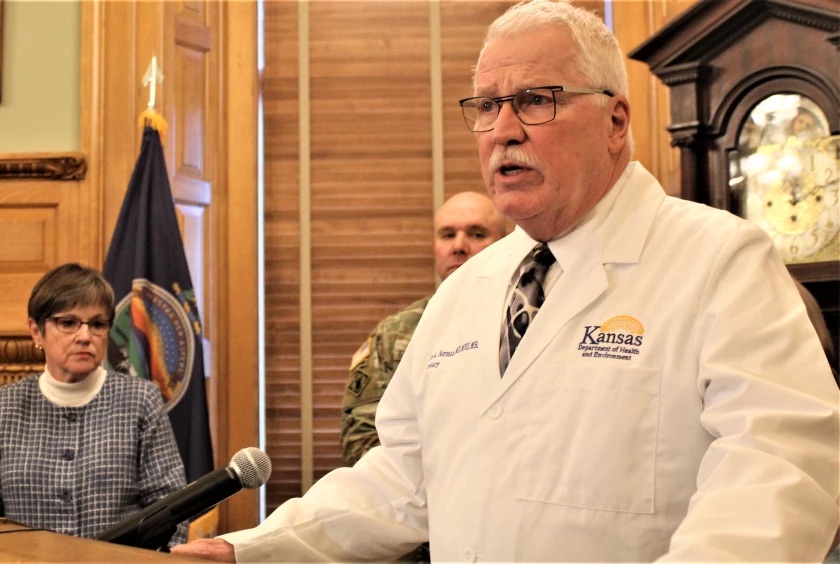
One lasting effect of the pandemic – the divide over health policies and difference directions on the role of medications and vaccines in human health. Every day it seems a new conflict or reversal of accepted public health standard. That’s an argument for a different time, but it’s an argument that may decide many lives.
The Coronaviridae did not disappear. It has mutated and lurks in our universe. Whatever tries and fails, will keep on trying. It’s what they do. Sleep well, my pretties.
*Dr. Norman was “requested” to step down from his post by Gov. Kelly. Norman admitted that he worked at the pleasure of the Governor, but felt he had been pushed out, similar to Dr. Fauci. I read that Norman was in a power struggle with the Governor’s chief of staff, and lost. Norman was perhaps too far out front and bristled many people, including members of the State Legislature, who pushed back against closing schools and restrictions on gatherings and harm to the state’s economy.


 Ticket 2 Ride
Leave a reply to greenpete58 Cancel reply