
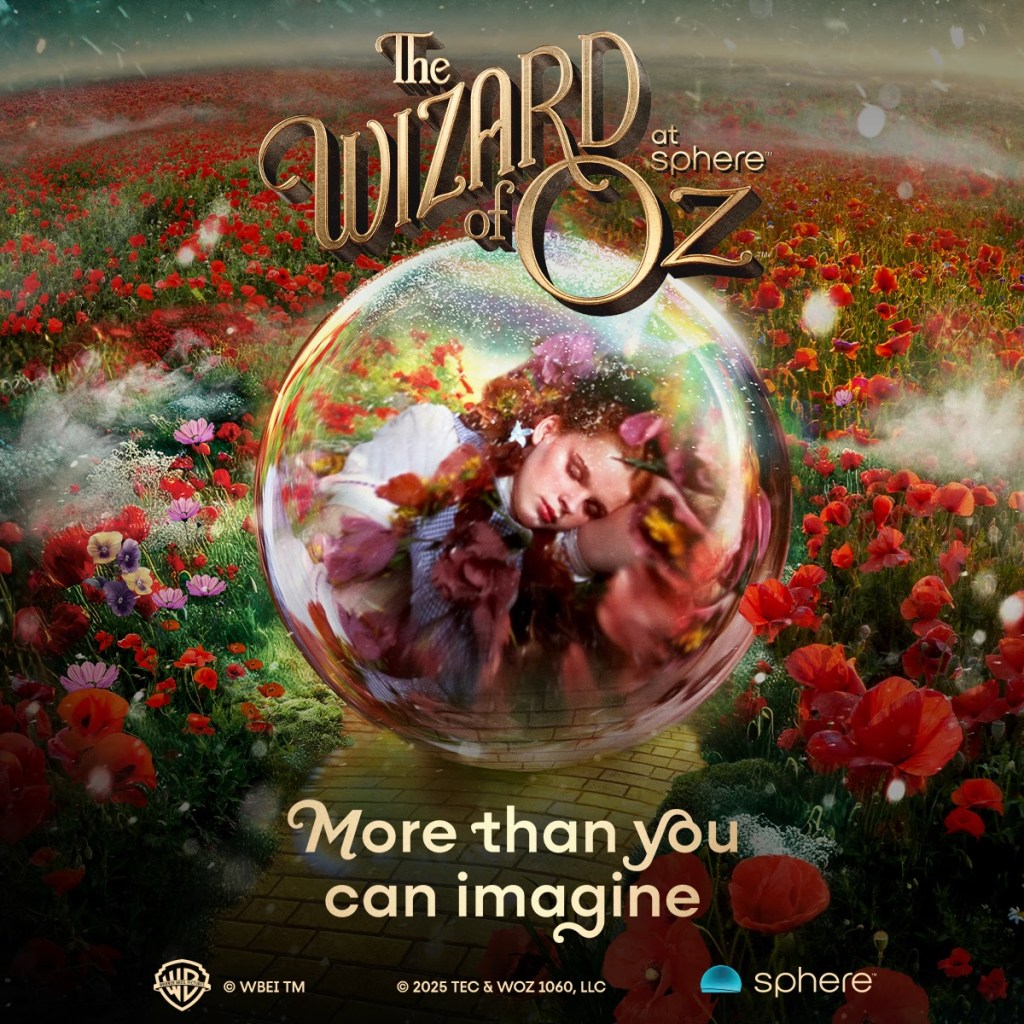
A special edition of Sunday Cinema.
I’m not a big fan of tinkering with classic films. That aside, the Sphere in Las Vegas, has recreated The Wizard of Oz as a new entertainment experience. The Sphere is an impressive looking structure, particularly as the exterior is essentially a video screen.
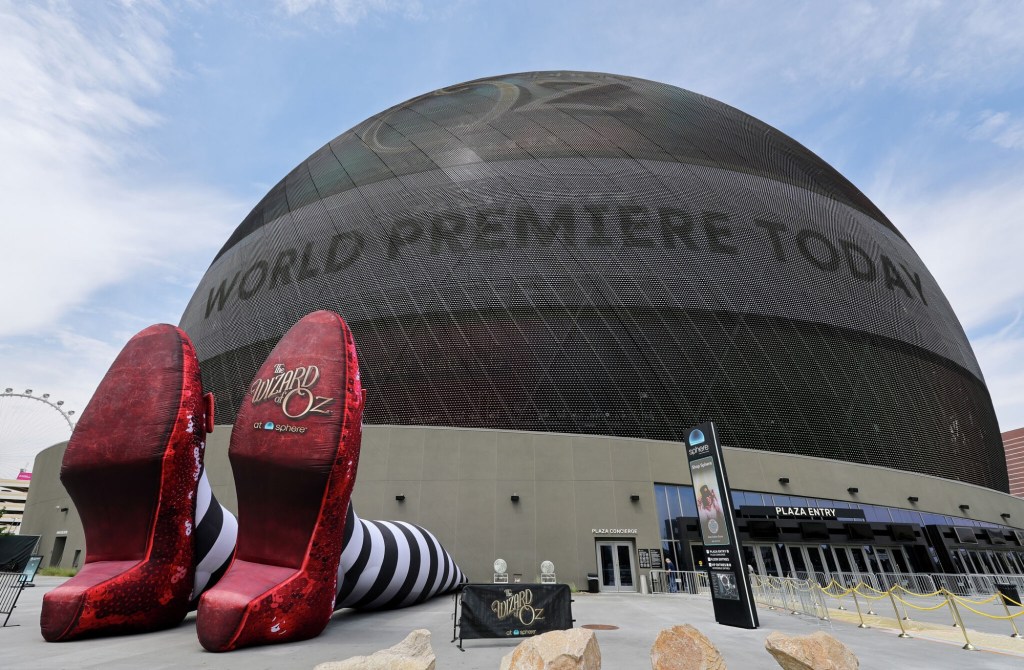
The Sphere is that orb-shaped building that has the technology to display images in a wraparound 18K LED screen. The image is on the curved ceiling and sides, and the sound system is leading technology. There’s much more to the experience than a big screen and big sound. Open for two years, the $2.3B facility, has hosted numerous, films musical residencies (U2, Dead & Company, Phish) and currently the Eagles, and special programs.

The company that owns the Sphere negotiated with Warner Bros., which owns much of the MGM film library, to digitally enhance the film. Reportedly, $80M was spent on this film project, and it shows. In addition to the spectacular imagery, this is an immersive 4D presentation, meaning the seats rumble, wind rustles patrons’ hair, leaves blow through the audience, foam apples drop from the sky, it snows, and other visual and sound effects punctuate the story.
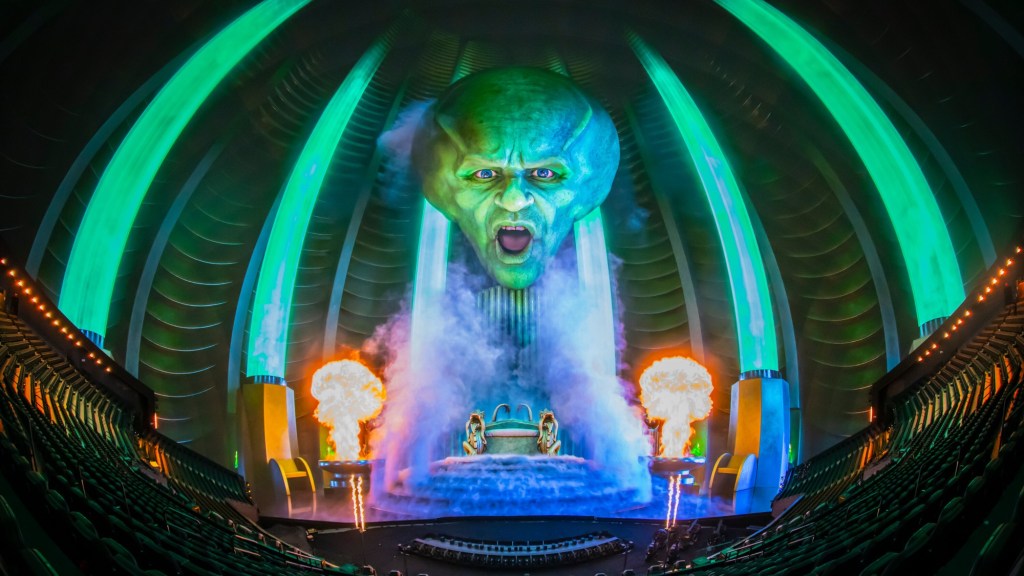
When I first heard about the immersive aspects, I thought of the sci-fi comedy Matinee, about a Hitchcock-like director utilizing shock elements to “jolt” the audiences of his low-budget films. Well, done right, these immersive touches can be fun and surprising, not cheap gimmicks.
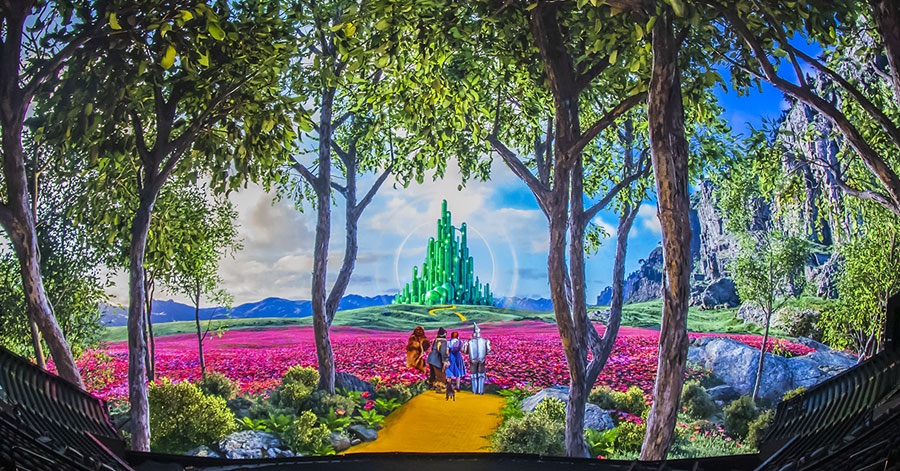
When the credits started on a normal sized movie screen, suddenly the film image pops to the large wraparound screen. Magical! The image wrapping around and above is amazing. It’s a clean, crisp image, considering the digitalization crew had a 1939 movie to start with. There are times that not everything in a scene are enhanced to the same clarity, but whatever is highlighted in the scene is crystal clear, and generally the scene in it’s entirety is superbly digitally enhanced. Not a complaint, I just wonder why everything in the frame was not digitally enhanced to the same quality. To go a step further, it appears that images in the film frame were worked on separated from the background in the sense that Dorothy’s image and the yellow bricks she’s walking on have slight different digital quality. I believe the digital process is referred to as outpainting, in this world of make-believe Glenda the Good Witch retains a soft-focus photographic quality from the original film, which is apparent when she stands in the same frame as crystal sharp Dorothy. Again, not a complaint, just a slight difference.

Besides the image clarity, the background in film has a greatly added depth. MGM, like every other movie studio then, employed an art department who specialized in painting realistic backgrounds: city buildings, mountains, forests, oceans, streetscapes that appear through windows, etc. Many background paintings were used in The Wizard of Oz, now, those backgrounds included detail, realism and activity, courtesy of AI. I was amazed to see birds in many backgrounds, for example, or moving clouds, that were painted images in the original film. In addition, the frame size has been expanded, so you see a much wider frame to include more background and peripheral views, and even characters who are in the scene, but not always visible in the frame, are now present. The scene is what is taking place as denoted by script and, the frame is what the camera photographs in a frame of film. The use of AI has envisioned what the camera frame might have photographed had the lens originally included it.
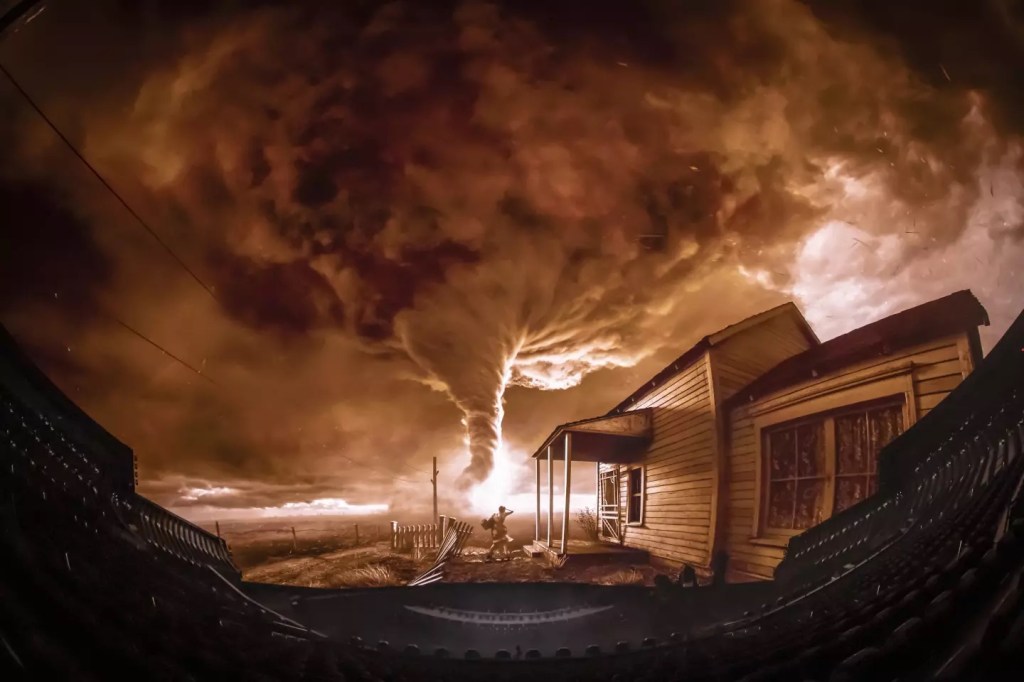
The tornado sequence is amazing, even if the wind, leaves, seat rumbling, etc. weren’t included, the visuals are simply incredible. Here’s a link to a video someone put on YouTube.
One other thing that stood out was the recording of the musical soundtrack to replace the original. The music now has great separation, definition and power.
Watching the film felt like I was on a ship and it was moving, as images moves, and your gyroscope follows. That sense of motion was came and went, but the feeling of action going was constant.
One other noticeable difference, the film is almost a half hour shorter. I didn’t know this, but noticed many scenes were shorter than I remembered. The film moved faster, that for sure.
Tickets are of course expensive, essentially everything in Vegas is. The Sphere is magnificent and the film an exciting experience. I hope that the film can be extended at the sphere, and there is some way to bring this experience, even in limited manner, to more fans.
- Start Date: August 28, 2025
- Current End Date: March 31, 2026
- Run Type: Open-ended, meaning it has the potential to be extended beyond the current dates.
- Experience: The run time of the movie has been shortened to 75 minutes for the Sphere experience, cutting 27 minutes from the original film.
- Box Office: The film, as of the end of September, has sold more than 500,000 tickets. That equates to $65M in sales.


 Ticket 2 Ride
Leave a reply to Mike Miller Cancel reply