

Rolling Stone writer, film director and ex-spouse of Heart guitarist Nancy Wilson, Cameron Crowe has lived a life us mere mortals can only imagine.
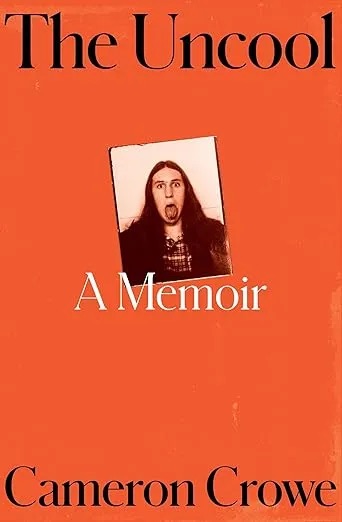
Crowe and I are the same age, have lived very different lives, but at the core seem to perceive a similar wavelength about life. It’s hard to imagine him as uncool, this kid was rubbing shoulders with the famous and the very cool at age 14. He was living every young person’s dream of riding along with and interviewing rock stars. Being in the presence of cool, doesn’t make you cool by association, according to legendary Rolling Stones’ scribe and mentor, Lester Bangs meaning. But then, was Crowe ever wanting to be seen as cool, or just the fortunate soul he was?

The Uncool: A Memoir (2025, Simon&Shuster) is about Crowe’s early life and really stops after the Fast Times at Ridgemont High film success, although the book is framed around the opening of Almost Famous: The Musical as it prepares to open, and Crowe’s mother’s health is failing. Almost Famous, the film, was the fictionalized story based on Crowe and family set in 1973. Crowe would win an Academy Award for his screenplay. Crowe had a supportive, but strained, relationship with his mother, who never gave up trying to steer him towards law school. Yet, she basked in his success and never stopped pushing him with her Dale Carnegie positive reinforcement. They had a complicated mother-son relationship, and she longed to see her character on stage, but unfortunately that didn’t happen.
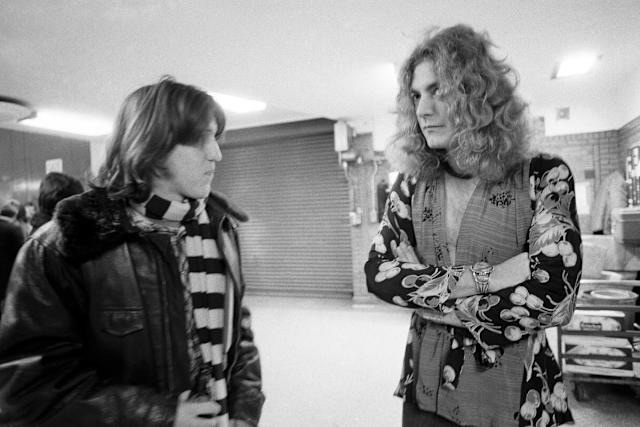
What would follow his stint with Rolling Stone is an award-winning career writing and directing films, but that’s a story for another book. The Uncool has some amazing stories of Crowe not only interviewing, but spending time getting to know David Bowie, Gregg Allman, Don Henley and Glenn Frey, Ronnie Van Zant and many others. He accompanied the Allman Brothers Band, Led Zeppelin and other artists on tour to write articles for Rolling Stone, and he was backstage, in the dressing rooms, hotel rooms and recording studios with them. Here’s a teenager flying around the country with rock stars but was too young to drink, and didn’t yet qualify for a driver’s license. Think about it.

Crowe’s story is about the 1970s and the musical decade, when rock and roll was discovering mega-venues, cocaine, private jets, and getting on the cover of Rolling Stone had real merit. If you lived in that decade like I did, you’ll really enjoy these stories. Some are bittersweet, as when Crowe talks about seeing Bowie and Allman in their later years, and realizes that their memories don’t quite align with his on events he holds precious. Both men are gone now, but we have a glimpse into those crazy times when they were blazing across the rock and roll sky.
We also get to see inside Crowe’s life, see the strains and successes of his family life, and how he became a contributing writer for arguably the most influential publication of its time. Despite the life he lived inside of the rock and roll world, this teenager had very typical teen issues, especially with women. The coolness of the rock and roll world rarely rubbed off on him, not that he was trying very hard for it to. The fact that he emerged out the other side, not tainted by drugs or other excesses, and went on to achieve personal and creative success, speaks to how well he was grounded, and wasn’t consumed by the world he often visited, but didn’t live in.
Thoughts Pete Townshend of The Who: “Townshend openly struggled with the purpose and promise of rock. It was more than just sonic wallpaper. There are few greater spokesmen for the passion and power of music, and the importance of creative authenticity. He was also one of the few artists who would confide in the press. On any given day, Townshend was the best interview in rock. His interviews were X-rays into his process, rock therapy in real time.”
“Music was already more than music,” Crowe writes. “It was a door that opened for three minutes. Sometimes way longer. In the forbidden world there was no judgment. Only your own thoughts and secret desires, slashing through the atmosphere. And when the song was over, the door clanged shut again.” Damn, can I relate to that.
And his interview with Kris Kristofferson, who in the early 1970s, was also firmly planted in Hollywood. “I didn’t know it yet, but Kristofferson had flagged the very passion that would guide the rest of my creative life,” Crowe writes. “The marriage of film and music would soon be my favorite part of writing and directing films. All I knew then, sitting in the big red chair, was that I’d discovered a blissful place in the world. I liked asking about things I wanted to know. I liked listening even better.” A perspective that would prove valuable when he landed in Hollywood.
“I’d also discovered my writing voice,” after penning a personal story for Rolling Stone. “The personal tone of that embarrassing article is now my favorite kind of writing. In fact, it’s the tone of this book.”
The Uncool is a great read.



 Ticket 2 Ride
Leave a reply to greenpete58 Cancel reply