

The name Larry Cohen is probably not familiar to most people, but you’ve seen or at least heard of his work. Cohen wrote for TV in the 1960s before finding his footing in film. After he established himself as a screenwriter, he began directing, usually low budget films involving horror or science fiction. He penned several scripts (directed by others) that turned into big studio films toward the end of his career.
Larry Cohen died in 2019, but his memoir was not published until 2025.
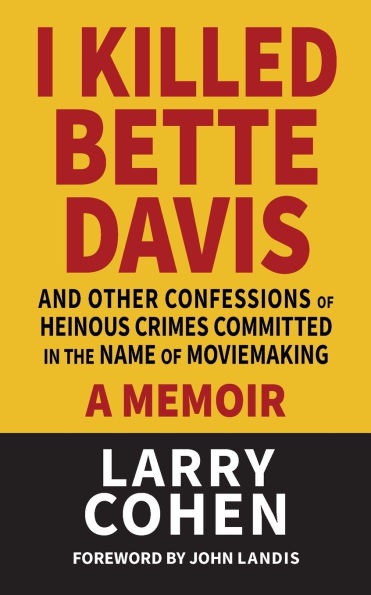
Some of his directed titles had names like: Black Caesar, It’s Alive, Maniac Cop, God Told Me To and The Private Files of J. Edgar Hoover. Scripted he didn’t direct include Phone Booth and Cellular.
So, you might be thinking: this Cohen guy dealt in most schlock and drive-in movie stuff, why is he interesting enough to write a memoir? Well, to survive and thrive in Hollywood is remarkable by itself, but to leave behind a wake of admiration and funny stories – it’s begs at least a few characters of your time.
The book begins with the Bette Davis story, Cohen had written a screenplay specifically for Davis and planned to get her star in his film. The Wicked Stepmother was Davis’ last acting credit, and although it started promisingly enough, it ended badly, as Davis left the film before completion. “I never meant Bette Davis any harm,” Cohen writes. “Just the opposite. It began as an effort to help her resurrect her dormant career and ended with the final nail in the coffin of a legend.”
Cohen didn’t really kill Bette Davis, obviously, he simply offered her a movie job that at her advanced age and health, was unable to complete and needed a way out of the movie. “There’s no question that sometimes people you admire are better off being left alone.” Maybe that’s the moral of the story.
Cohen’s life and career, even without the Bette Davis story, still warrant the read. Cohen created a bunch of television shows in the 1960s including The Invaders, Coronet Blue and Blue Light. Many people remember The Invaders but not the other two short-lived series.
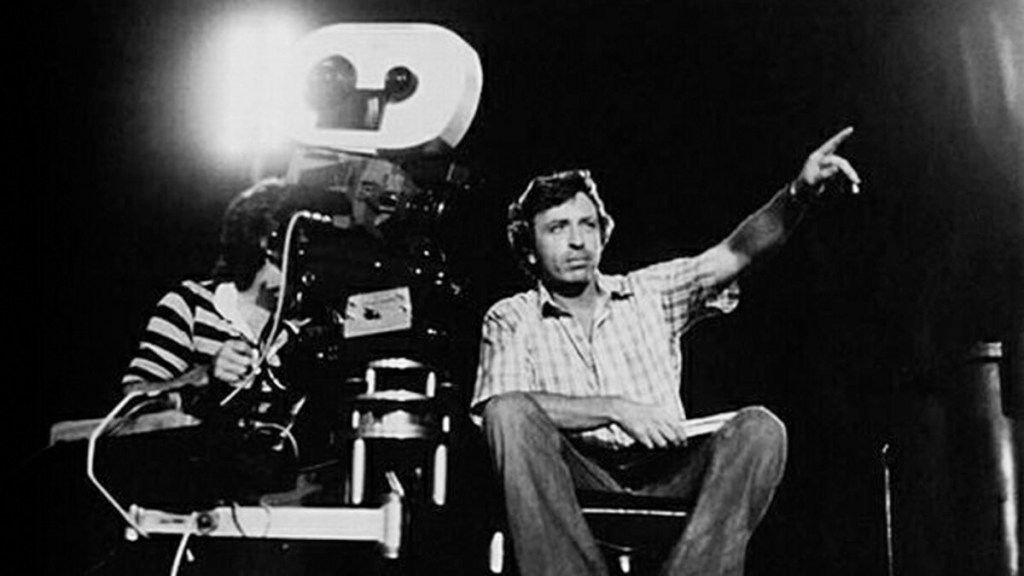
Cohen was really not a Hollywood guy which might sound funny given his profession. As a New Yorker, his way of dealing with the movie industry resulted in many interesting stories. He operated outside of the studio system, his production company was mainly he and his wife, no studio office just working from home, didn’t trust the Hollywood agent biz, preferred to write, produce and direct his projects, and was good for his word.
More than a filmmaker, he was a film fan. He was friends with such luminaries as Composer Bernard Herrmann, actor Peter Falk, and directors Sam Fuller, Joshua Logan, Orson Welles and Alfred Hitchcock and those stories are great reading.
We cook up our own stories rather than wait to see what’s offered. I also find that low-budget directors who have distinguished themselves and go on to higher-budget films shortly cease writing their own material. They become directors for hire and somehow never achieve the originality that their earlier films promised. Don’t get me wrong, I’m not better than anybody else. I’ve just never even gotten the opportunity to sell out.
Raising money to produce films was always a struggle, but he believed in the scripts he wrote, to the point that when studios declined financing, that didn’t stop him from making the film. “There was still no studio interest, so I decided to start making the film without backing. I had no budget, no shooting schedule, no production manager and no completion bond. Who needed such formalities? I’d simply bring my cast to Washington and begin shooting with a small crew. After the first week I’d have exhausted my funds, but I hoped by then somebody would step up and assume the financial risk.”
None of his films escaped producing funny stories. Here are several:
Rip (Torn) wore two small hairpieces-one on each side of his forehead. He continually refused to let the hair stylist adjust them. Instead, he would hide them somewhere on location, and sometimes he forgot where he put them. When we shot at Pimlico Racetrack outside Washington, he left them behind at the hotel and we had to send a limo to pick up Rip’s hair.
Filming a crime film in NYC, on a very small budget, Cohen was used to solving problems. Not panicking, he did the obvious:
Instead I was standing there like an idiot. I had a sniper sequence but no gun. The situation was totally absurd, as was my solution. I simply turned to the dozen spectators who had gathered on the roof. They were residents of the building who’d come upstairs to watch a movie in progress. “Okay, who’s got a rifle with a telescopic sight?” I demanded. Instantly a girl’s hand shot up. “My boyfriend’s got one.”
Sometimes he got permits to film, other times he filmed “guerrilla style”. On more than one occasion he used hidden camera or simply filmed amongst the crowds.
The city would never have given me a permit to run amok wielding weapons in the midst of this celebration (New York City St. Patrick’s Day Parade), which is highlighted by 5,000 or more cops moving in close forma-tion. I was banking on my hunch that no one would imagine I’d have the nerve to create such chaos without permission. Id place several phony policemen within the ranks wearing rented uniforms. Everything else would be improvised. There was always the possibility I’d be shut down immediately and even arrested. But getting this scene was worth doing jail time!
Here’s a story about the sound tapes (recording dialogue and ambient sound during a take) that disappeared after the sound man put them on the top of his car and forgot to load them in the truck before departing the airport. Without the sound tapes, this would be a silent film and a huge financial loss. When told, Cohen didn’t panic, no one was fired. The sound editor told Cohen he had retrieved them, but many reels had been driven over by vehicles in the rain. Still, Cohen didn’t panic.
“T’ll hire an assistant editor to unravel the tapes and put them on spools and we’ll see what we’ve got.” As if by a miracle, we seemed to have one decent sound take of each sequence, enough to piece together a usable track for every scene we shot in Tucson. The absurdity of it all does not escape me, even after all these years. That the crew members were able to find the tapes in the massive LAX complex boggles the mind. Thereafter, the crew regarded me with a sense of awe. I seemed infallible —which, of course, I was.
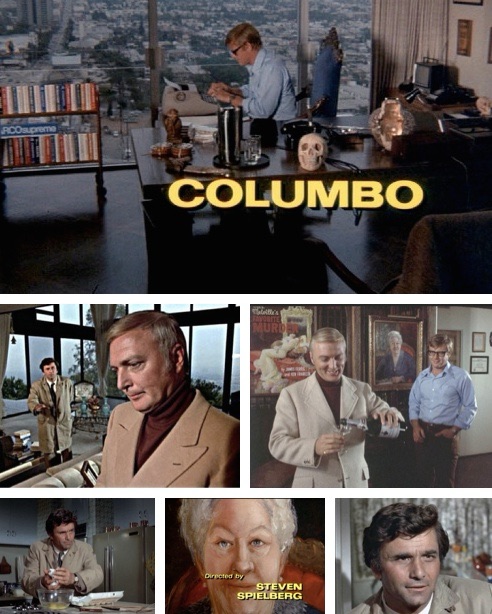
Larry Cohen’s film and television legacy is probably known as low-budget, exploitive and not worthy of serious reflection. I have seen very little of his film work, but I’m very familiar with his television credits. Cohen was a great storyteller, he thought well beyond the margins, which is my he was such an accomplished writer. He wrote (uncredited) one of the first Columbo episodes, which incidentally was directed by some kid named Steven Spielberg.
Larry Cohen worked in the snake pit of Hollywood and got screwed over many times by unethical, egotistical and powerful industry people. He hired attorneys and used the Writers Guild to help fight many battles, often winning. He also generously gave people jobs who needed them, let people be extras in his films, and befriended many who Hollywood had cast aside.
On the other hand, if dad had understood what I was trying to achieve and offered me his kindness and support, it might have lessened the compulsion I felt to overcome all obstacles. Thanks to him, I became immunized to criticism. Without being exposed to Dad’s constant negativity, I might have given up too easily.
Here’s a funny and heartfelt book. I hope that his film and television legacy will be explored by more people.






Leave a Reply