
I’m always torn, when I review a biography or memoir, about how much of the book’s subject to include in my post. For well-known people, it is less necessary, yet the influence of that person may call for more subject background. As a public figure, Robert F. Kennedy, Jr. currently holds sway over public policy can effects every person in this country.
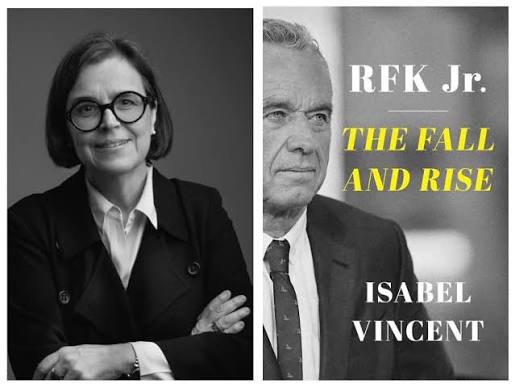
Isabel Vincent has written a fascinating book about Robert F. Kennedy, Jr. RFK Jr. The Fall and Rise (2026, William Morrow), dissecting a very charismatic, intelligent, but deeply flawed man. “A work in progress” is how he refers to himself. We’re all works in progress, except for probably narcissists, who might use that phrase to draw empathy and appear more human. I don’t know if Kennedy could be described as a narcissist, that term is applied so frequently these days, but he is very manipulative, entitled and lacks empathy towards others.
Vincent spent 13 years writing this book, starting after the 2012 suicide by Mary Richardson, Kennedy’s estranged wife and mother of four of his children. Richardson and Kennedy had a very turbulent marriage and their divorce was bitter. Richardson took possession of three volumes of her soon to be ex-husband’s journals. Those journals made their way to Vincent, who drew from them for newspaper articles and this book. To say that Kennedy’s thoughts and notes are quite revealing, is an understatement. The journals show a man deeply searching for his own meaning, basking in his triumphs and validating his often bizarre behavior toward others.
Much has been written and reported about Kennedy through the years, especially since he ran for president in 2024, and now his 15 months as Secretary of Health and Human Services. His public life is as outrageous as his personal life. Vincent does a fine job of hitting the high and lows of his work at HHS and how he formulated his extreme views. Trump promised him the HHS job if he dropped out of the presidential race.
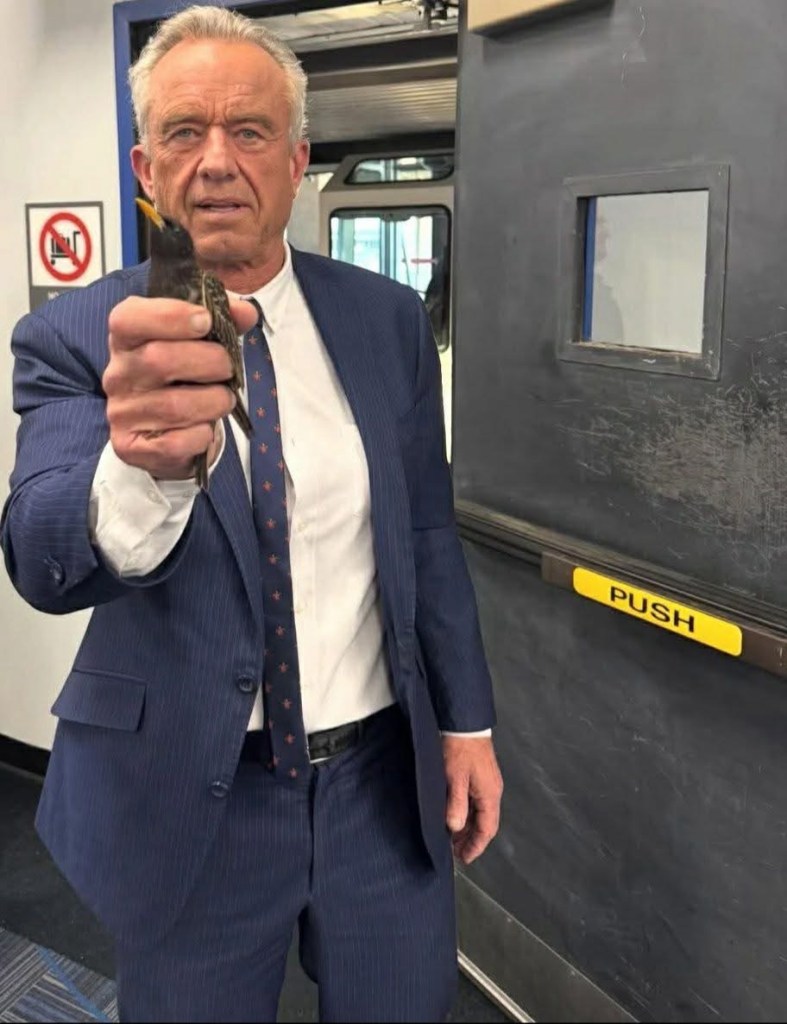
Vincent does not devote a great deal of space for Kennedy’s brain worm, or even his heroin addiction, although his use of drugs is noted in passing throughout the book. She does mention his unusual interest in collecting, studying and displaying animal parts. The more bizarre his actions or public comment, the greater the MAGA movement seems to embrace his unorthodox and autocratic approach to his position.
Regarding Kennedy’s personal life, why that’s important is how his behavior and choices reveal his moral code and values. The man was a candidate for POTUS, and now heads a department with a budget of billions of dollars and makes decisions about research, medicines and health policies. He cheated on all three of his wives, and kept a list (and rating) of each woman he was intimate. He’s described himself as addicted to sex, careless and destructive, only interested in his own sense of conquest. That’s newsworthy for a person with so much public health responsibility.
“Mary was waiting and hoping for Bobby,” said a source who had spoken to Mary daily during her struggles in the last year of her life. “She was in no shape to date. She had gained weight. She wasn’t the knockout she had been. And Bobby was cruel about her weight, telling her that she had squandered her beauty, squandered her gift. He would put his arm around her and criticize her. It was ugly.” And she was terrified of his bullying, another friend said, especially during the negotiations for their divorce. “She was petrified of his wagging finger,” said the friend, describing how Kennedy had violently pointed his index finger in her direction when he was making a point. But no matter what had happened between them, Mary fiercely wanted to remain married and continue to be part of the Kennedy family, her friends said. “It was the Kennedys or nothing.”
Mary had her share of issues, including a longstanding eating disorder, and her battle with alcohol was well-documented. While she was unhappy in the marriage, and with Kennedy’s infidelities, Mary didn’t want to give up being a Kennedy. “When Mary became pregnant with their first child, Kennedy arranged for a quick divorce from Emily in the Dominican Republic,” Vincent writes.
A significant part of the book details Kennedy’s environmental legal work. From an early age he was interested in nature and wildlife, which was the genesis of his career going after polluters and those endangering the environment. What’s less known to the public is how personally profitable it was for Kennedy. From being a lawyer for a nonprofit, he was a partner in a law firm that sued major corporations and governments resulting in multi million dollar fees, his compensation for serving on corporate boards, a continuous series of high dollar speaking engagements, paid family trips to conferences, referrals fees from other law firms, etc.
Trading on the Kennedy legacy, he demanded tens of thousands of dollars for his appearances as well as free travel for his family, which in some cases allowed him to turn what were largely work events into mini all-expenses-paid vacations to exotic destinations. The grift worked well at a time when he was cash-strapped and raising five children.
To be fair, even though he monetized being a Kennedy throughout his 72 years, he lived under a microscope where many things he did was held up for public scrutiny. His father, murdered when Kennedy was a teen, lived with that very public loss. I can’t imagine the heavy toll that would place on Kennedy and his siblings.
“My biggest battle was with addiction to drugs,” admitted. “Soon after my father’s death I made a series of choices involving drugs that started me down a road from which I had to struggle to return.” Kennedy has forever lived in his father’s shadow. His journals document this constant internal battle of not measuring up to this self-image he had created, in large part based on his father’s accomplishments. Kennedy changed his wardrobe to mirror his father’s dress in the 1960s.
“My father’s greatest gift to me was his character and values,” he wrote in his diary on February 1, 2001. “In almost any moral dilemma I can always refer to my father. ‘What would he have done here?’ And I get the right answer.” That’s an interesting statement. In all I’ve read about his father, I do not see the alignment between father and son.
During the pandemic, Kennedy found himself censored on social media for their attacks on Anthony Fauci, pharmaceutical companies and spread of misinformation. His views were deeply rooted in vaccine mandates as being anti-democracy, treading on personal freedom and worse than life in Hitler’s Germany (said at an anti-vaccine rally in Washington in 2022), invoking Anne Frank’s name to describe the government crackdown.
Maybe the most controversial of all was Kennedy meeting with his father’s killer, and then demanding a new investigation into his father’s murder. He believes that Sirhan Sirhan was falsely accused, and submitted a letter to the parole board to release Sirhan. The board recommended Sirhan’s release in after a hearing in 2021. The other RFK children immediately objected the release of Sirhan. Governor Gavin Newsom overruled that parole request.
Kennedy has found himself on the outs with many of his family members over a variety of issues, including his appointment as HHS Secretary. His sister Kerry and his mother even honored Fauci with the Ripple of Hope Award from the Robert F. Kennedy Human Rights foundation, where Kerry was president. Most of the Kennedy family have distanced themselves from him, as Vincent presents in her book.
There’s really no definitive explanation for Kennedy’s late rise in life, other than an intense drive, or thirst, that has never been quenched. Whether it was drugs, sex, his environmental work, fame, money or power. There’s something he can’t quite grab.
Maybe Vincent comes close:
“No matter how much I have, I want more!” That unbridled desire, his obsession with “more” would become all-consuming and the catalyst for tragedy.

 Ticket 2 Ride
Leave a comment