
What causes a band/artist to regress: by delivering disappointing new music, being dropped by labels, shedding members or changing musical direction? Sometimes musical tastes change and what was new is now old hat. Other times bands/artists sabotage themselves through their own decisions. There are many reasons. Popularity can be fleeting.
In my humble opinion, these bands/artists, primarily by their own choices, negatively impacted their own career trajectories. Too much commercial success, we can fix that!
Modest Mouse
Formed in 1993, I was oblivious to Modest Mouse until I heard “Float On.”
Who can forget Good News for People Who Love Bad News (2004) with “Float On” and “Ocean Breathes Salty”; followed by We Were Dead Before the Ship Even Sank (2007) with “Dashboard” and “Missed the Boat.”
That was the commercial period for Modest Mouse, and when I embraced the band. Reviews were very positive, even longtime fans seemed to gush over this album, appreciating the usual weirdness and rough edges, and new fans found the melodic sweetness and maturity of material to be inviting and engaging. A Grammy nomination for Good News for People Who Love Bad News was well-deserved. The follow-up, We Were Dead Before the Ship Even Sank featured Johnny Marr (The Smiths) as a member, and I believe tried to replicate the mainstream elements from the previous multi-platinum selling album. They partially succeeded, with less results. “Dashboard” is a great song, it pulses, jangles and sails (a nautical reference). Marr’s guitar work is awesome. “People as Places as People” and “Little Motel” are melodic and pull you in. Most of the other songs are bombastic and don’t take advantage of the excellent musicianship. Marr left after this album to join The Chins.
Lineup changes and a long wait (2015) until Strangers to Ourselves appeared. “Lampshades on Fire” was the first single, along with “Coyotes” and “Ansel” are the strongest songs. There are some textural additions over their last album, but otherwise this album feels like previous albums. There’s a big gap between the better songs and the rest. Where’s the growth? It feels like this band pushes repeat and records most the same material. After this long of an absence, I expected more.
The Golden Casket (2021) was the band’s seventh studio release. After Strangers to Ourselves I was done with Modest Mouse. Some of the changes I had been hoping for finally seemed to take place here. While the album is an improvement over the last several albums, there aren’t any major singles like “Dashboard” or “Float On.” The quirkiness of this band, which was appealing 20 years ago, seems tired and redundant, and aimed at the same age group. It’s funny, 20 years ago their albums were praised for a more mature attitude and musical direction. That didn’t happen. The Golden Casket is a step in the right direction as the songs contain more appealing riffs and textures with less of the sonic jackhammer pounding away at your brain. There is a new production team for this album, yet many of the songs feel unfinished and incomplete.
An Eraser and a Maze arrived this summer and I was not sure if I’d give it a listen. But I did. Most of the lineup has changed from the last album. Isaac Brock is the only original member still onboard. Jacknife Lee returns as one of the producers. Founding drummer Jeremiah Green passed away in 2022, so there is mortality and less of loss that is present in some of the songs here.
At first listen, I was very underwhelmed. Second listen identified several songs that impressed me, but most of it did not. Gone are the interesting textures from the last album, although most of the goofy and bombastic playing is under control. I read in a recent interview with Isaac Brock that he feels the songs have a lot of commercial elements, something he asked his producer to add to any song he felt needed a melodic boost.
“Impossible Somedays”, “Absolutely Necessary Never” are interesting songs
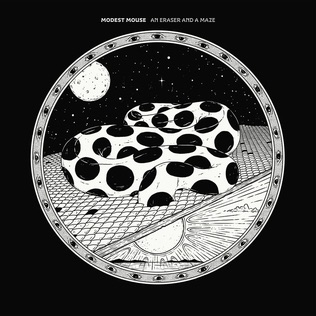
While I like parts of this album I believe that Brock enjoys the jumble of sounds and frenetic nature of what has always been the reason this band formed, not as a huge commercial enterprise with broad mainstream appeal. I mean, why would anybody want that?
FYI: Modest Mouse is scheduled to play in my city in September. If they were performing at a different venue, I would consider attending. Neither my wife or I enjoy this outdoor venue which is essentially standard room only, unless you buy a VIP ticket and you get to sit on the side on a picnic table. No thanks.
The Flaming Lips
What’s up with Wayne Croyne? This band had a strong upward trajectory, then a series of head-scratching albums and personnel turnovers. Whatever traction this band achieved suddenly disappeared.
Formed in 1983 (how is that possible?), I did notice this band until The Soft Bulletin (1999), which included “Waiting for a Superman.” How can this punk-alternative band make something so gentle, melodic and engaging? Well, I kept listening to this album, searching for more gems. “Racing for the Prize” and most of the album showed they could be rough and noisy, but also melodic and engaging.
Next came Yoshimi Battles the Pink Robots (2002) with the big single “Do You Realize??” The album is certainly more electronic than past albums and less harsh. “In the Morning of the Magicians”, “All We Have Now” and “Approaching Pavonis Mons by Balloon” are the standout tracks.
At War with the Mystics (2006) There best album, despite the cheesy “The Yeah Yeah Yeah Song.” “The Sound of Failure”, “My Cosmic Autumn Rebellion”, “Vein of Stars”, “Mr Ambulance Driver”, “Pompeii am Götterdämmerung” and “Goin’ On” are all excellent songs. The rest of the album isn’t bad, just not as good as the ones I mentioned.
Embryonic (2009) An album that feels like a step backwards. “The Impulse” has a soft electric sound with a heavily processed vocal. Charming in an otherworldly way. “Silver Trembling Hands” takes a listen or two, but it’s worth it – beauty amongst the noise. There is a lot of noise, casual listeners won’t have the patience to uncover several enjoyable song, but there’s not enough of them here.
The Terror (2013) Moody, very atmospheric and lacking any really exciting songs. Maybe the best song is a slow and dreamy version of “All You Need is Love.”
King’s Mouth: Music and Songs (2015) A vast improvement in accessibility of the songs. Still very lo-fi in musical texture, but the songwriting and production gets high marks. “Electric Fire” and “All for the Life of the City” being standouts.
American Head (2020) “Will You Return/When You Come Down” leads off the album exemplifying the texture, style and accessibility of the rest of the album. It’s a partial return to their more successful albums, but not completely. Most of the songs here are somber, melancholy and slow. The harshness is minimal and the melodies are upfront.
After several very successful and accessible albums, Wayne and crew backed away from the path they were on and returned to a noisy, harsh industrial sound. They also took a detour through entire albums of covers including Dark Side of the Moon and Sgt. Pepper, and side projects with other artists. I’m curious about what they have coming up next.
The Lemonheads
Group leader Evan Dando didn’t hang up his guitar, but he did downshift and change the focus of his life. No longer a young guy who can party and do drugs all night, or even play concert on consecutive nights. Age is a bitch. In 2025, Dando released a new Lemonheads album and published his memoirs. Neither were particularly impressive. The new music was the first in almost twenty years.
I’ve written about The Lemonheads and Evan Dando a couple of times. Follow the links for past reviews.
A few of their earlier songs:
“It’s About Time”, “Into Your Arms”, “If I Could Talk I’d Tell You”, “Mrs. Robinson”
Their 2025 album, Love Chant, was underwhelming, both in songwriting and performance. Dando gathered some past Lemonheads to contribute to it, so maybe they tried. The result was just not impressive.
“Deep End” is maybe the best song on Love Chant.
The band has released their 2027 tour schedule, there is nothing listed for the venue they cancelled, or anything within several hundred miles. Was it something I said?
The J. Geils Band
The J. Geils Band is a great story, with a disappointing ending. Great music, many years working in the trenches, a killer live band, and finally breaking through to massive success. The songs from Freeze Frame, their No. 1 album, were all over the radio. Large-scale tours after playing small venues and supporting acts to more successful bands.
Releasing their first album in 1970, the J. Geils Band played an eclectic style of music. Allmusic.com described them as “…as a band “pure and simple, churning out greasy covers of obscure R&B, doo wop, and soul tunes, while cutting them with a healthy dose of Stonesy swagger.” They retained that mix of styles to the very end.
“Must Have Got Lost” (1974) became their first song to receive considerable airplay, reaching No. 12.
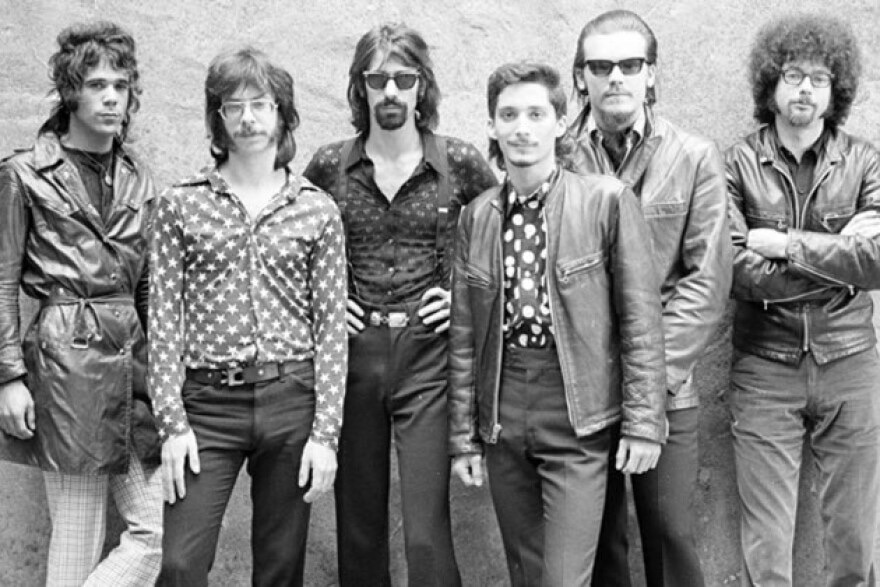
In 1978, “One Last Kiss”, from their Santuary album hinted at the possibilities.
Love Stinks (1980) delivered the goods with songs like “Come Back ”, “Just Can’t Wait” and the title track.
A year later, the platinum selling Freeze Frame (1981) arrived. “Centerfold”, “Freeze Frame”, “Flamethrower”
What happened? The band imploded. Egos, fighting for the spotlight, destroying the very thing that made them successful. After Freeze Frame, keyboardist/main songwriter/producer Seth Justman and lead vocalist Peter Wolf disagreed over the direction of the band, Justman pushed toward a more commercial sound, Wolf was out-voted and was out of the band. The resulting album, which was fronted by Justman, failed. The band not only regressed, it broke up. Long story short: the band members, reformed and occasionally played concerts. In 2012, without namesake J. Geils, the others went on tour, resulting in Geils filing a lawsuit. Geils, without the knowledge of the other band members, had trademarked the J. Geils Band name, leading to years of legal wrangling. Geils would never play with his former band again.
Imagine if the band had managed to continue on after Freeze Frame, finding a way to balance the R&B-rock with more contemporary sounds, and the conflict over the spotlight had been solved. The creative energy of Freeze Frame was hot, and it evaporated, as the music industry moved on. They were still talented and wrote great songs but the magic of the moment was gone.



Leave a comment