
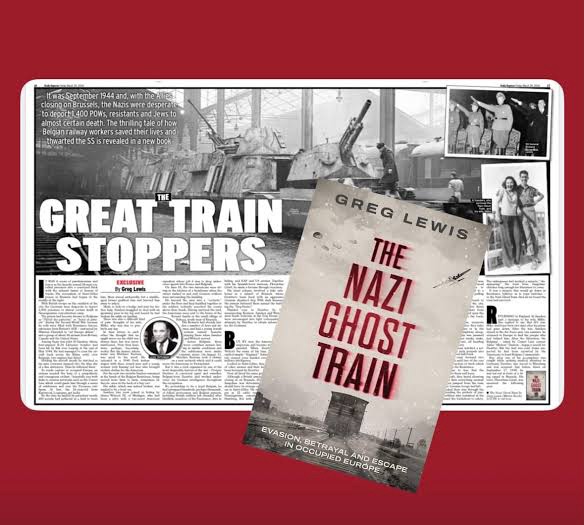
There are a lot of heroes in this book. None of them wore capes, had superpowers, or looked like Rambo. These heroes were young and old men and women, mostly from Belgium, but others were a mix of nationalities, who risked their lives daily, under threat of arrest, torture, imprisonment or death.
I’ve read and reviewed many books on World War II, you can easily search my blog site for more book reviews. I’m always amazed by finding a new story of bravery, sacrifice and risk by ordinary people doing extraordinary things. These stories don’t always have a happy ending, there’s always tragedy and loss, but there’s always courage and triumph of the human spirit.
In these stories, truth is not always joyful, it sometimes reveals human weakness, peril and unspeakable evil. Today, there are forces who would whitewash, rewrite, and pretend that events and bad people didn’t happen. World War II was a devastating event, it forever changed the world, destroyed families, and showed us the depravity of man. Within that event there are tales of remarkable actions that need to be told and preserved. This is one.
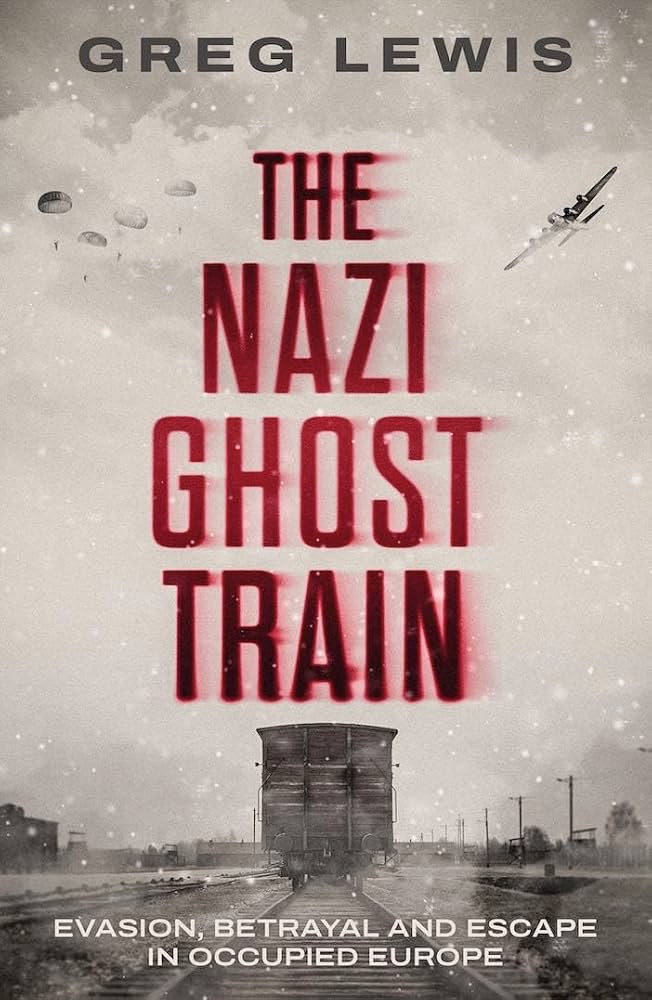
The Nazi Ghost Train, by Greg Lewis (Pegasus Books, June 2, 2026)
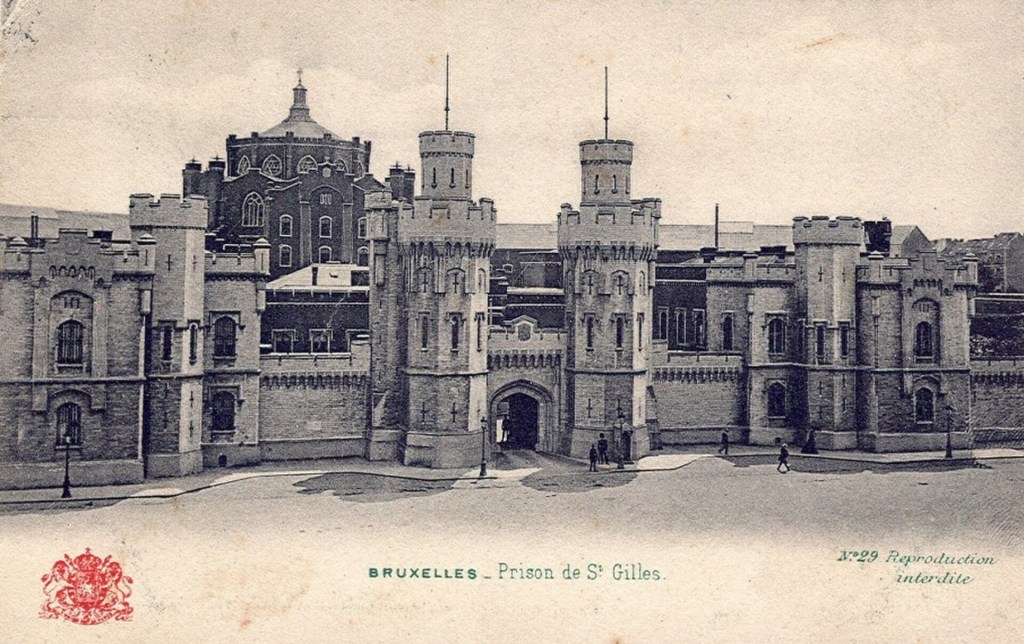
This book tells the story of the heroic efforts of those who secretly battled the Nazis in occupied Belgium, and who rose up to prevent a train of Allied airmen and political prisoners from reaching Germany as the Allied forces fought their way across Europe in the final months of the war. Under the Nazi plan, all Jews, political prisoners and résistants in the prisons of Breendonk, Saint-Gilles and Antwerp were being transferred to concentration camps. Deportations in general fell under the Nacht und Nebel (Night and Fog) decree, “which allowed for people who were suspected of opposing Nazi rule to be arrested and taken into custody without any contact with their families and banished into the prison and concentration camp system.”
Those on this final train were downed Allied airmen, members of the Resistance (and many Belgians who helped them), and captured Allied agents who were sent behind the enemy lines to assist the Resistance and disable Nazi war efforts, and other political prisoners. Officially, there were around 1,400 Saint-Gilles prisoners: Belgians, French, Russians, Americans, Canadians and British, men as well as women.
The book spotlights a number of members of those groups to lend names and personal stories to their roles in the fight. Lewis’s book is carefully researched from first hand accounts, historical records and the national archives of several nations. He ratchets the tension to the very end of the book. Sometimes I read only a few pages at a time, having to step away, and put those stories out of my mind.
The story of the Resistance in Europe covers a vast number of organizations and nationalities. There was a reason these organizations or groups were diverse and semi-independent: the Nazis, with help from collaborators in each occupied country, became increasing proficient at infiltrating resistance groups and arresting anyone who helped in aiding and resistance members. There were active Belgian collaborators who worked for the Nazis, and others who informed, so secrecy was vital. The stories in this book are focused on the plight of the downed airmen and those who helped them, and those who hunted them.
First, a little history
Entering the War, American air crews joined English, Canadian, Australian and other Allied bombing operations based in England. Bomber squadrons flew long missions to bomb targets in Germany (and targets in other countries including Belgium), farther than fighter support could accompany the bombers. After a certain distance, the squadrons were on their own, and susceptible to tracking by radar, anti-aircraft guns and squadrons of fighters. Most of the American flown missions at that time were in the daylight, which added greatly to the risk of being shot down.
Between Britain and America, about 20,000 bombers were destroyed, with a combined 150,000 crewmen lost. More than 35,000 crewmen were captured by German and aligned European countries (figures from the USAF). It is estimated that more than 5,000 Allied airmen (the exact number of American airmen is unknown) were rescued and reached safety.
Each flight seemed to make the likelihood of disaster even greater, and, although still only 20, he was on his tenth mission. The war waged by Bomber Command had made these young men grow up quickly. – a typical American airman
The Belgian Resistance was estimated to have 5 percent of the national population involved in resistance activities (more were casually involved), with about 25 percent of those killed. Belgium declared their neutrality before the war started, but was invaded and occupied starting May 10, 1940.
Author Lewis writes: For each airman there had been dozens of helpers. Many – such as Versavels, the Degands and the Lepoivre family – were now, like (airman) Harris himself, among the civilian prisoners in Saint-Gilles.
And now, back to our story
Many airmen were helped by organized resistance groups, with the assistance of farmers, shopkeepers, priests and others who found or were approached after airmen parachuted or their airplanes crash landed. Some airmen were immediately found by German soldiers or Belgian Nazi collaborators.
Lewis takes us inside the stories of airmen who found sympathetic Belgians who provided them with food, shelter, medical care and forged documents. The airmen were usually moved time and time again to different safe locations, often a step ahead of the Gestapo or the Belgian organization that worked closely with the Nazi occupying force. Airmen could be in hiding for weeks or months, some found their way to Switzerland or neighboring countries on their way to England. Unfortunately, many were eventually found and arrested, and ended up in places like Saint-Gilles prison.
The resistance network was composed of numerous branches, and in time, as more and more Allied crews were shot down, and the Gestapo increased their infiltration of the resistance infrastructure, the ability to keep airmen safe became a higher risk. Lewis also details some of the Belgians who were arrested and imprisoned for helping downed aircrews.
Prosper Dezitter was a shadowy and notorious leader of a group who infiltrated the resistance movement that led to the capture of many airmen and Belgians who aided in their escape. Dezitter was the best known of those who worked with hand-in-hand with the Gestapo. “He had become so important to the Germans that they decided to give him a pass which stated that the bearer could not be arrested or detained whatever the conditions seemed to be.”
Lewis constructs many parallel stories. He takes us through the Allied bombing missions to their downing, their time being sheltered, to their capture, interrogation and imprisonment. Also traced for the stories of Belgians resistance, political prisoners and others who also wind up in Saint-Gilles prison, and eventually aboard the train.
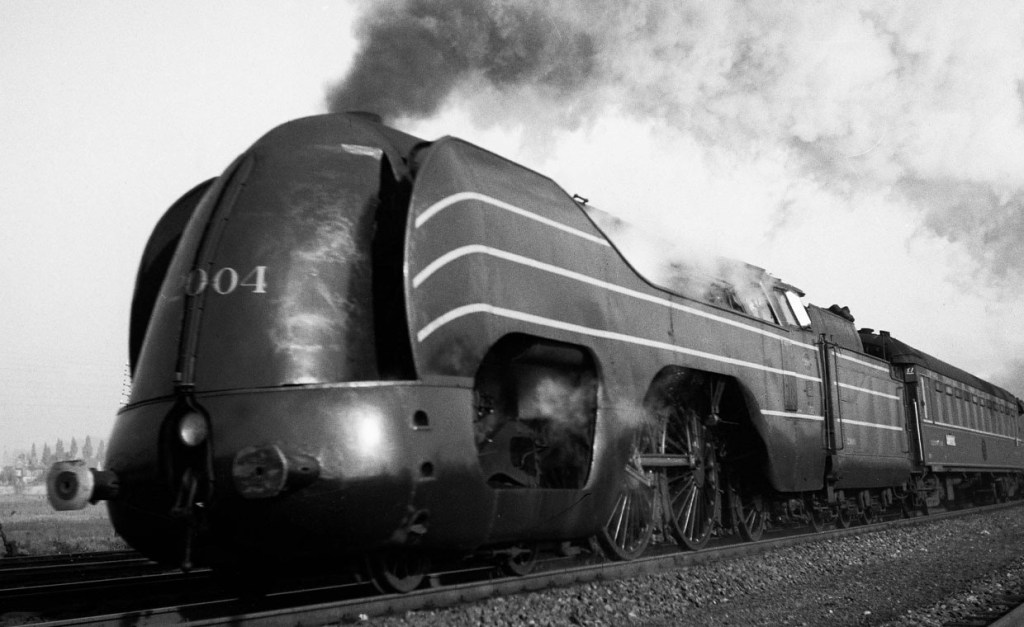
As the Allies approach Brussels, the Nazis are in a panic as they scramble to move east ahead of Allies. The last prison train has 1,400 souls crowed 70-90 per boxcar, to be shipped to concentration camps. In the chaos, prisoners aren’t sure if they will be transported or shot as the Nazis pull out. News of the last prison train is circulated among Belgians, and it becomes the mission of the resistance and many Belgians to stop the train from ever leaving the Brussels area.
The last chapters keep you tense and pinned to the pages. The bravery of those at the railway yard, the chances they took to sabotage locomotives, set forward rail signals to “stop”, intentionally draining engine boiler pressure, making other locomotives unavailable, convincing German officials to uncouple train cars and sending another locomotive far away for water, damaging water station equipment, creating a problem with the arrangement of train cars, convincing railway employees to abandon their work, blocking tracks on the train’s proposed route, cutting phone lines and other acts to cause confusion or delay.
Lewis doesn’t just end the story with the fate of the train, he provides information on all of the main characters in the story, and that is amazing.
“Teenage résistant Jules Buedts, who lived to be 87 thanks to the acts of locomotive driver Verheggen, met the driver once but did not know what to say. In the end, he just said: ‘Thank you for saving my life’ Verheggen told him: ‘It was my duty as a good Belgian.’”
You do not have to be a student of World War II to be enthralled by this story. Lewis has written a deeply researched and organized story, of many brave and heroes, many of which did not survive the war, but helped freedom to survive.





Leave a comment