
Who was J. Robert Oppenheimer? After a three hour cinematic dive into his life, I’m not sure. Certainly, I learned many things about what he did, and concerns that rose from his work, but Christopher Nolan’s film provides only clues and questions.
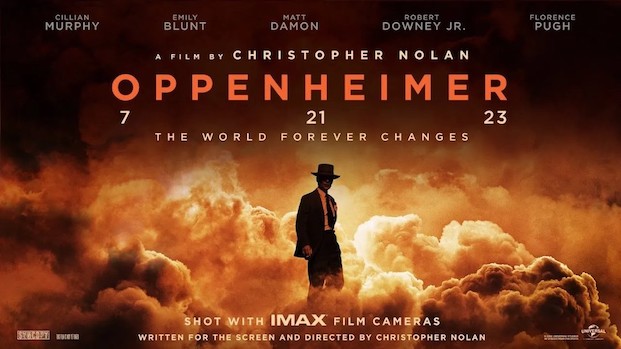
Maybe that question is far too complicated to answer. Perhaps distilling a complicated man in a complex world down into a shot glass of smooth-tasting liquor is not possible, or even Nolan’s intent. Based on the 2005 biography American Prometheus by Kai Bird and Martin J. Sherwin, Nolan wrote the adaptation.
The film covers Oppenheimer’s life from his days as a college student to the Cold War of the 1950s and communist scare. The structure of the film starts in the 1950s, at some sort of hearing, then jumps back to his college days where he begins his career in theoretical physics. The importance of that hearing will not be know until late in the film. There are jump-cuts throughout the film to events and snippets of conversations that piece together the story. Parts of the film, primarily the sections about Lewis Strauss, who was primarily responsible for Oppenheimer losing his security clearance, were done in black & white, while the rest of the film was in color. Losing his security clearance was vital to Oppenheimer’s professional career, but also served as Nolan’s cinematic tool to trace the personal issues and fractures in Oppenheimer’s life.
The Oppenheimer portrayed in the film is a conflicted man; conflict was a big part of his life. He didn’t seem a faithful husband, interested father, had an ego, wasn’t smart about his personal life, underestimated his adversaries, and picked some wrong battles to fight. Yet, it’s the flaws that underscore a person’s character and provide rich texture for defining them.
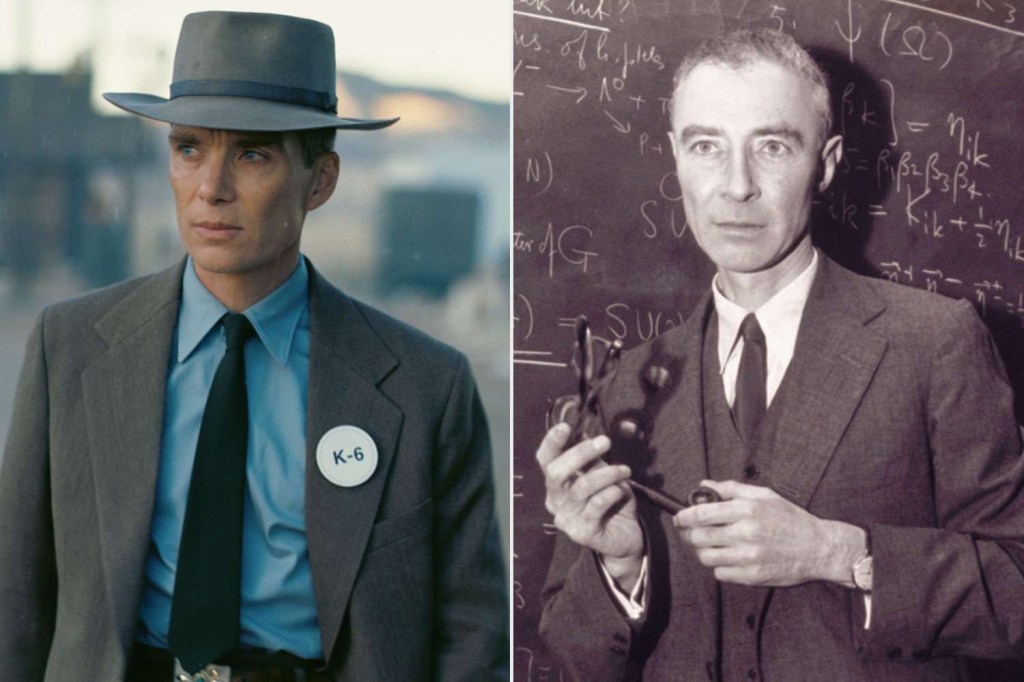
I’ve not studied Oppenheimer’s life, but I was impressed with Cillian Murphy’s portrayal of him. You see a man on screen that is able to take theoretical science and lead a village of scientists and engineers to create history’s greatest weapon and overarching threat to our own existence. Many scientists and educators sounded the alarm about unlocking the potential of the atom. That genie cannot go back in the bottle.
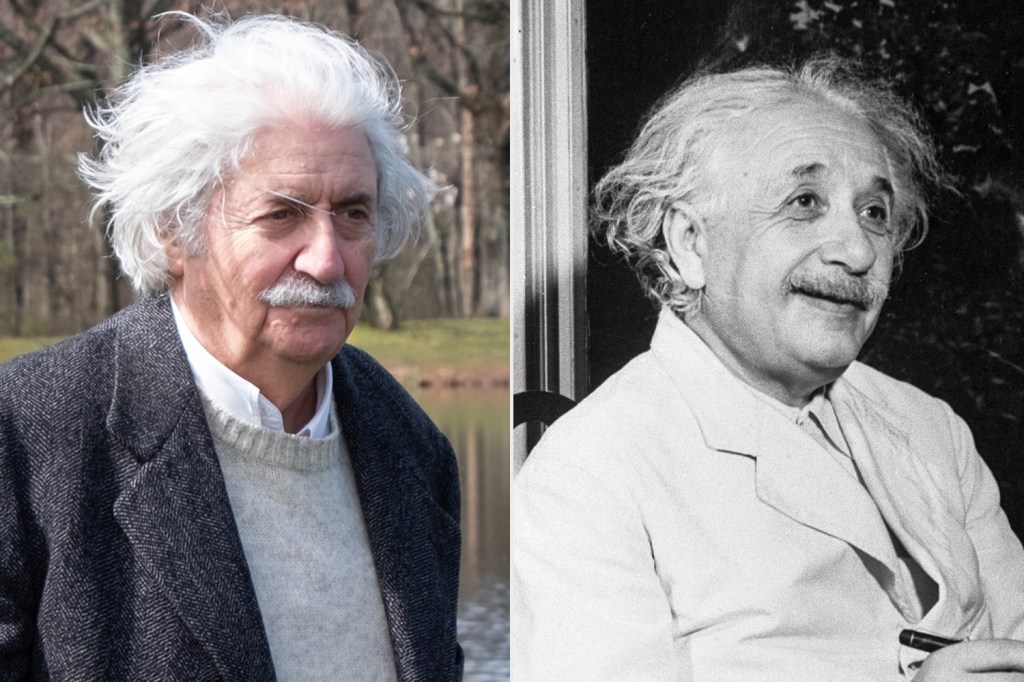
The cast is impressive. In addition to Murphy is Robert Downey, Jr. as Strauss, Emily Blunt as Kitty Oppenheimer, Tom Conti as Albert Einstein, Tony Goldwyn as Gordon Gray, Jason Clarke as Roger Robb, Matthew Modine as Vannevar Bush, Gary Oldman as President Truman, Benny Safdie as Edward Teller, Kenneth Branagh as Niels Bohr, Rami Malek as David Hill, Casey Affleck as Boris Pash, Josh Hartnett as Ernest Lawrence, Florence Pugh as Jean Tatlock, Matt Damon as Gen. Leslie Groves, amongst others.

I have been tempted to see Oppenheimer again, because I know that I missed some of it. The film is like a continuous series of ocean waves crashing over you; so much information and too little focus to drink in all of attention to detail. Actually, if waves are submerging you, drinking is what you don’t want to do. My point is, so much to absorb but the film projector keeps turning.

I come from a time when serious, artsy films came out regularly, the kinds of films that made you work to absorb it, but was worth it. Oppenheimer might not be the highest grossing film of the year (it’s not), or get the critics’ tongues wagging (I don’t want to see that), but it is important that this type of film be made, and seen, preferably in a theater. Why in a theater? Maybe because it takes effort and intent to do so these days. If grown-up films like Oppenheimer are made and attended, more films like it will be made.




 Ticket 2 Ride
Leave a comment