

What does this mean? The opening sequence in the excavation project in Iraq is full of symbols and haunting images. All through the film, the question mark appears over your head – what does mean? How does that person’s reaction or their opaque comment relate to the story? The three main characters’ lives flow together and suddenly collide in at the film’s end. The Exorcist is full of surprises and mystery.
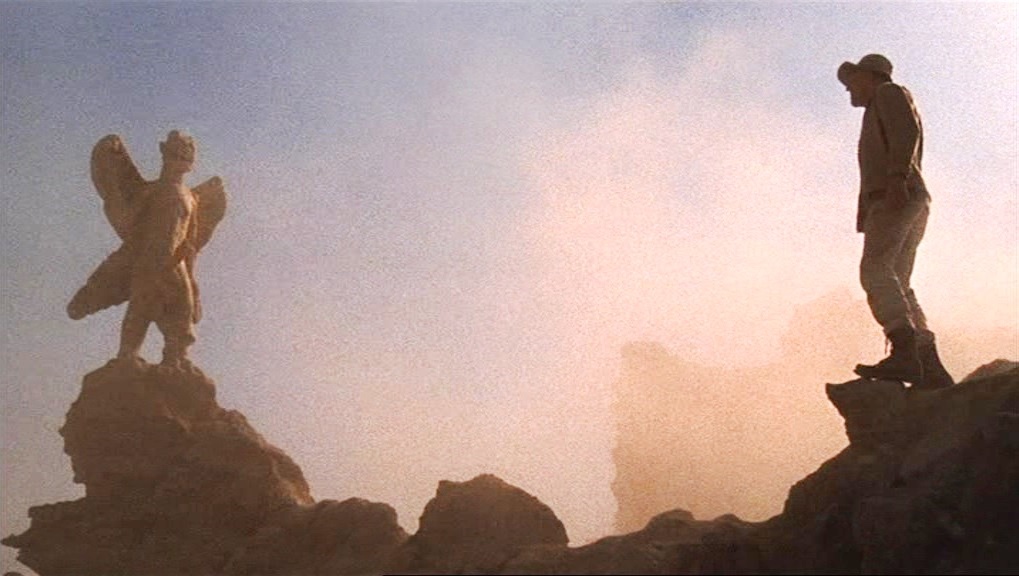
I was a sophomore in high school when The Exorcist was released. It would be a few years before I actually saw the film, but it was more than a popular movie, it was a cultural phenomenon. I’ve seen the film a few times in 50 years, including what is caller “The version you’ve never seen before,” which includes about 10 extra minutes not in the original release. Included is a scene at the end that lifts the mood – just a tiny bit. I dug out my DVD copy of this version and watched it again.
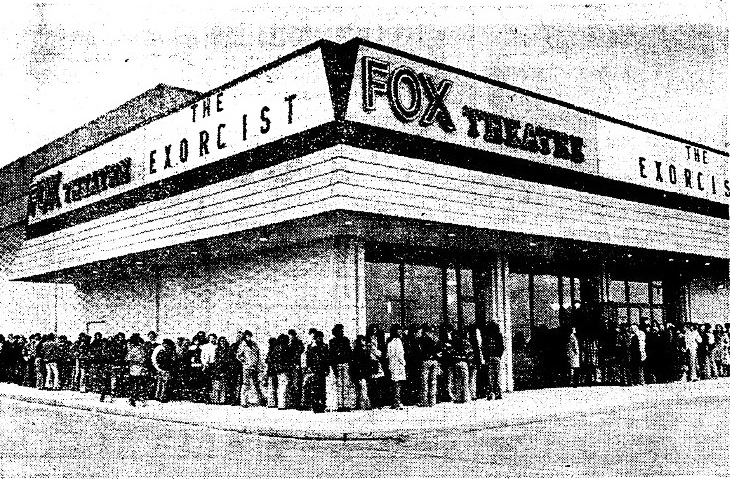
Ticket buyers lined-up around the block to be scared at this horror-mystery. What Night of the Living Dead did for vampire movies, and The Godfather did for crime movies, The Exorcist did for supernatural movies. I remember Rosemary’s Baby was scary, but The Exorcist was frightening.
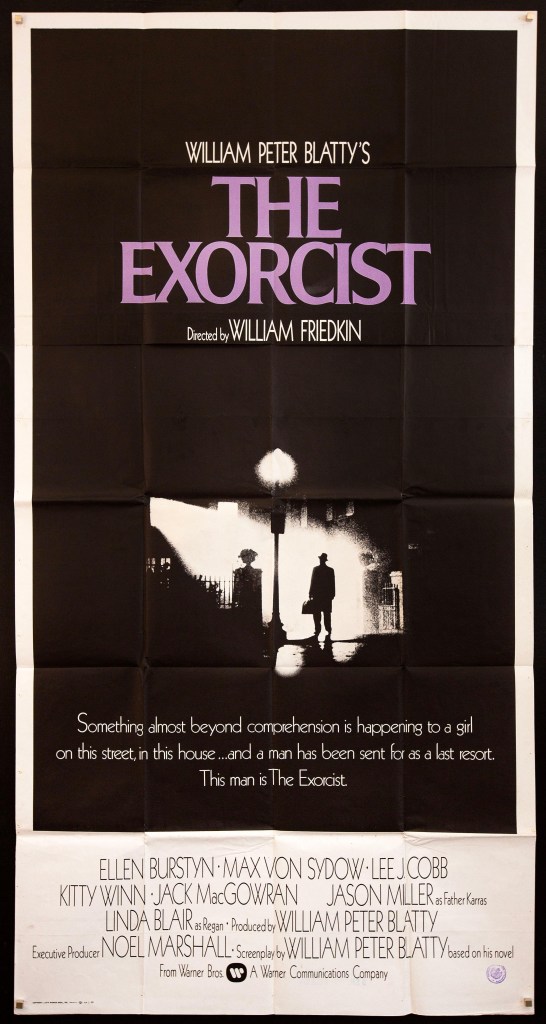
The movie opened big and just got bigger. Decades before social media and the internet, Warner Bros. found highly effective means of mass marketing and getting the movie talked about and part of the public conversation. To aid in injecting a scare, the Mike Oldfield music used as the film theme was a radio hit. The opening musical notes were as ominous as the John Williams notes for Jaws.
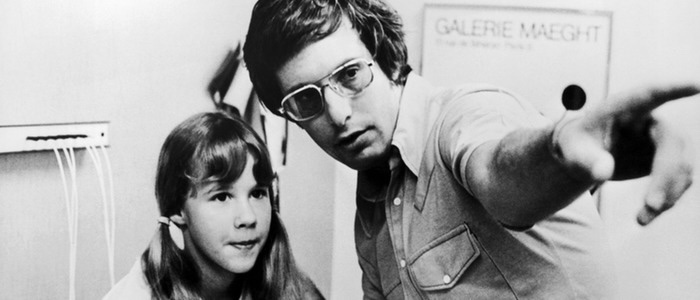
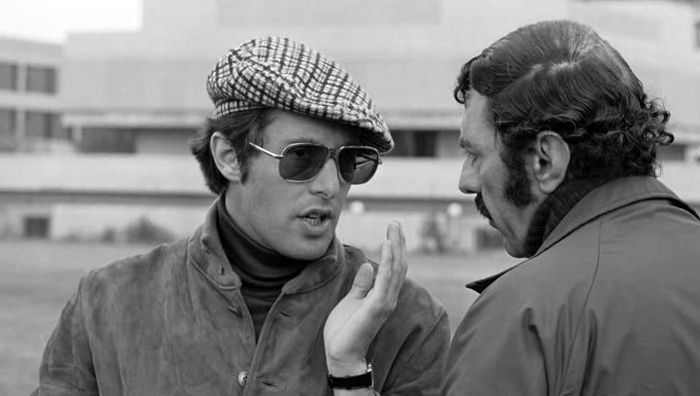
The Exorcist was directed by a young William Friedkin, who had recently struck gold two years earlier with The French Connection. Friedkin passed away back on August 7, 2023. Friedkin and writer/producer William Peter Blatty, had career highs with The Exorcist. Blatty wrote the novel the film is based, and held onto the story rights, which would become valuable as sequels, prequels, a television series and a limited series for streaming, would follow. The Exorcist would inspire horror films in general and especially the demonic genre.
To mark the 50 year anniversary of the film, Nat Segaloff was written The Exorcist Legacy: 50 Years of Fear (Citadel Press, 2023), basically anything you’d want to know about the film and its impact.

The idea behind the film originated with Blatty, a screenwriter of Blake Edwards comedies, who got interested in the subject of exorcism and a story of demonic possession from the 1949. A fourteen year old boy from a small town in Maryland was reportedly released from the Devil’s hold by a Catholic priest. Over the next few months, Ronald E. Hunkeler was observed having marks appearing on his body, strange sounds, moving furniture and sudden temperature changes. The boy seemed to recover and live a normal life. Notes were recorded by one of the priests in attendance, but they deemed confidential and never released. Blatty was able to talk with that priest but was unable to locate anyone else from that event. That seemed just enough to send Blatty forward, using the basic threads of that case to invent the story that would become his horror-mystery.
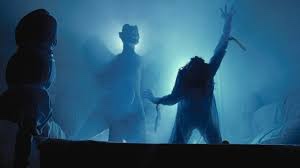
“It’s an argument for God,” Blatty told The Washingtonian. “I intended it to be an apostolic work, to help people in their faith. Because I thoroughly believed in the authenticity and validity of that particular event.” He had struggled at times with his own faith. He attended Georgetown University in Washington DC, where The Exorcist takes place. The biggest influences were the Jesuits at the university, and his mother’s strong Catholic faith. His mother is the basis for Father Karris’ mother in the film.
Publishers were uninterested in his book, although he was able to sign with Bantam Books, which published paperbacks. Bantam found a publishing house for hardcover printing. Blatty began shopping around the story to studios, prior to publication, without success. Eventually, producer Paul Monash, who had a huge hit with Butch Cassidy and the Sundance Kid, took an option on the rights, and then sold them to Warner Bros. Potential film directors were sought, but Blatty wanted Friedkin, even before The French Connection hit big. Blatty held out for Friedkin, then suddenly, the book took off after a slow start, and The French Connection became the talk of Hollywood.
Segaloff provides interviews with the major players to hear directly from them about the evolution of the book and film. If you are a fan of this film or of film history in general, this book has a lot to offer. The last half of the book focuses on the film and television projects that sprang from The Exorcist. I admit that I haven’t seen any of them, spin-offs are not my cup of tea (with minor exception). Segaloff also examines the differences between Blatty’s book and the original film, and the various versions of the film through the years. For serious fans of the film, this is required reading. Blatty (who died in 2017), Friedkin and studio execs disagreed about the final edits to the release. Blatty and Friedkin’s relationship halted for a number of years over this disagreement, before agreeing on a restored version and working together on assembling unreleased scenes. It’s not unusual in the film world for various versions of a film to emerge.
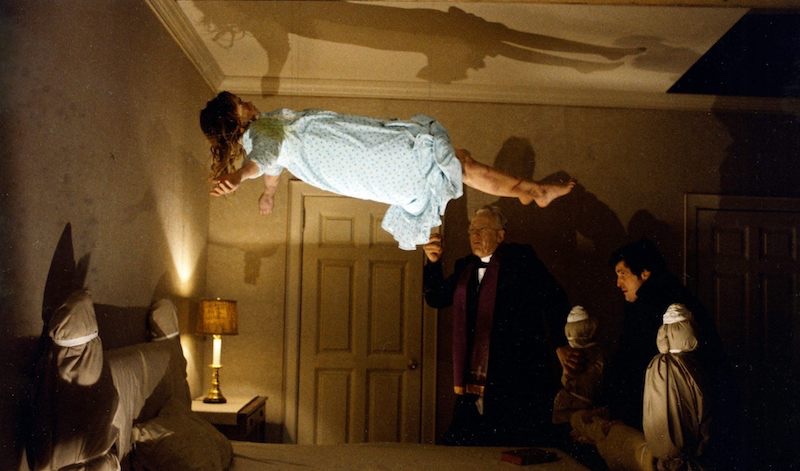
Segaloff also does a great job of tracing the technical challenges of the visuals and sound. He notes that there was only one special effect not an original image in the released film. No CGI or digital magic; everything (with the one exception) was shot on camera with the aid of prosthetics, a life-sized doll of Regan, lighting, power devices to shake furniture and the set, squinting pea soup and other effects. The sound of the demon was supplied by veteran actress Mercedes McCambridge. Her voice and the eerie voices and strange sounds were created electronically with the available gadgets of the day.
Friedkin wanted composer Bernard Herrmann, the composer of many Hitchcock films, but he declined. Lalo Schifrin was suggested and wrote a score that Friedkin angrily threw out. Besides Oldfield’s “Tubular Bells,” Jack Nitsche contributed some incidental music and some pieces of classical and experimental music was licensed. The soundtrack is quite eclectic that compliments the unnerving tension, but there is only about 17 minutes of music in the film.
Besides Ellen Burstyn as Chris MacNeil, Regan’s actress mom, Max von Sydow as Father Merrin, the historian and lead exorcist, Jason Miller as Father Karras, the conflicted psychiatrist who assists with the exorcism, newcomer Linda Blair as Regan, Lee J. Cobb as the Columbo-like police Lt. Kinderman, Kitty Winn as Sharon, Chris’ secretary, and several actual priests in supporting roles. Blatty hired a number priests and medical professionals as technical advisors to provide authenticity. Blatty found some great day players for small, but important character roles.
Blatty and Friedkin hired top professionals for the production team. Owen Roizman, nominated for an Academy Award for his cinematography five times including for The Exorcist. Editor Evan Lottman and his team were also nominated for an Academy Award as were art directors Bill Malley and Jerry Wunderlich. Sound editors Robert Knudson and Christopher Newman picked up statues for their work on The Exorcist. A total of ten Oscar nominations and two wins.
Although the original production budget doubled due to illnesses, production delays, injuries, a fire, and underestimated filming challenges, The Exorcist has pulled in an estimated 20 times the cost. Paul Monash, who sold the rights to Warner Bros., retained five percent of the profits. Smart guy.
The Exorcist is an old-fashioned horror film. The horror film landscape of today bares no similarities, but that’s a different blog. If you want to be scared in the dark, The Exorcist will still do it. Then realize you might have been sitting in the theater when it was released 50 years ago – that’s even scarier.



 Ticket 2 Ride
Leave a comment