

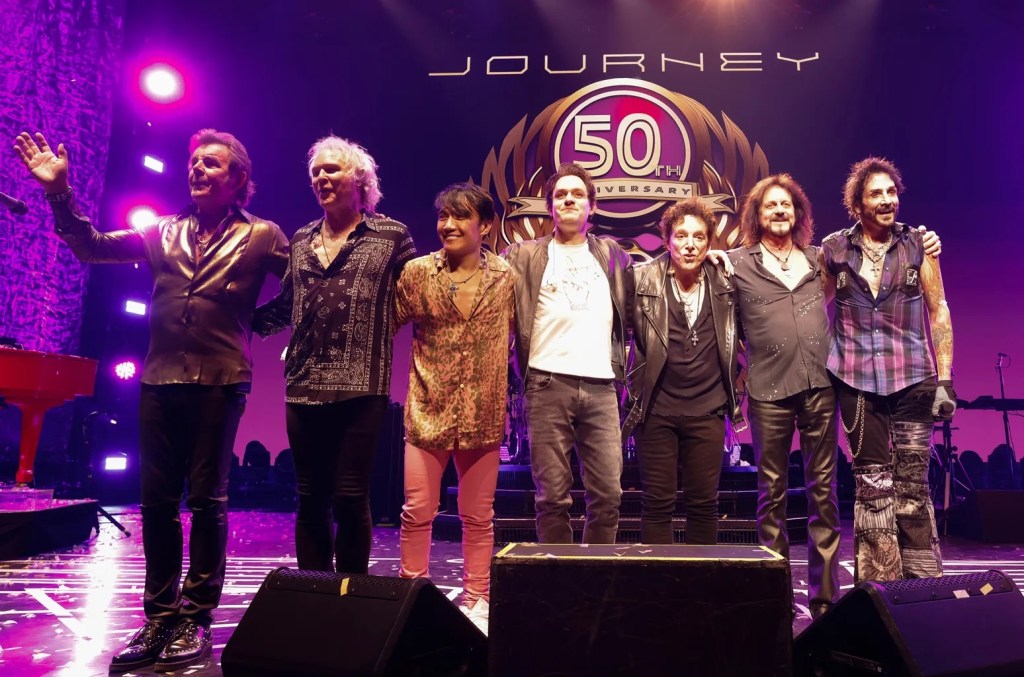
Journey has been around for 50 years now. I’ve seen Journey a few times in concert through the years, but I never witnessed the Steve Perry or Gregg Rolie versions. They were at their peak in from the late 1970s to mid 1980s, filling arenas and pushing anthems up the charts.
I wanted to delve into the early Journey before the rock anthems and massive stadium tours. My focus was initially on the music, but it’s difficult to ignore the band dynamics that caused so much behind the scenes turmoil.
The past several years have been a train wreck for the band with infighting, lawsuits and several members kicked out of the band from an attempted corporate coup. The story of Journey includes numerous firings, members forced out and reworking of corporate ownership stakes. The first firing involved drummer Dunbar, who according to Journey biographer David Hamilton Golland, had to sue the band to get a fair settlement because the band’s manager made various transactions to devalue the corporate company (Dunbar owned an equal share) that owned Journey. Complicated, because the brand grew wealthy in revenue and assets. The next to exit would be Rolie, then Perry, and then others including original bassist Valory. The internal story of the band is almost as fascinating as the music.
Golland’s book, Livin’ Just to Find Emotion: Journey and the Story of American Rock (Rowman & Littlefield, 2024), is a deeply interesting read. Golland is a historian and dean of the School of Humanities and Social Services at Monmouth University, who writes about public policy and political history, and on the side dabbles in music writing.

The Steve Perry/Gregg Rolie version of Journey is the music that I remember, but there was plenty of decent music in the early years.
Let’s look at the era up through keyboardist Gregg Rolie leaving the band.
The original version of the band were Gregg Rolie, Neal Schon, Ross Valory and Aynsley Dunbar, along with this-album-only rhythm guitarist George Tickner. The Journey debut album was released in April 1975.
What you got from Journey was the heavy, instrumental, progressive-rock influenced sound of the day, a-la Styx, Kansas, Jethro Tull. Rolie handled most of the vocals, but this was a music-first, vocals later focused band, like Santana, where Rolie and Schon came from. The more pop-sounding, layered vocals would be a few albums down the road. I’ve heard this version of the band also compared to the Mahavishnu Orchestra, because of the jazzier sound at times. I found it interesting that Roy Halee produced this first album, as Halee was notable for his work with Simon & Garfunkel, together and solo. Not a likely pairing. Assigned by Columbia Records, Halee was a studio veteran for a group still looking for their sound. Halee and Journey didn’t exactly mesh; this partnership lasted exactly one album.
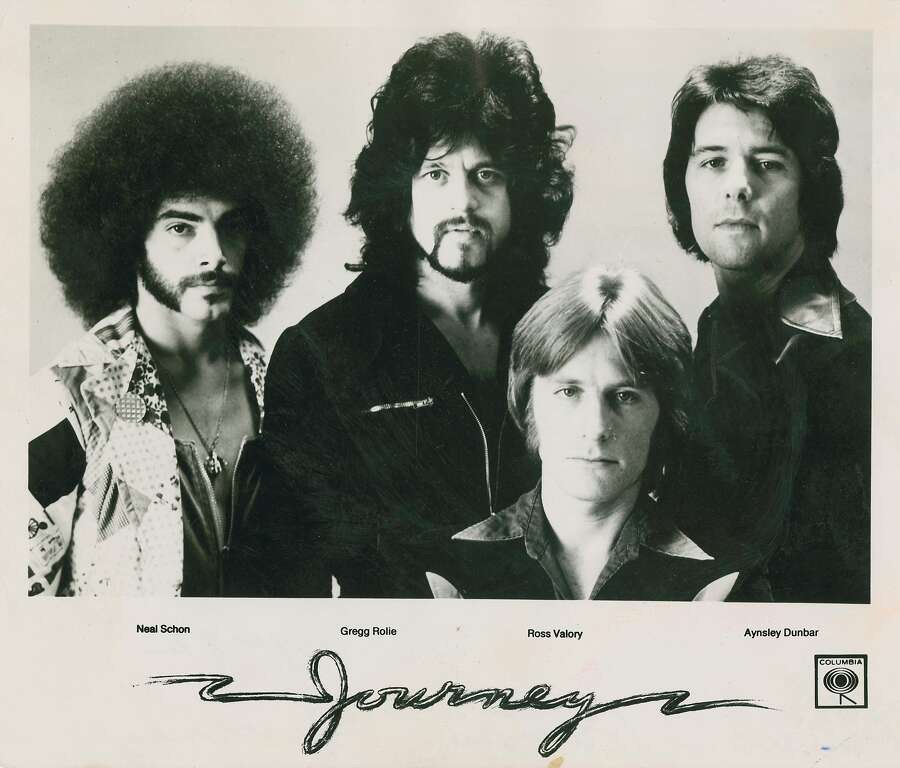
The other key player in Journey was manager “Herbie” Herbert who is given credit for assembling Journey and proving the business strategy and savvy to make the group wealthy. Instead of receiving a percentage, like most managers, he was an equal partner in the corporate entity that owns the Journey brand. Sweet deal.
Highlights of the debut album:

Most of the songs on their debut album are five or six minutes long. Even in their own album notes, the word “Santana” is present in the rock heavy and thunderous instrumental barrage. Vocal harmonies? Not so much. Early Journey could be Grand Funk Railroad, T. Rex, Deep Purple, Argent, Edgar Winter or other contemporary bands.
“Of a Lifetime” is a standout track. Minimal vocals, just a powerful rock piece of music. Written by Tickner, Rolie and Schon. Great guitar work. I wish they were doing more of this now.
“Kohoutek” is an instrumental, written by Schon and Rolie. Jazz-fusion, Jeff Beck territory. Dunbar is all over this album, his drumming tears it up. “Topaz” a Tickner instrumental, has some groovy riffs along with Rolie keyboard textures. This album had its moments, great musicianship and some funky grooves. This was not top 40 radio band – it would take awhile. “To Play Some Music” was not a very good offering as a single.

Their second album, Look into the Future, was self-produced, with help from Glen Kolotkin. “I’m Gonna Leave You” is a heavy rocker. “On a Saturday Night” was a better attempt as a single. The band made more ti reign-in the jazz-fusion elements and the album had no instrumentals this time. They covered The Beatles’ “It’s All Too Much” which is an okay effect. Tickner wrote a couple of songs but doesn’t play on their debut album, now a med student, so Journey was now a quartet. “Anyway” is a very good bluesy Bad Company type moody rocker by Rolie. “You’re on Your Own” sounds a bit like Badfinger, a noisy rocker. “Midnight Dreamer” has some nice noodling, but is very unfocused.
Was this a better album than their debut? It was more focused by turning their experimentation into slicker, hard rock. I liked some of the rough edges on the first album. Clearly this band was a work-in-progress.
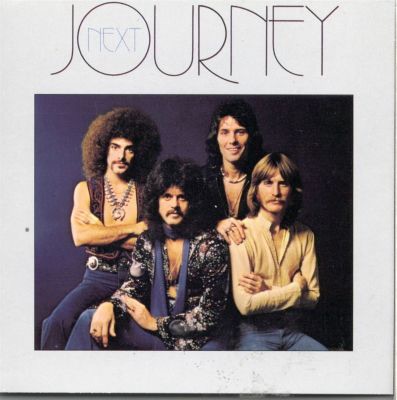
The third album was also self-produced and the last with Rolie as the primary vocalist. “Spaceman” was a pretty good single, it was a step in the direction toward more commercial fare. “Nickel & Dime”, an instrumental by Rolie, Schon, Tickner and Vallory shows what Journey does best – tough, jazz-flavored rock, with plenty of musical fireworks.
The album seems divided between slow bluesy rockers and fast, jazzy rockers. The songs are okay, the playing very good, but it’s hard to distinguish a lot of forward movement.
Interestingly, drummer Dunbar is credited with contributing lyrics on five of the eight songs. Schon steps out to sing lead on two songs that he wrote.
“All for You” begins the corner-turning for Journey. A song recorded with singer Robert Fleischman, who was briefly a member of the band during the transition that was starting. Fleischman is credited with Rolie and Schon on the song, which is more of a traditional rock format, and leans more heavily on vocals.
An unreleased song, “Cookie Duster” is more like jazz-fusion than rock. It’s a blistering instrumental.
Steve Perry Joins Journey
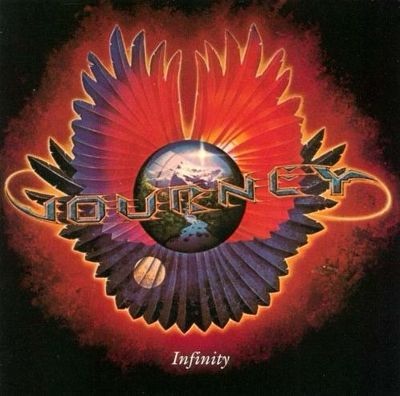
With Steve Perry, Journey found not only their voice, but also a critical piece of their song-craft. Perry as a lyricist and musical force helped shape the power of Journey’s musicianship with a strong sense of melody and vocal dexterity that put Journey on radio playlists. With Perry aboard, Journey’s music was ready for the arenas.
Infinity would sell three million copies in the U.S. alone, a huge leap from their first three albums.
What was different? These three songs say it all:
“Feelin’ That Way” / “Anytime”
“Lights”
Roy Thomas Baker became the producer for the next several albums. That was pivotal to Journey’s sound and song structure.
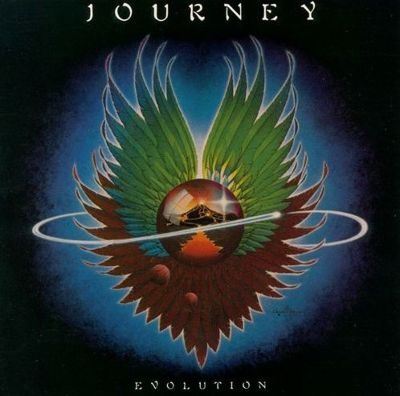
Evolution was the last album with Gregg Rolie. Steve Smith joined as the new drummer and Perry was a commanding presence onstage and in the writing process. He co-wrote ten of eleven songs. Evolution was the band’s highest charting album to that point and again went triple platinum.
Journey was on its way. Jonathan Cain would replace Rolie and remains in the band, although he indicated he was leaving after the next tour. Perry of course left and occasionally releases music.
Longtime bassist Ross Valory and drummer Steve Smith were ousted in 2020 in a bizarre corporate struggle. Currently, Journey consists of Schon, Cain, Deen Castronovo, Arnel Pineda, Jason Derlatka and Todd Jensen.
Journey received a star on the Hollywood Walk of Fame in 2005. Current and former band members were on hand.

The future of Journey? As long as Schon wants play, there’s Journey.



 Ticket 2 Ride
Leave a reply to greenpete58 Cancel reply