
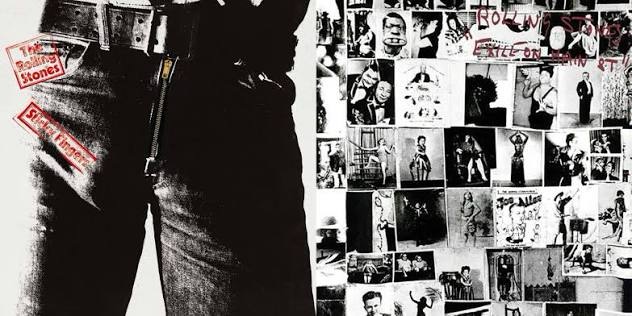
Two more Stones albums from their classic period. Looking back, what has been their impact?
Sticky Fingers and Exile are quite similar in style, written and recorded a year apart, however one had the Muscle Shoals swampy-R&B influence and the other was mostly recorded in the Mediterranean breeze of south of France.
These albums have a darkness that made the Stones mysterious and dangerous. It might have drugs, Altamont, hard lifestyle, the death of Brian Jones, lyrical subject matter or a combination of things. Their image was the flip-side of the smartly dressed and clean-cut 1960s pop groups, because the Stones never pretended to be that. Beggar’s Banquet set the course, these albums left no doubt.
Sticky Fingers (1971)
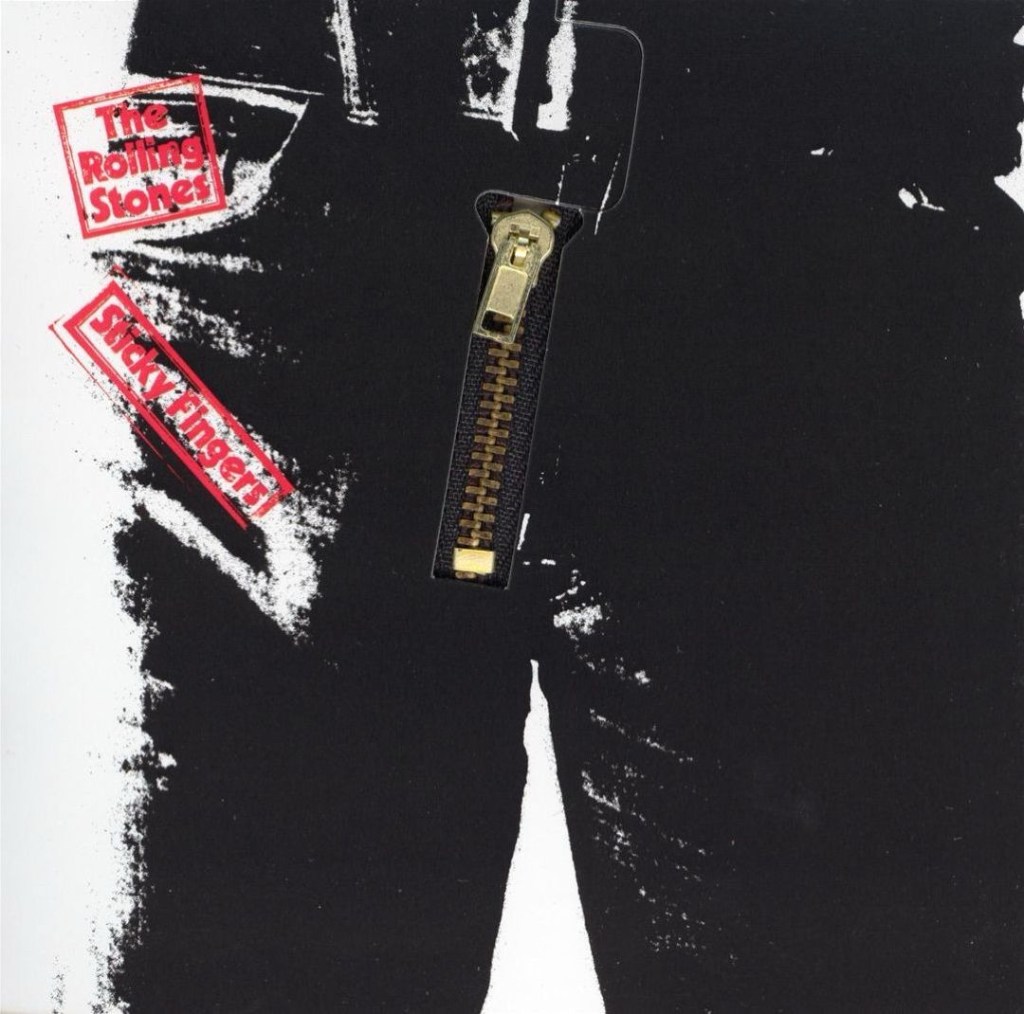
Partially recorded at Muscle Shoals Sound in Alabama, London and Stargroves (Mick Jagger’s home studio). Sessions started in 1969 and continued until late 1970. The album cover, designed by Andy Warhol, showed the famous crotch photo and a real working zipper. The album introduced the Stones’ lips and tongue logo.
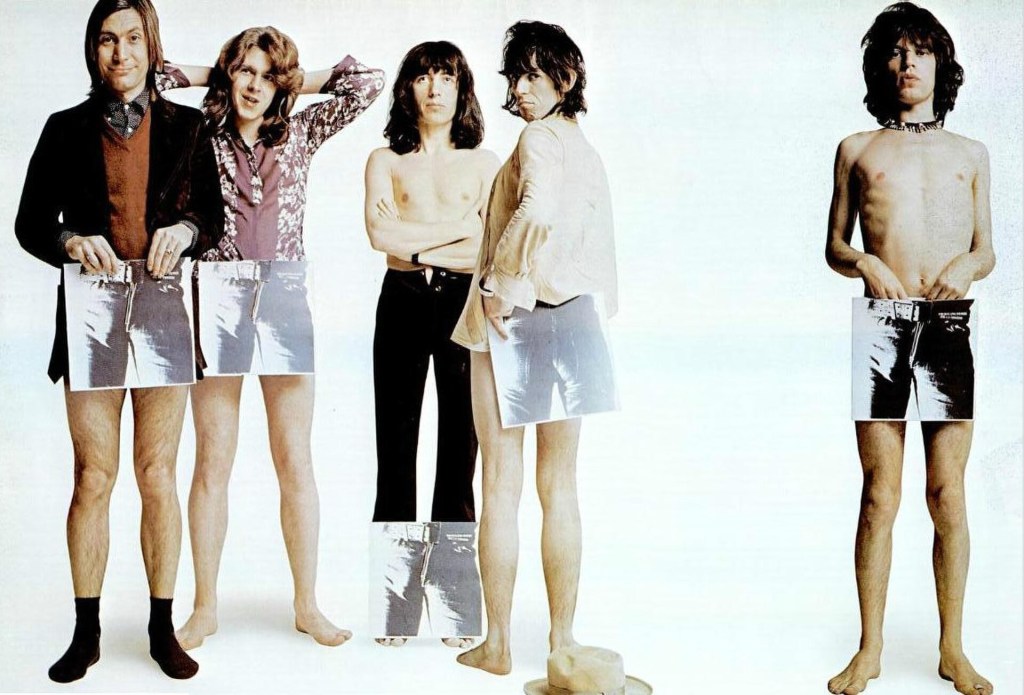
Jimmy Miller – producer
Glyn Johns – engineer
Andy Johns – engineer
Chris Kimsey – engineer
Jimmy Johnson – engineer
- “Brown Sugar” 3:48 – This song hasn’t aged well. The music is equal to anything the Stones ever recorded. The lyrics might have been edgy in 1971, now it’s just creepy. The Stones no longer play it in concert.
- “Sway” 3:50 – Great riff song, killer guitars and Nicky Hopkins piano.
- “Wild Horses” 5:42 – A great ballad, the Stones could always incorporate acoustic instruments into a hard-hitting song.
- “Can’t You Hear Me Knocking” 7:14 – Mick Taylor makes this song, his solo and interplay with Richards is amazing. Another instance where Taylor should have been given a co-writing credit.
- “You Gotta Move”
Fred McDowell-Gary Davis
2:32 – Never a fan of this blues song. It’s played well with slide guitar, just not my cup of tea. - “Bitch” 3:38 – Another amazing riff song, the groove glides across the room. As usual, the horns by Keys and Price are blistering.
- “I Got the Blues” 3:54 – Another slow blues. Wikipedia said it well: It is a slow-paced, bluesy song featuring languid guitars with heavy blues and soul influences. Billy Preston plays a nasty organ. Price and Keys on the horns.
- “Sister Morphine”
Jagger-Richards-Marianne Faithfull 5:31 – Ry Cooder provides a nasty electric slide guitar. Sadly, Faithfull had to fight to get credit as a co-writer. Powerful song, original version by Faithfull banned by radio. - “Dead Flowers” 4:03 – Country rocker. Again, great slide guitar, this time by both Richards and Taylor.
- “Moonlight Mile” 5:56 – A quiet song grows powerful wings and soars. I haven’t heard this song in years. It’s certainly grander and more exotic than I recall.
This is a remarkable record. The distance between Let It Bleed and Sticky Fingers is huge in my opinion. Why? This album has a vibe that marks the 1970s, an urban swagger that rocks and sets a direction soul infused rock that would be popular in that period. At the same time, the Stones bring the blues and roots sounds into the 70s without feeling like they are repeating themselves from Beggar’s Banquet.
The trip to Muscle Shoals is evident. This record has an American sounding vibe, especially with the horns.
Exile On Main Street (1972)
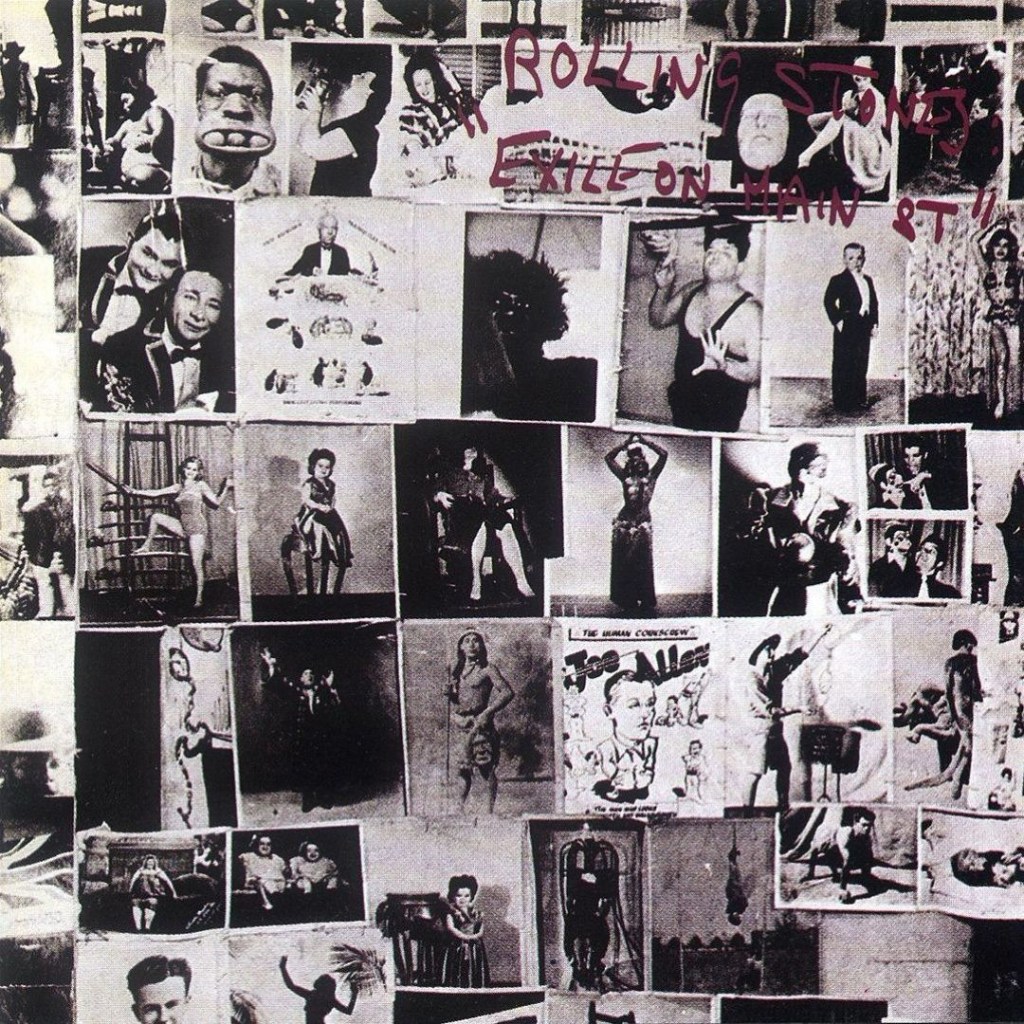
Principally recorded at Villa Nellcôte in southern France, as the Stones became tax exiles. Also recorded in Los Angeles and at Stargroves (Mick Jagger’s home studio). Produced by Jimmy Miller and engineered by Andy Johns.

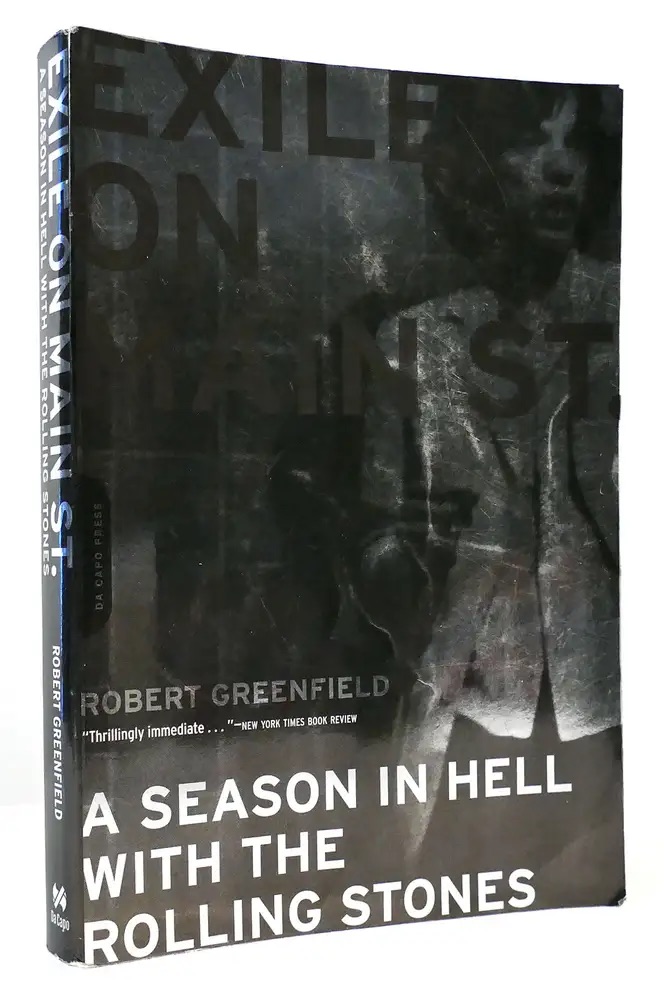
The story of the making of this album is enough to fill a book. Exile on Main St.: A Season in Hell with the Rolling Stones by Robert Greenfield is a must read for Stones fans. I recently re-read it after listening to this album. I’ll just give you a glimpse into the chaos, debauchory, extravagance and insanity that took place that summer. You should read the book for yourself to truly understand what an insane idea it was for an unsupervised group of musicians and their hanger-ons to try and record an album with an unlimited amount of money, hard drugs and sexual mischief at hand.
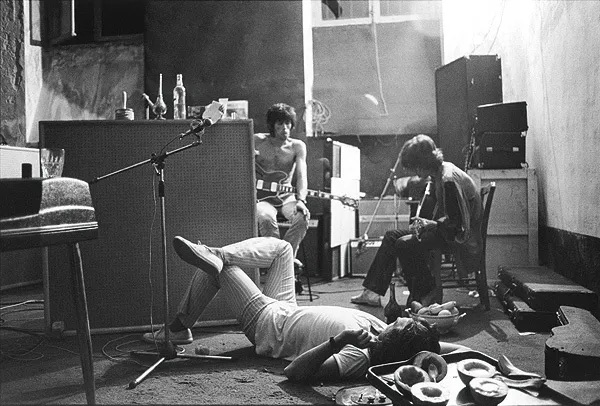
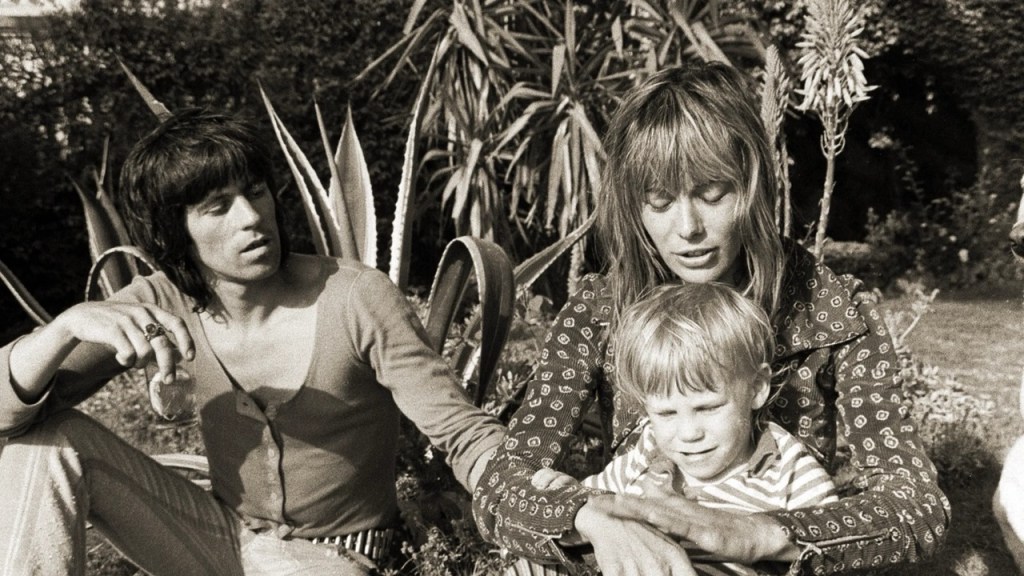
The Stones had to leave England for tax reasons, renting villas and houses in the south of France seemed like a great idea. Spending a month driving around looking for a place to record proved fruitless, so they decided to park their mobile recording truck at Nellcôte where Richards and Anita Pallenberg were camped. Not the ideal location given the problems with echo, heat and dampness, a non-functioning intercom system and distance from where the others were staying. Weeks of fruitless jamming failed to produce any songs. Richards had a raging heroin addiction which made him undependable and unfocused. Jagger married Bianca during the recording of the album so he took chunks of time away. By the end of the stay there, guitarist Mick Taylor, sax player Bobby Keyes, record company president Marshall Chess, Producer Jimmy Miller and engineer Andy Johns also had serious drug problems. Girlfriends were sleeping with other members of the extended party. Pallenberg was pregnant and she was afraid Jagger was the father (he wasn’t), and Taylor’s girlfriend may have been seduced by Jagger as well. Bianca was already pregnant. Richards’ drug supplier had supplied the drugs that would kill Jim Morrison, who was living in Paris, and supplied drugs that caused the death of the heir Jean Paul Getty Jr.’s wife was also in Paris. Nellcôte was broken into and prized guitars and saxophones were stolen, likely by the drug connection over unpaid deliveries. Richards feared for the safety of his son. Richards and others were also afraid of Nellcôte being raided by French police so they practiced hiding of the drugs. Richards and Pallenberg would have legal problems that would have to be resolved before the Stones could tour America. It’s implied that a lot of money changed hands in France and America to get Richards and Pallenberg off the hook with a slap on the wrist and to get the necessary clearance to tour America in 1972 and have the highest grossing concert tour to date. In the end, the Stones, who were also negotiating with Allen Klein to end their management contract, spend an enormous amount of money in France, and whatever money they had hoped to save as tax exiles, was small compared to what the adventure had cost them. The Stones spent a lot, but found ways to make even more. Exile on Main Street, almost called Tropical Disease, should have been titled Adventures in Sex, Drugs & Rock’n’Roll, it was definitely that.
- “Rocks Off” 4:31 – A rousing Stones rocker, a great song that never got the credit it deserves.
- “Rip This Joint” 2:22 – Fast and frenetic. Just try to keep up.
- “Shake Your Hips” Slim Harpo 2:59 – Bluesy strutting song. This will get you on your feet.
- “Casino Boogie” 3:33 – Mid tempo, bluesy rocker, great Bobby Keys sax, Taylor slide guitar and Nicky Hopkins electric piano.
- “Tumbling Dice” 3:45 – A rock classic.
- “Sweet Virginia” 4:27 – Country rock, very acoustic with harp, sax and a lot of picking. Very down home.
- “Torn and Frayed” 4:17 – For just an album track, a pretty good song. The guitar work is stellar. On a less Stones album, this would be single.
- “Sweet Black Angel” 2:54 – A country-blues ballad with a West Indian rhythm. About Angela Davis.
- “Loving Cup” 4:25 – Another fine song with a great groove. The guitar work is solid, along with the piano and horns.
- “Happy” 3:04 – The best song Richards ever sang, and it came to him suddenly, and was recorded without Jagger, Wyman, Taylor or Watts.
- “Turd on the Run” 2:36 – A very fast, pounding bluesy shuffle.
- “Ventilator Blues”
Jagger-Richards-Mick Taylor
3:24 – Slow blues song. - “I Just Want to See His Face” 2:52 – A strange song, it doesn’t sound anything like a Stones song. Jagger said it started as a riff jam with Charlie Watts and Taylor.
- “Let It Loose” 5:16 – A bluesy gospel ballad. Hopkins piano is prominent, along with Richards playing a guitar through a Leslie speaker.
- “All Down the Line” 3:49 – Great Richards riff.
- “Stop Breaking Down” Robert Johnson 4:34 – Nice slide guitar. Bluesy piano by Ian Stewart.
- “Shine a Light” 4:14 – A soulful, gospel fueled rocker.
- “Soul Survivor” 3:49 – Another great Stones riff song, perfect for an end to this album.
Afterward, the band landed in L.A. where they finished and mixed the album. Initial reviews were mixed, but it sold well and led to the legendary Stones tour of America. It’s actually amazing that an album came out of the misadventure of the recording in France. The album holds up well. Subsequent rereleases have added bonus tracks and cleaned up the sound.







Leave a Reply