
The return of Friday Five. This week, producer Todd Rundgren is in the spotlight. Five artists (other than himself) that he produced.
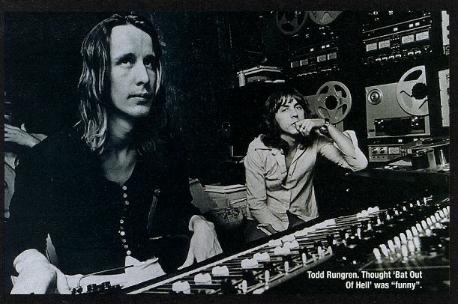
Meatloaf – Remember Bat Out of Hell (1977)? Forty-three million albums sold. Four years in the making, Rundgren was there during the recording and mixing. Finding a record company to sign Meatloaf and the album was a major part of the four years. During recording, it was Rundgren that paid the recording bills. Jim Steinman wrote the songs, and Meatloaf was to bring them to life, while Rundgren navigated the sessions, no easy feat. Meatloaf initially didn’t warm to Rundgren, but did during the course of recording and marveled at Rundgren being able to formulate and play a long guitar solo.
Rundgren said in an interview: “This is a spoof of Bruce Springsteen, and that’s why I’m doing it.’ And the rest, as they say, is history. I didn’t care if it succeeded or not; I just wanted to make fun of Bruce Springsteen.”
The Tubes – The Tubes are an interesting band to produce. Rundgren produced two of their albums, which not as successful as hoped; while David Foster, hardly a rocker, produced two slickly-crafted albums that were very successful. Foster barely used the band on his produced albums, while Rundgren sought to highlight the band’s quirkiness and their musicality. Rundgren’s two produced albums: Remote Control and Love Bomb, had mixed reviews and weren’t hits. Personally, I like them all, but feel that Love Bomb was not given a fair shot by Capitol Records, who let it die on the charts with minimal promotion.
Badfinger – Hired by Apple Records to work with Badfinger on what would be their 1971 album Straight Up, after Geoff Emerick and George Harrison had each produced songs for the album. Emerick had produced an entire album worth of songs that were rejected by Capitol Records. Harrison worked on several songs before leaving to work on the Concert for Bangladesh. Rundgren took over, recorded several tracks and the band recorded several new songs. His relationship with the band soured and was reportedly felt by both sides. The resulting album, credited to both Rundgren and Harrison as producers. Straight Up is generally considered Bandfinger’s best album.
XTC – Sometimes a band and producer don’t see eye to eye. This pairing should have worked. The resulting album, Skylarking (1986), is considered a gem. Rundgren was able to get the band’s unique style onto a recording that retained the nuisances of the songs while giving them a commercial push. The experience is still one that band and producer still talk about. Most of the head-butting was between guitarist/songwriter Andy Partridge and Rundgren.
Rundren’s hands-on approach including song selection and order, immediately angered Partridge. Told by the record label to pick an American producer, Rundgren was selected. “Basically, I was being told to shut up and do as I was told, and stop being quirky and English,” Partridge said in an interview with magnet magazine.com. “So, I went into this album feeling compromised. Virgin and Geffen wanted big sales, but any big sales from us would be an accident, I think.”
Not everything was negative. “To be able to sit with Todd and talk about how the song should feel, what sound picture it should paint, was something we’d never been able to do before,” says Partridge.
“It was such a combination of situations … that created, ultimately, an album that sounds like we were having a great time doing it,” Rundgren said to the Post and Courier. “And at times we were having a good time.”
Grand Funk Railroad – Rundgren produced two albums for GFR, including Were an American Band (1973), an album that peaked at No. 2 on the Billboard chart. The title track went to No. 1 on the chart. “Walk Like a Man” was a top 20 single. Rundgren gave the band tighter and cleaner sound and pushed Don Brewer to sing lead more often. Rundgren helped the band find greater commercial success.
Honorable mention: Hall & Oates, The Patti Smith Group, Cheap Trick, The Band, The Psychedelic Furs, The Pursuit of Happiness, The New York Dolls, Rick Derringer
Why Producer?
So what made Todd Rundgren such an in-demand producer? Here’s my take.
A producer wants the best music possible for the artist. His or her vision may be different than the artist. The producer is in charge and is responsible for submitting an album or set of music to the artist’s management, record label and of course the artist. Rundgren is a take-charge producer in the studio. That rankles some artists, particularly those who did not select him.
Producers generally select the songs, but that’s not always true. Artists submit songs and producers often submit songs. Some producers help develop the songs and earn songwriting credits. Rundgren sometimes does. Bob Erin, David Foster, Andrew Watt and others do. Producers can decide the track running order. Producers often arrange songs or contract with arrangers, additional studio musicians and contract for string sections, etc. Rundgren very actively did this and had various musicians handy to call in to add drugs, keyboards, horns, etc.
As an accomplished musician, Rundgren frequently added keyboards, guitars and synth sounds because he knew how to do it. Rundgren has a very commercial ear, he writes his own songs and is quite good at accentuating the melodic strengths of a song.
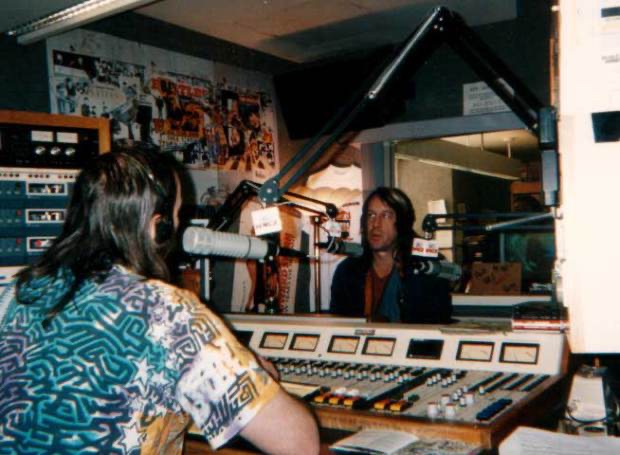
Rundgren is nicknamed the “Wizard” because at an early age found his knack in the studio and recording music himself. The man knows electronics, studio effects and how to build tracks with layers of sound. Just look at his early 1970s albums.
Record companies liked him because he works fast and understands the budget. Some artists mentioned that he didn’t do endless takes, and he could improvise needed parts himself. He takes charge, and that can mean choosing the studio and the production process. Is he a control freak? Ask the people he collaborated with.
I have a lot of the albums he produced. It’s quite a variety of established artists and brand new artists. Where I think he was most effective was producing artists who had a few albums under their belt but were looking to turn the corner and have greater success and more airplay.





Leave a Reply