
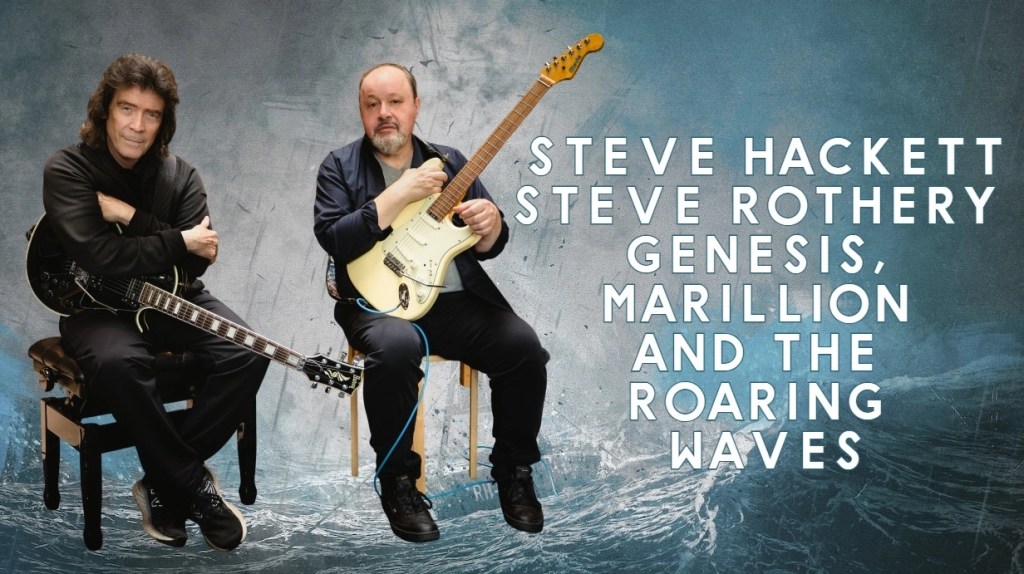
The Roaring Waves (2026) took eight years to make, but they weren’t driven by a deadline, it was a labor of love. Steve Hackett and Steve Rothery, were each busy in their day jobs. Hackett, formerly of Genesis, was busy touring and recording on a 50 year solo career, and Rothery, guitarist for Marillion since 1979, had both the band and solo career.
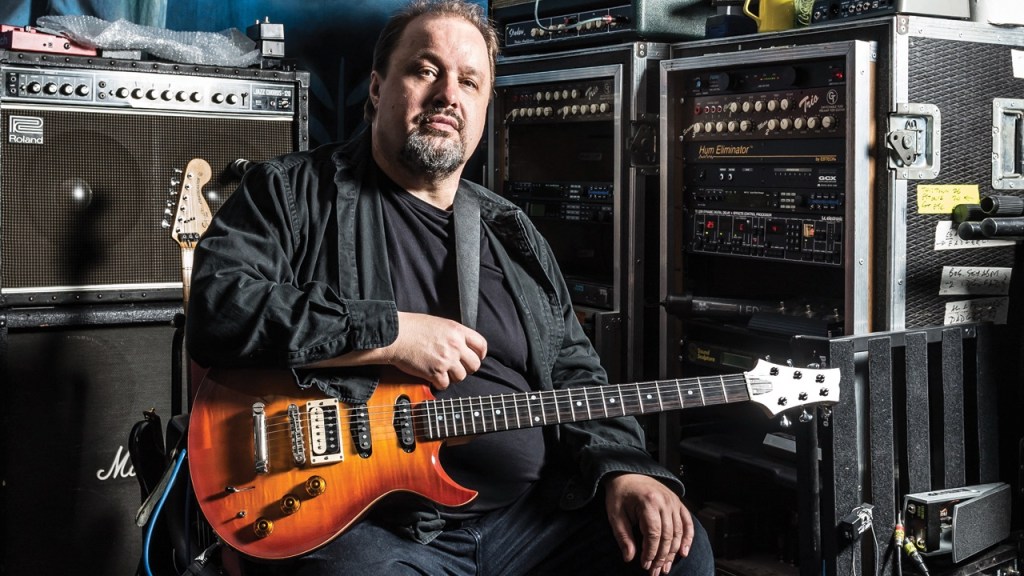
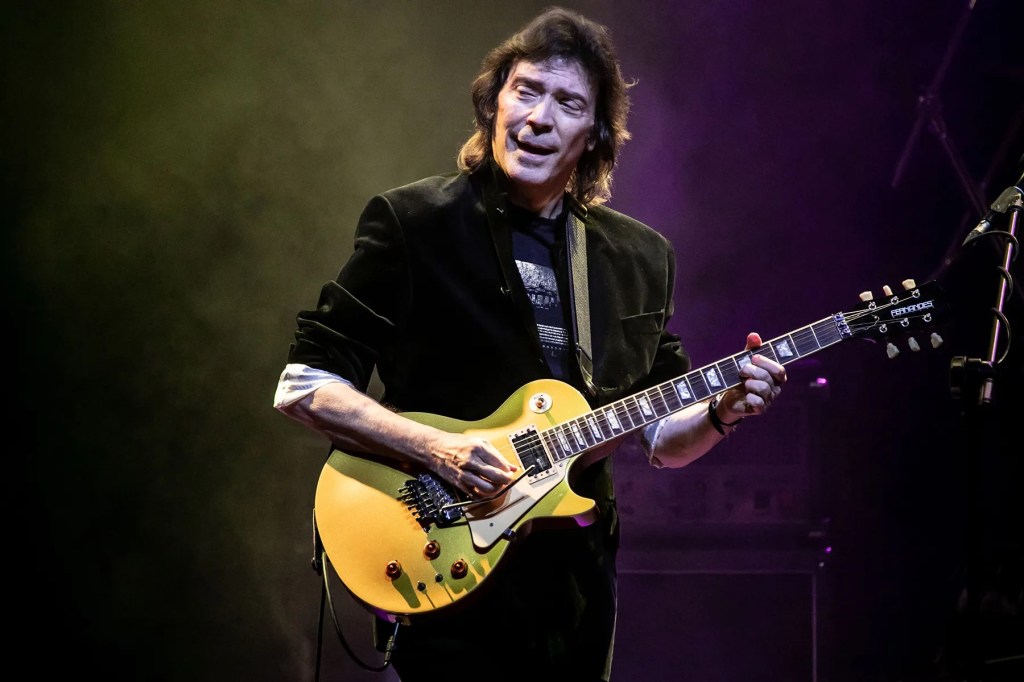
“When you’re friends first, and the music comes later, you know it’s non-competitive and something else starts to happen,” says Hackett to Prog magazine.
Hackett told Spinning magazine, “albums involving two guitarists can sometimes become a competition, with each player attempting to ‘outplay each other and show their chops.” That is not what happens here. Instead, he said, they listened, responded and left space for each other to create.
“We speak the same musical language but with slightly different influences, his being more classical, mine more folk,” Rothery said to Guitar World.
“It was a bit old school our approach, like the idea of mates getting together in the garage and playing and hanging out” Hackett said. Recording took place over eight years, a lot of back and forth between the other’s home recording studios.
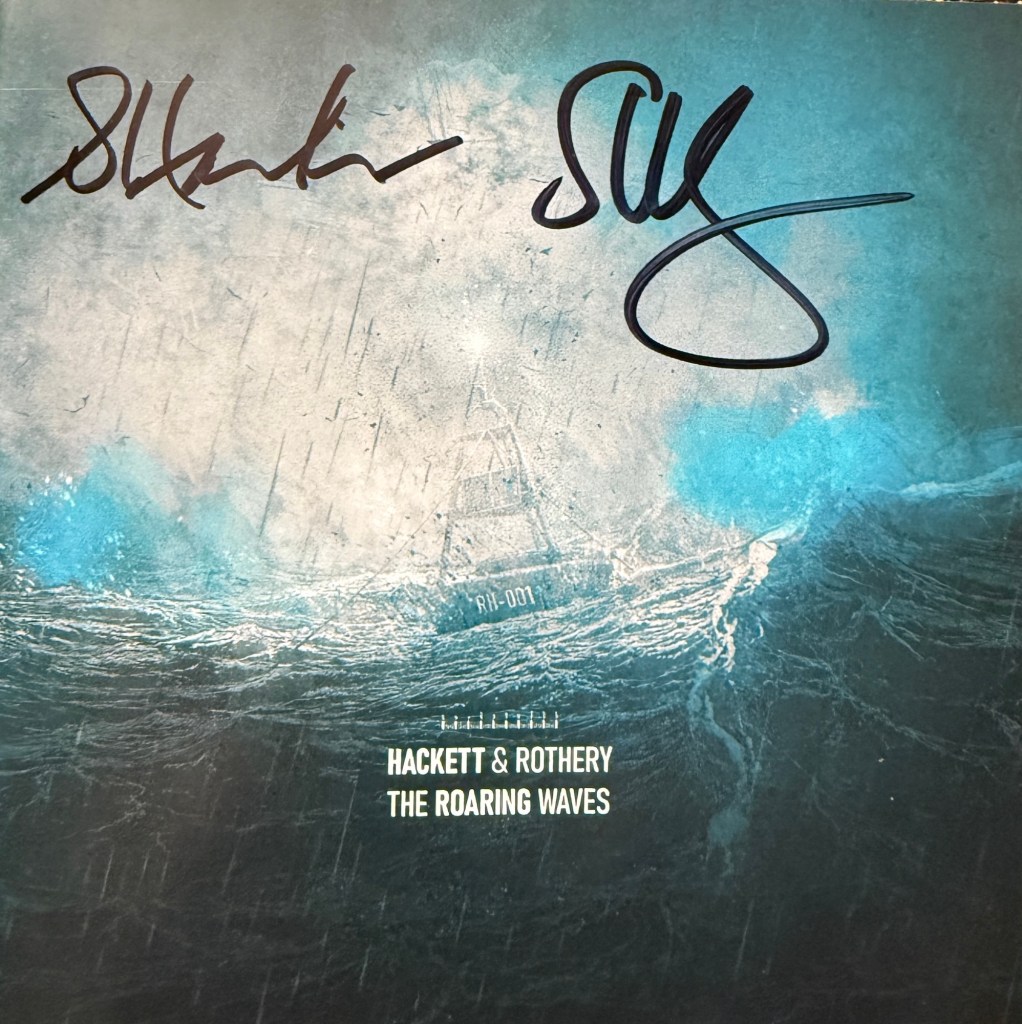
What’s the album about? The sea. “In winter you could hear the roaring of the of the waves during the stormy weather, Whitby was a very evocative place to live, a very poetic and powerful place to grow up,” Rothery said to InsideOut Music. “So, I suppose this record, is a way of expressing some of those memories and emotions about what the sea meant to me.”
I’m a little cautious when two well-known guitarists join together on a project. Hackett and Steve Howe (Yes) formed a group in the 1980s, GTR, that was much less than the sum of its parts. Their styles didn’t mesh well, or their ability to compliment each other.
One needn’t worry about compatibility issues here. The soundscapes here are quite diverse, which is likely an outcome of the lengthy creative process.
I’m a big fan of each guitarist. Although Hackett has been gone from Genesis for nearly 50 years, he’s teamed with many other artists during those five decades. Outside of his project with Howe, these haven’t been high profile, pop-oriented projects, and blending of musical styles has been much more successful. His solo work has involved operating with various memberships of his band, but some longtime creative relationships.
Rothery has been a member of Marillion for almost 50 years, with not much turnover. The music of that band is complex and sweeping, building their soundscape from all the members, of which the guitar is important, but not the only ingredient. His solo work is stunning, I’m so glad that I stumbled across it.
Here are my thoughts on these songs.
“The Storm” 6:50 The calm before the storm, building and building. So many different guitars.
“Sandsend” 4:46 Less chaotic, more nuanced, but every bit as powerful.
“Red Dragon” 4:19 The sea is complicated. It can be beautiful, vast and shimmering, but it has great power and deep zones of life and danger. This song taps into that complexity, beauty and strength.
“The Roaring Waves” 7:11 Nylon guitar opening, great styling. Then comes the seductive crest of the wave, mesmerizing as it crashes then retreats, but only temporarily. More gentle guitar, then it all repeats.
“K-129” 7:53 The K-129 was a Russian ballistic submarine. It sank in 1964 with all hands. The CIA in a secret project raised parts of the submarine. Political intrigue drive this song, electric beat, soaring guitars, pinging from great depth.
“The Black Sea” 6:41 Mysterious and majestic, no less daunting. Echoing, sounds in the distance, long sustained guitars.
“Pacific Coast Highway” 7:31 The most rock and roll song on the album. Bluesy hard, rollicking organ, pounding drumbeat, snarling guitar. The song transitions to a gentler ride, smoothly arriving at the dock with the sound of a choir.
Steve Hackett: Guitar, harmonica
Steve Rothery: Guitar, bass guitar, keyboards
Riccardo Romano: Keyboards, bass guitar
Daniele Pomo / Leon Parr: Drums
Produced by Hackett & Rothery
Final thoughts
As soon as this album ends, you want to hear it again. The background of the sea is a powerful motif. One can easily imagine these songs being soundscapes to the many different variants of the sea.
There are no hit singles on an album of instrumentals, that’s not the point. These are two masters of the guitar, letting their music paint on a broad canvas, filling in colors and creating textures so real you can feel the sea spray on your face.


Leave a Reply