
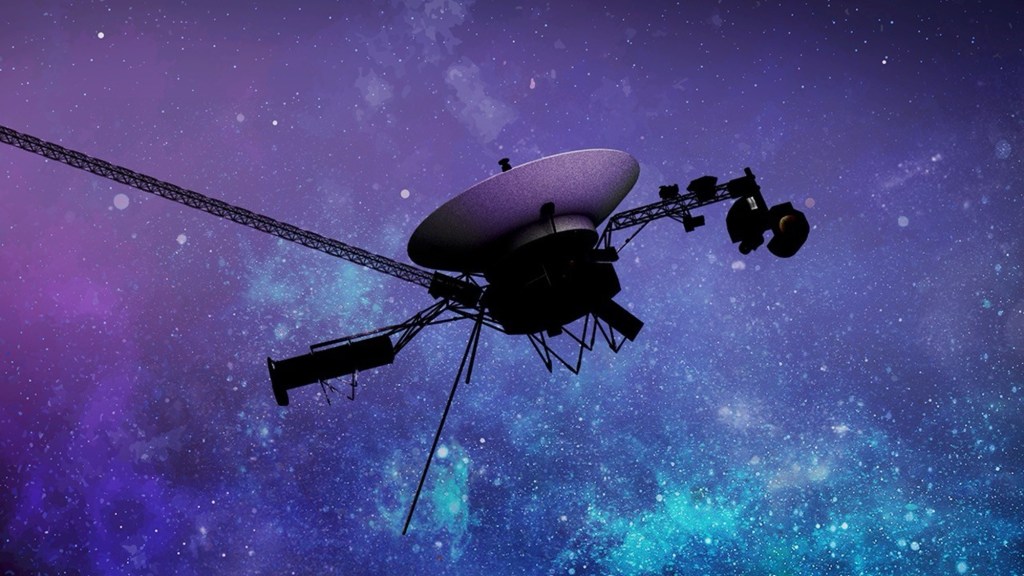
The Voyager project was ambitious, and would accomplish way more than NASA imagined. Remember the film The Martian, its plot hinges on being able to power-up and communicate using the old Pathfinder probe (left on Mars) with Earth from Mars, where it has been for almost 40 years. Old technology. Well, consider mid-1970s computer and software that would be the communications backbone for almost 20 years of flight Voyager time in the Solar System. Since traveling into deep space, two scientific instruments are still powered-up – one that listens to plasma waves and one that measures magnetic fields. Engineers have carefully shutdown other instruments and “swapped which instruments are powered” to minimize power usage. Both probes use radioisotope thermoelectric generators that convert the heat generated by the decay of plutonium-238 fuel into electricity. Over time, the energy source has been slowly degrading, necessitating energy savings measures and preparing for the mission’s eventual end.
Most things wear-out long before we’d prefer, but the two Voyager space probes have lasted well-beyond their expectations. Launched within two weeks of each other in 1977, their missions were to explore outer planets (and their moons) in our solar system, which they accomplished, but apparently weren’t ready to retire. Onward to interstellar space, beyond the heliosphere (the outermost atmospheric layer of the Sun). Despite the shutdown of some instruments, power is a contact concern.
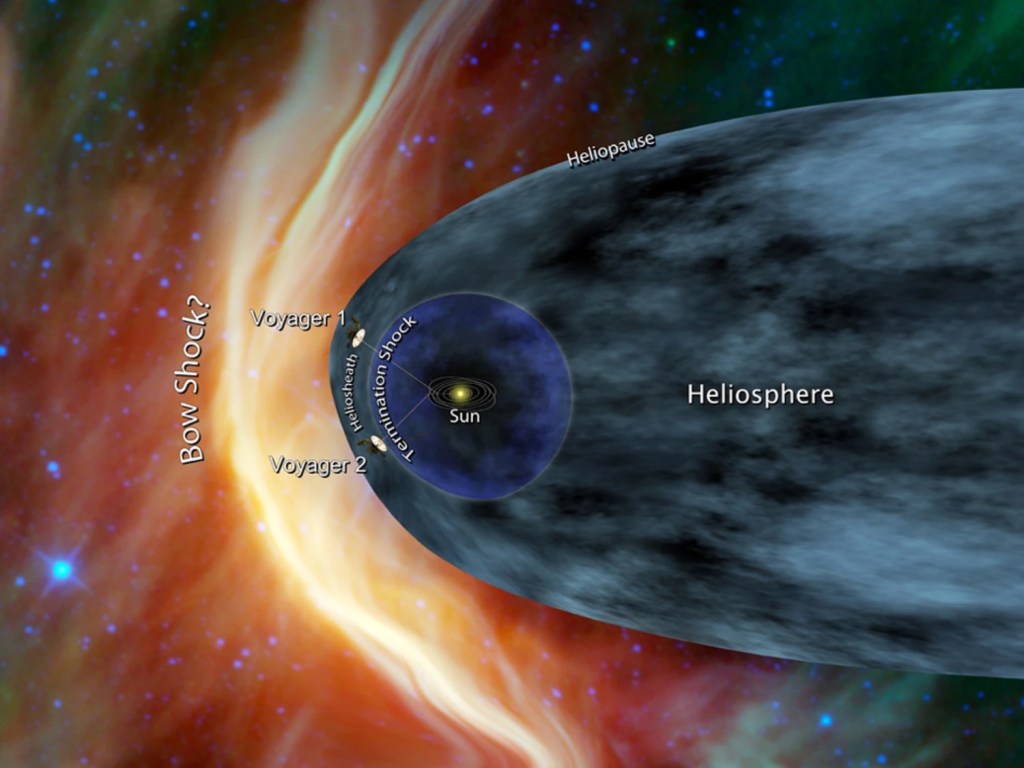
The two Voyager probes had a mission expectancy of only 5 years, but was extended to take advantage of their functionality. Lucky us.
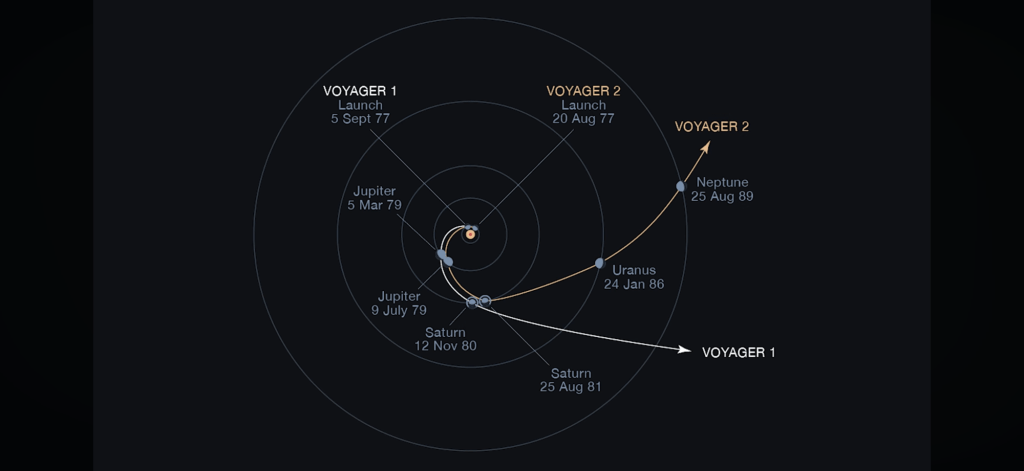
The original mission had the probes studying Jupiter and Saturn, but took advantage of Uranus and Neptune’s unique orbital positions to send the probes to visit these planets and their moons, before leaving the solar system. Each probe has experienced its own challenges for NASA engineers.
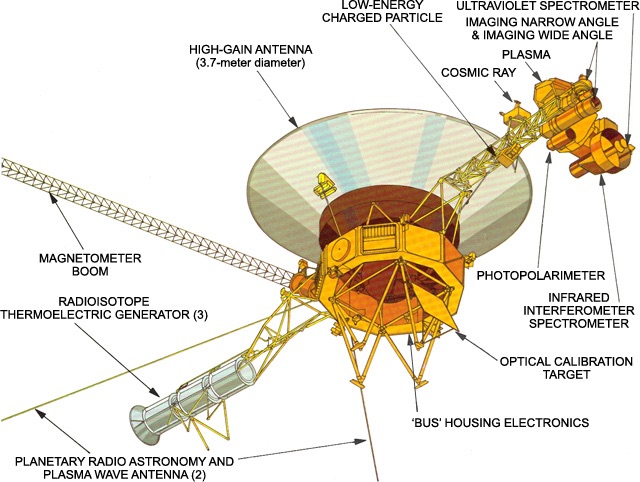
Each probe is powered by three Radioisotope Thermoelectric Generators (RTGs) fueled by decaying plutonium. Because the plutonium fuel decays over time, the spacecraft loses about 4 watts of power every year. To conserve energy and keep the probe communicating with Earth, NASA engineers have been systematically turning off non-essential systems and science instruments as the probe travels deeper into space.
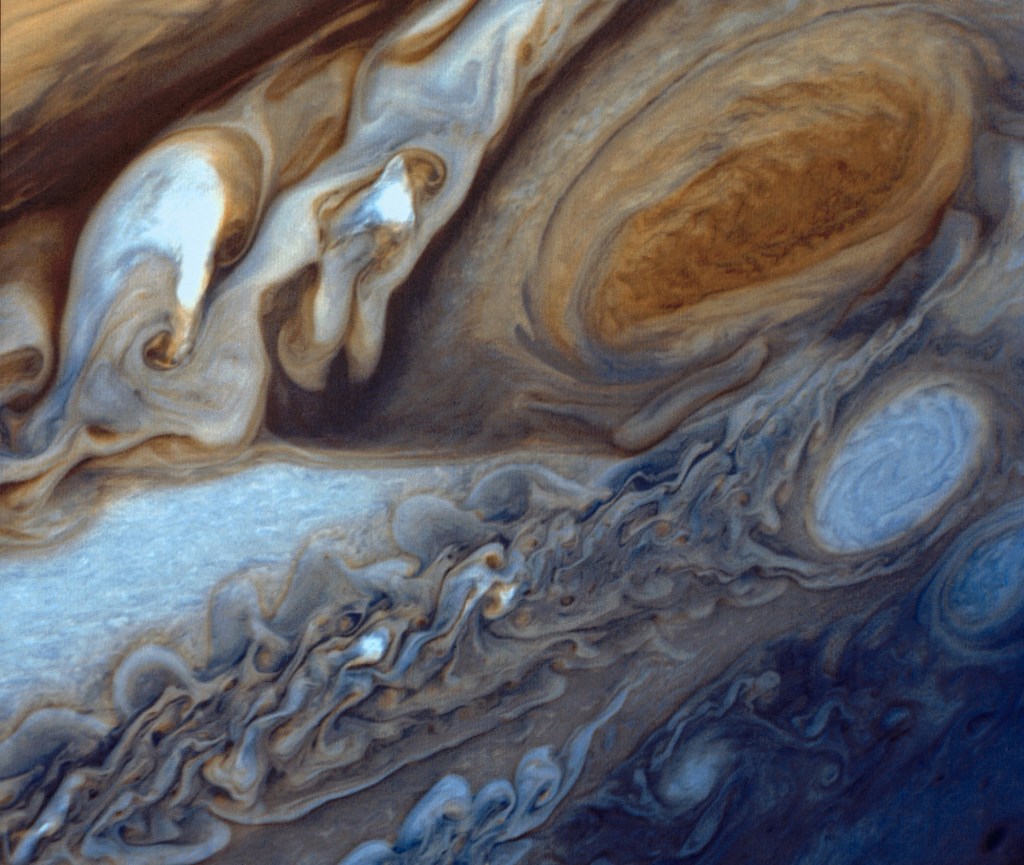
Jupiter, already suspected of a very turbulent atmosphere, revealed even more secrets including additional rotating storms and differing cloud rotational patterns than just the known Giant Red Spot. Another surprise: Jupiter has four rings circling the planet.
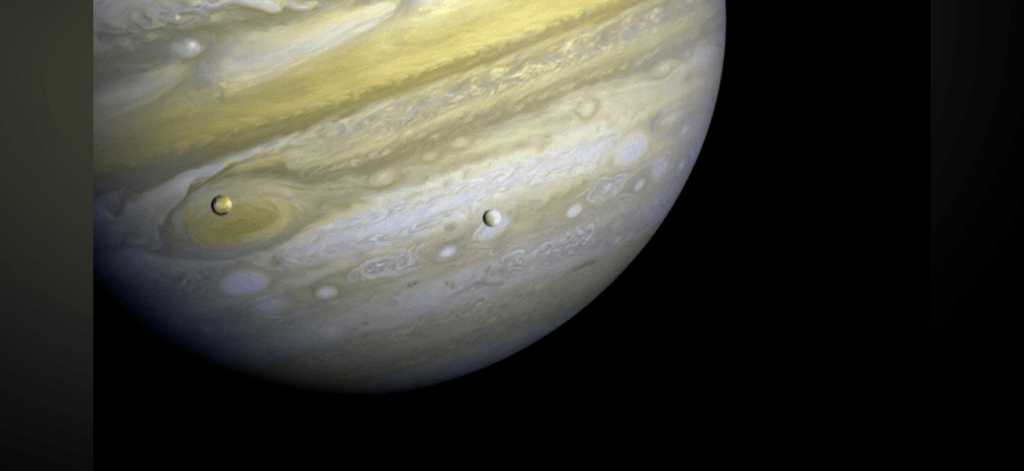
Jupiter’s Io was thought to bear the scars of many impact craters like our Moon, but Voyager revealed significant volcanic activity and the presence of lava lakes from less than one million years ago (which is like yesterday in Universe time). Io is now known as the most geologically active site in the solar system. Voyager captured not just past volcanic activity, but current eruptions.
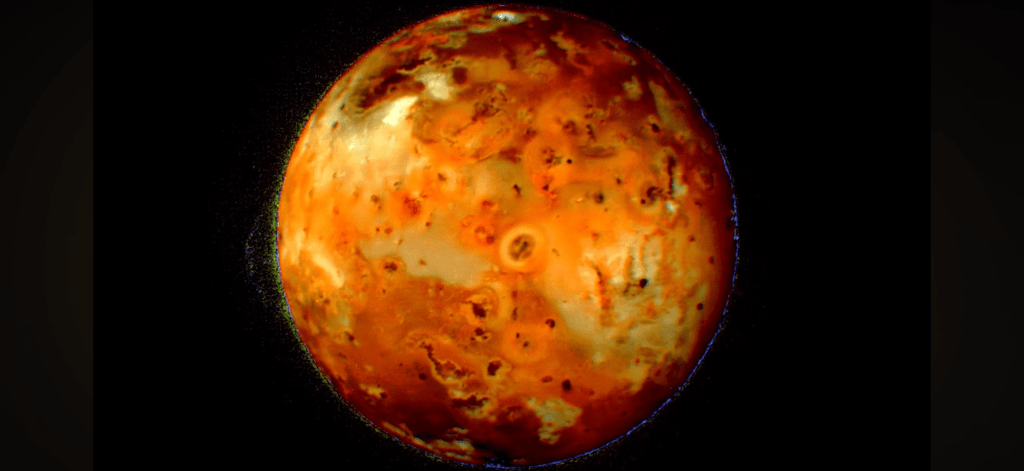
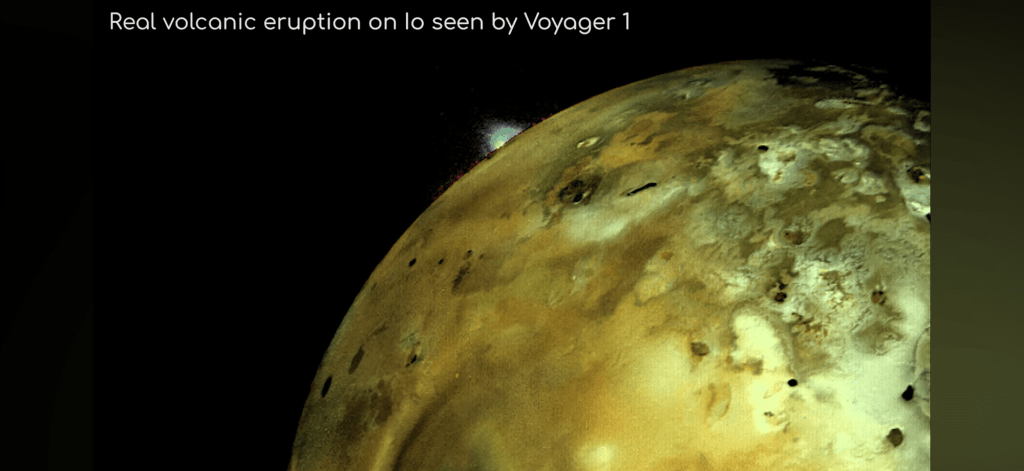
Voyager 1 & 2 gave NASA not only detailed and revealing photographs, but rich electromagnetic and other data from probe instrumentation.
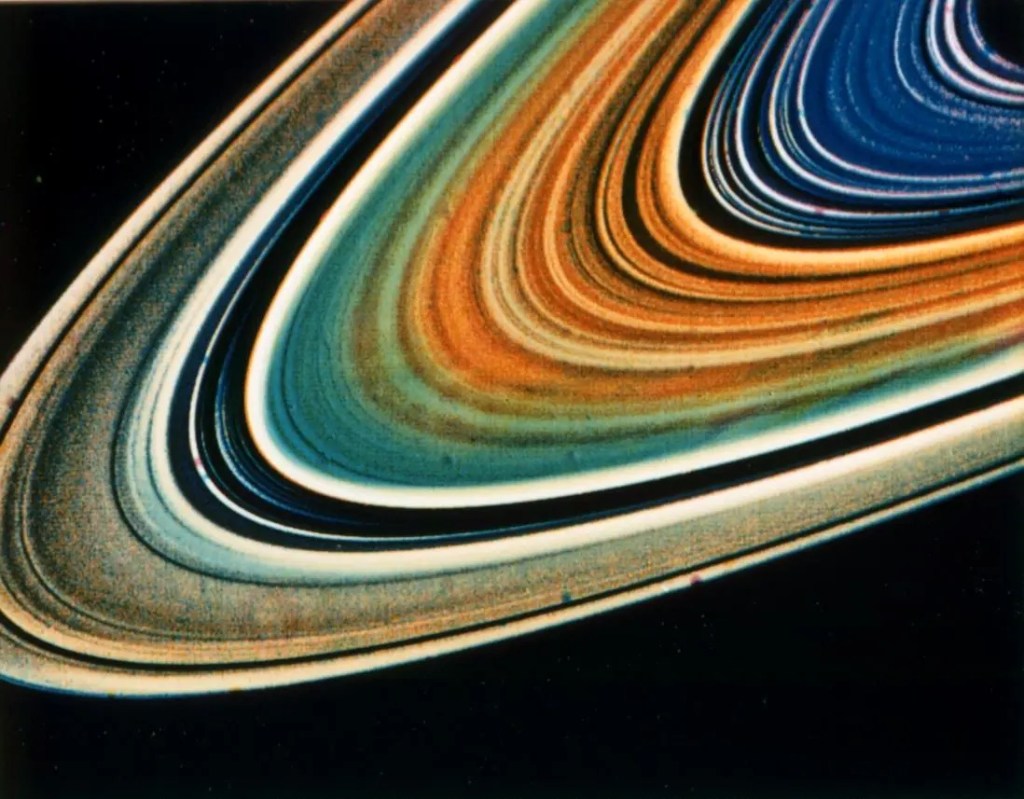
Next, the probes visited Saturn and immediately revealed to scientists that instead of 13 just possessing rings, the bands were made up of hundreds of icy, rotating rings, and the presence of “spoke-like” shapes in the rings that may play a role to the movement of the rings. In the video below, it is stated that Saturn is slowly losing its rings, as the planet’s gravitational pull is creating an icy particle rain onto the planet.
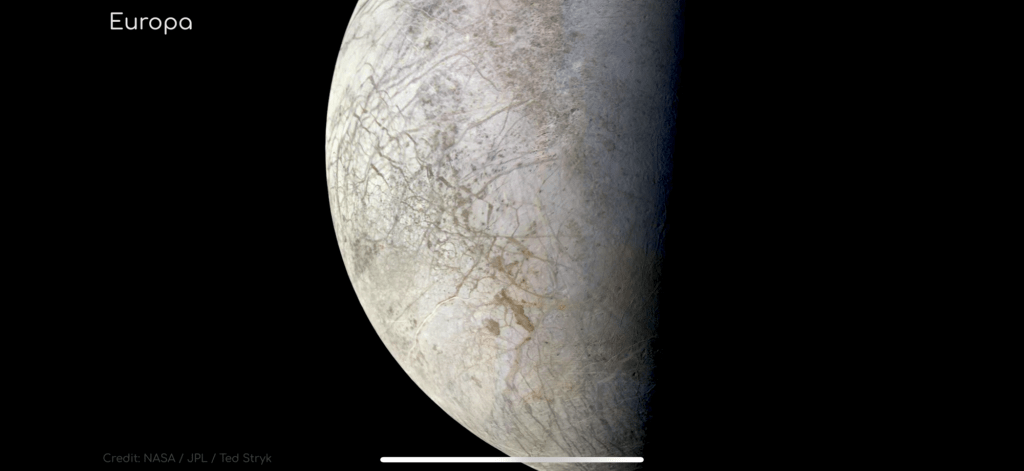
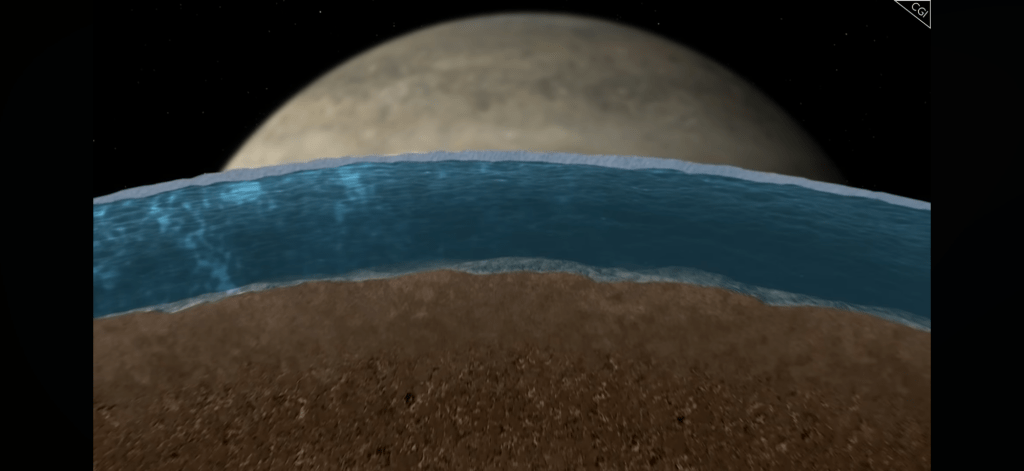
Europa is an icy moon with perhaps an ocean under the icy crust.
Saturn was revisited by NASA probe Cassini in 1997, which orbited the plant for 13 years. After the Saturn visit, Voyager 2 was redirected to interstellar space, which would take it 32 years to reach. Voyager 1 was positioned to encounter Uranus and Neptune.
Five years after leaving Saturn, Voyager 1 arrived at Uranus.
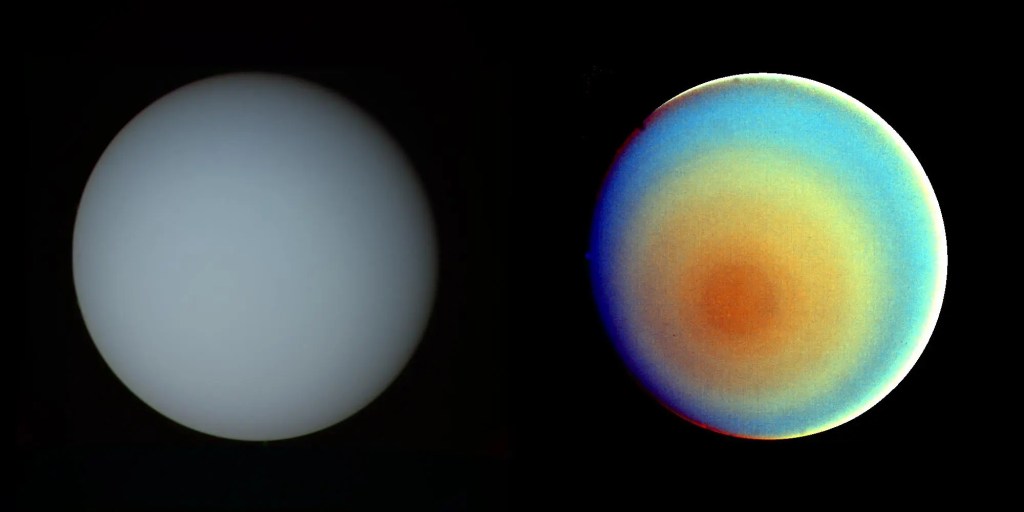
Uranus was revealed to wobble as it rotates, since it has a pronounced tilt on its axis. The planet’s magnetosphere is also oddly configured and has a 60 degree variant from the planet’s axis of rotation. The tale of the magnetosphere opposite the direction of the sun also tends millions of miles. Uranus is an oddly behaving planet. Imagine waking up on New Years Day on Uranus, and wondering if it was the room wobbling or you!
Uranus was thought to have several rings, which not only was verified, and it possesses more fine, dust rings than suspected. NASA also discovered additional moons of Uranus, bringing the total to 16. Since then, the total of Uranus moons has grown to 27.
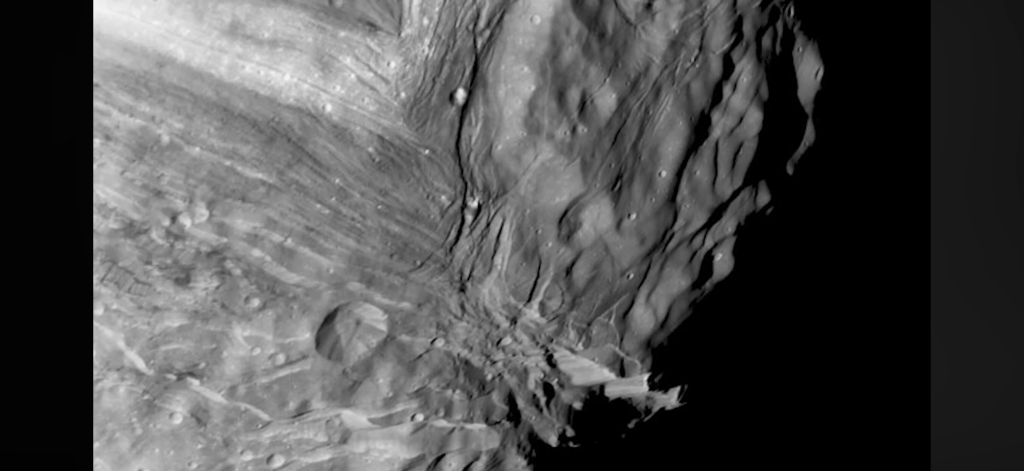
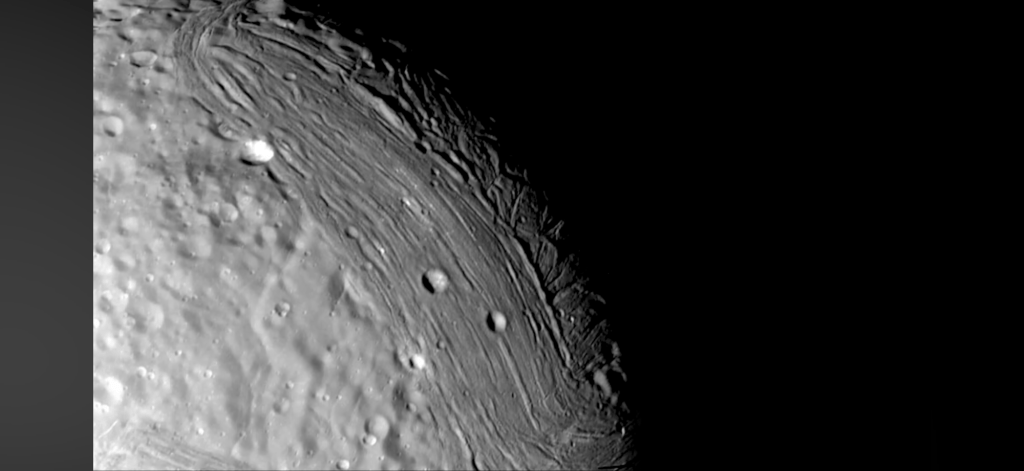
Neptune was the last planetary destination on the Voyager mission.
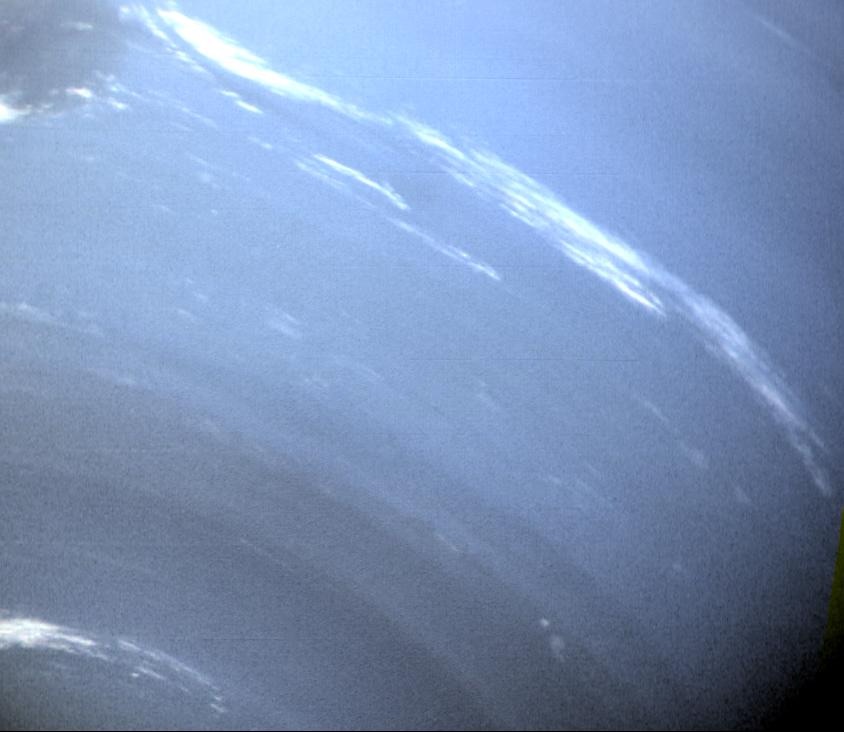
The weather on Neptune would create the ultimate “bad hair day” due to the winds detected at 1,300 mph. Neptune’s volatile atmosphere includes a “great dark spot”, one of several such masses, similar to Jupiter’s Giant Red Spot, that thought to be anticyclonic storms.
The current number of Neptune moons is 16, that number was much smaller prior to Voyager 2 flying by. Proteus, was discovered by Voyager. Several additional moons have been discovered in recent years since Voyager, owing discoveries in large part to the data sent by Voyager. Neptune’s rings were imaged by Voyager, until then, they were noted by French and Chilean astronomers as incomplete arcs. These faint, five rings are made of dust, cryovolcano, asteroid or other particles.
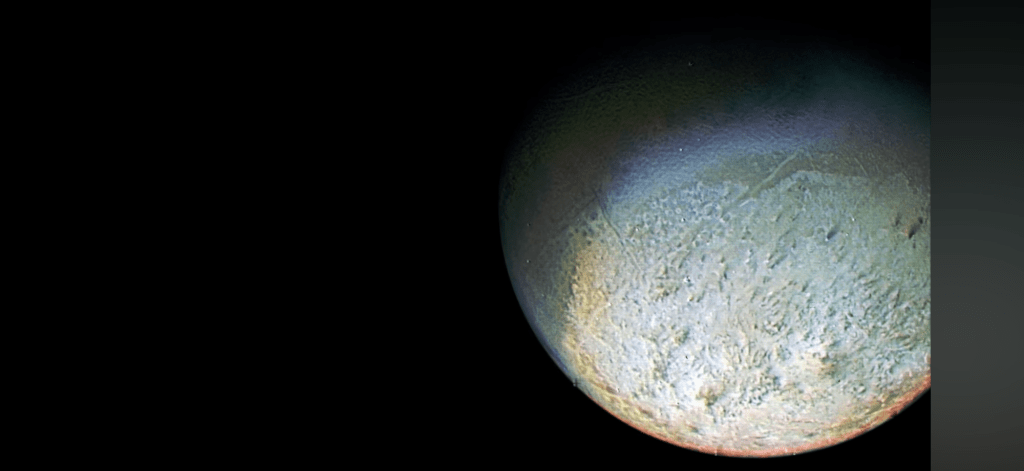
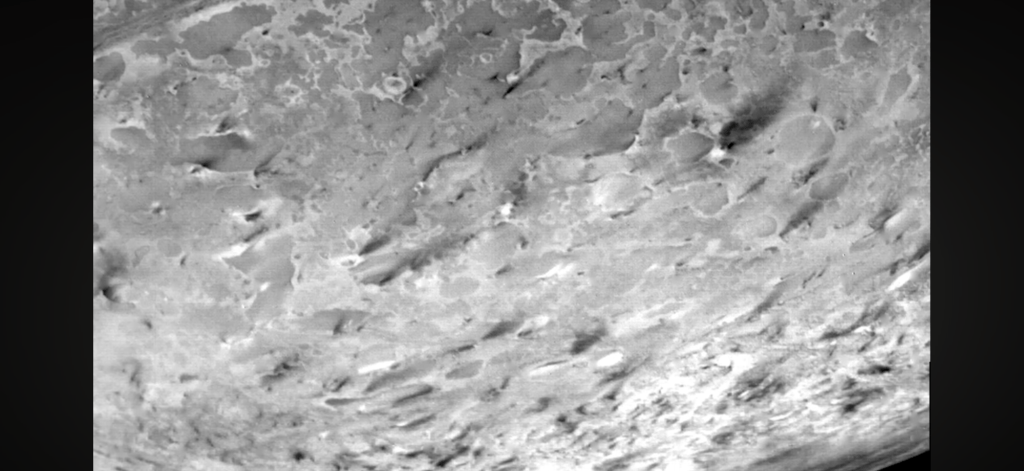
Triton rotates in retrograde compared to Neptune’s rotation. Was Triton formed from material from Neptune, or was it captured by the planet’s gravitational pull? Mrs. Neptune’s story is that Neptune is so charismatic, the planet could certainly attract a moon. Triton was exhibiting “A” in the dissolution of their relationship.
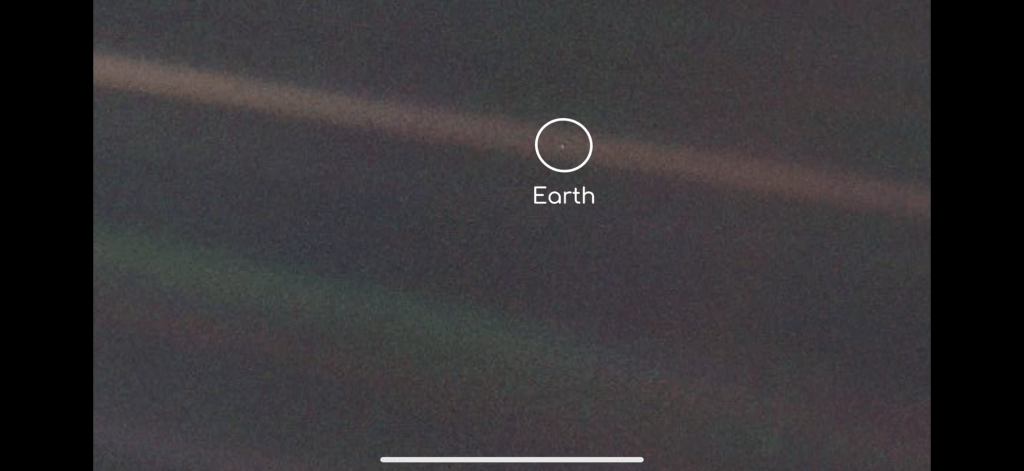
A Voyager 1 photo (below) of Earth from 6 billion kilometers away. Hi Mom!
Thoughts…
I was in college when the Voyager mission launched. How exciting, that probes would visit Jupiter and Saturn, and maybe Uranus and Neptune. The space program was in flux during those years as NASA redirected much of their focus to the planets and other subjects.
Star Trek was becoming huge in syndication, and Star Wars and Close Encounters of the Third Kind were fueling imaginations about what was beyond our atmosphere.
Writing about the Voyager mission was fun for me, it’s hard to believe that it almost 50 years ago. How does that happen?
Enjoy a YouTube video about the Voyager mission:
https://youtu.be/lbl_4TnPIGM?si=Re95QV3Tb3HjB6X7
For more reading:






 Ticket 2 Ride
Leave a comment