
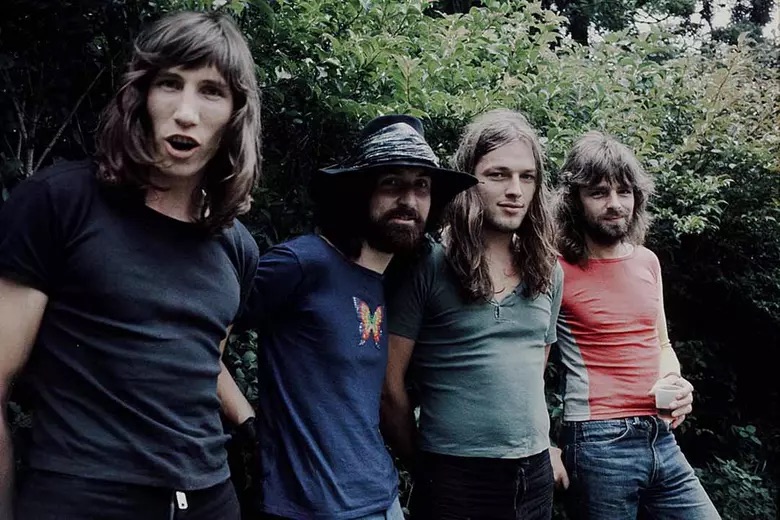
I didn’t intend to write about this book, I grabbed it at the library not even sure I’d have time to read it. Once I cracked it open, I knew I’d make time to at least read the parts I was most interested.
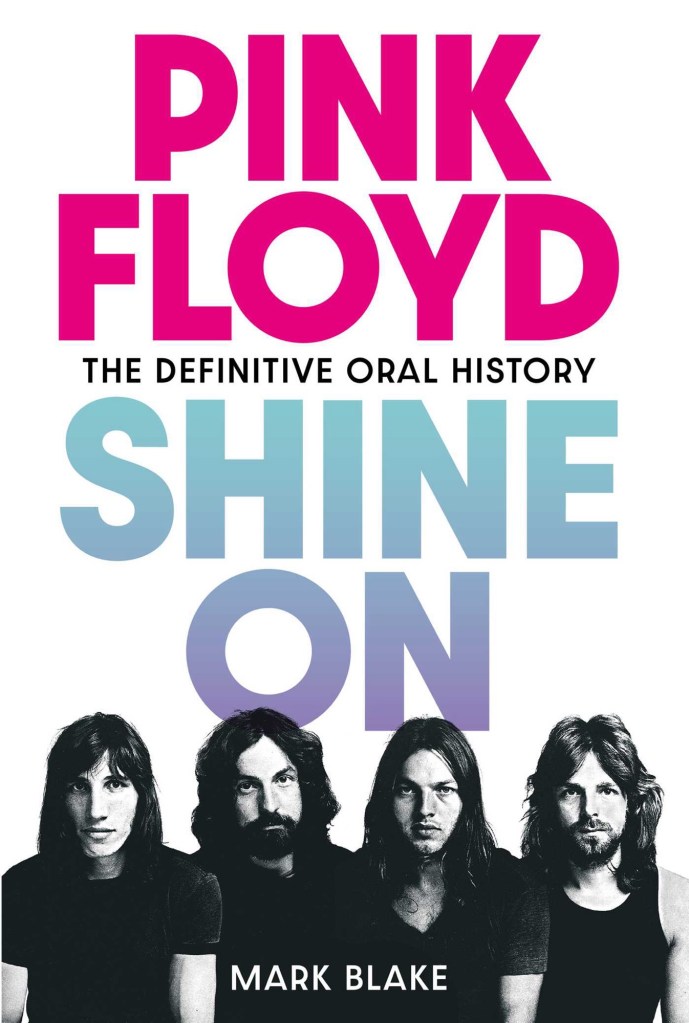
Pink Floyd, Shine On (2026, Pegasus) is compiled and edited by Mark Blake from interviews and comments from band members and others in the Floyd orbit. Blake interviewed members of the band through the years, so he knew the band and had a relationship with them.
This history is useful to learn about their creatively, but also can be used to trace the splintering and dissolution of Pink Floyd. To be honest, the sections I was most interested in were post Dark Side of the Moon, when the collaboration mostly stopped. Wish You Were Here was the end of Floyd as a band. It became Roger and band, and then Dave and band.
A few exceptions, plus a few tidbits from me.
Richard Wright: Animals was difficult because that was when Roger really began to start believing he was the sole writer of the band. With regards to that album, it was partly my fault, because I didn’t have much to offer. Dave, who did have something to offer, only managed to get a couple of things on there. I like my playing, but it wasn’t a fun record to make. Animals was a slog.
One of the best thing about Animals was the album art. Granted, there are some good musical moments, but the words never much connected with me. Back in the 1970s, photo art was staged, and most likely real. The inflatable pig really flew over the power station, but the photo is actually a composite of two photos.
Aubrey ‘Po’ Powell: The next day, everybody came back again, the pig inflated – all good – and then… No!’ The iron ring attached to the cable snapped and the pig zoomed off into the heavens. There was nothing we could do to stop it and I had forgotten to re-book the [police] marksman. Steve O’Rourke [Pink Floyd manager] and I both started laughing until we realised the seriousness of what was happening. I’ll always remember the look of schoolboy glee on Roger Waters’ face and then the whole band jumped in their cars and pissed off.
The pig broke loose, their greatest fear. The police had required them to have a sharpshooter present to bring the pig down if it became a problem. The airspace was compromised and had to be shutdown. The pig flew so high it could not be followed by a chase helicopter. Luckily it fell harmlessly to earth in a farmer’s field.
The Wall turned out to be a very successful album and it rescued the band from a dismal financial situation. The band put much of their income into companies as an investment to reduce the big tax bite. Unfortunately, investment of millions of dollars turned to shit. Waters said they lost all the money that Dark Side earned them. Not only did they lose their investment, the tax man came after them for their 83 percent!
David Gilmour: That made us take the decision that we’d better make The Wall in France and America to minimise our tax liabilities on it so we would have some funds to pay our other tax liabilities.
The Wall was Roger’s project, and it was the first album that incorporated session players to play parts instead of band members. Roger was game to have it be a solo album, but was persuaded to have it be a Floyd album. It was a confusing situation, two outside producers were hired, which was a surprise to both of them.
As Roger’s concept, he had recorded the demos and had trouble motivating the others to what he wanted. He fired Rick Wright, which did not sit well with Dave or Nick. The hard feelings between Roger and Rick had been developing for a while. Sadly, Rick was not at a mental or physical position to defend himself, or contribute fully with the band.
Nick Mason: Roger carried out a brilliant campaign to get what he wanted by a certain amount of cajoling and threatening. Looking back I should have stuck up for Rick, but I utterly failed to do so.
By the time Roger cranked up what became The Final Cut, Pink Floyd was barely a band. According to Nick, it was his understanding that it was to be tracks that didn’t fit on The Wall. “If these songs weren’t good enough for The Wall, why are they good enough now?” The Final Cut includes several holdover tracks but Roger had to write additional songs to fill out the album, and to unify the anti-war theme of the project.
The Final Cut was the last time Roger would record new material for Pink Floyd. He decided to go solo, but Dave had intentions to continue recording under the Pink Floyd name. Cue the attorneys. Dave and Nick recorded A Momentary Lapse of Reason, hiring Rick to work on the album. After it was finished, they intended to tour as Pink Floyd, under threats from Roger that he would file injunctions in every city they had venues booked.
That was back in 1987, almost forty years ago. Dave and Roger hammered out the divorce, but didn’t end the drama or animosity. The rest of the book covers the separate efforts of the four musicians.
Most of the information in the book, I already knew. I’m not a Pink Floyd authority, just spent years of my life and a sizable section of brain memory to all things Floyd. To read their own words helped to give context and further elaborate on many things. So, I found value in this read and the connection sections by Blake were useful.
Still, I ask the question, which one’s Pink?





Leave a Reply