
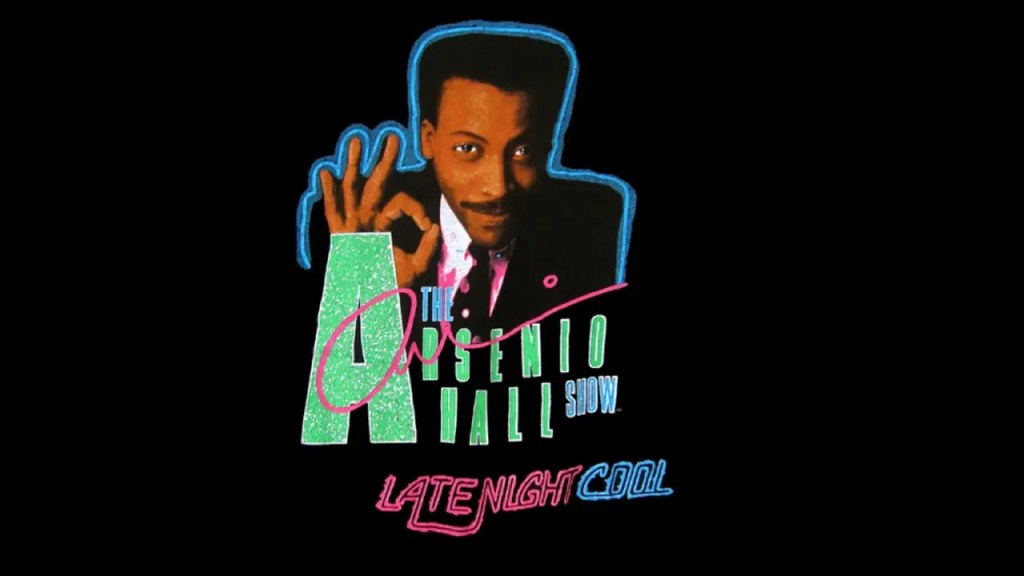
My wife saw this book and asked me if I was a big fan or Arsenio. Aren’t we all fans of this guy, at least a little? He’s very likable. His is an interesting story.
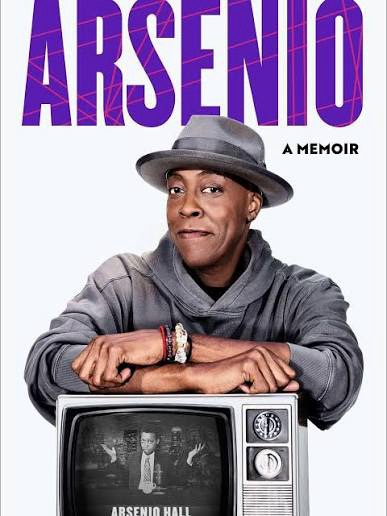
In a nutshell, the book mainly traces his young life as he prepares for his show business career (magic), his standup comedy years, and The Arsenio Hall Show period. Although he mentions several girlfriends, his partner with whom he shares a son, and his current partner, it’s not a kiss and tell book about his or other people’s personal lives. What we get is Arsenio achieving his dream, the hard work, the fruits of the success, and the painful part that comes with it.
As a kid in Cleveland, he wanted to be Johnny Carson, not a professional athlete, and got his young start in show business as a magician. From performing in his basement with a borrowed card table and folding chairs to hosting a syndicated late night talk show, Arsenio had a most unbelievable journey.
“Not cartoons or kid shows, like The Jetsons or Captain Kangaroo, like most six-and seven-year-olds. I become obsessed with talk shows. After school, I run into my room and turn on The Merv Griffin Show and The Mike Douglas Show, which is shot right here in Cleveland.”
The stories are of course a great read, especially his relationships with Richard Pryor, Jay Leno, Patti LaBelle, Magic Johnson, Prince and Eddie Murphy. Some memoirs focus on the negative, because that’s more dramatic and likely sells more books, but Arsenio shows us the more positive side of people in his life. This is not to say he sugarcoats his life, or that he was free from loss, just that what he shares is mostly the kindness and opportunity that blessed him.
He finally got his wish, sort of. March 1986 – he appears on The Tonight Show – but with Joan Rivers as the host. He would finally get his opportunity to perform for Johnny on July 21, 1988.
A large section of the book covers the nearly six years of The Arsenio Hall Show. Thinking back, it was a big deal. Numerous talk shows came and went in late night. Joey Bishop, Merv Griffin, Dick Cavett, Joan Rivers, Alan Thicke, Pat Sajak and Chevy Chase. Most were network, but a few were syndicated, like Arensio’s was. He worked for Paramount, a large entertainment corporation with deep pockets, and many overseers.
I won’t relate all of the challenges, but there were many. Being a syndicated show, not produced by a network, he didn’t have ability to cross utilize guests appearing on other shows on the network. That’s important in the very competitive world of booking guests. Guests that appeared on Carson or Letterman generally wouldn’t appear on his show. Arsenio’s “network” was a loose affiliation of local TV stations that signed up to air his show, but wouldn’t guarantee the air time.
As the only Black talk show host, he also faced the ongoing program of who his audience was. Arsenio found an audience and was successful for several years, but he always felt the pressure. “What rankles me most is that I keep finding myself caught in the middle position between being too Black and not being Black enough. Spike Lee, after appearing on the show, calls me an “Uncle Tom”. I can’t imagine how would be a difficult and hurtful the accusations must have felt.
Paramount pressured him to grow the audience. After three years the ranting began to slide and about a quarter of his affiliates would bail.
“The Arsenio Hall Show becomes synonymous with hip-hop. I break more rappers than any other show. Fans line up for hours to see the biggest rap stars of the day. We are the home of hip-hop.” But Paramount wanted a different show.
Then, Johnny Carson announced his retirement and the contest to fill his chair began. Arsenio noticed that his name was not among the names being talked about. To replace Johnny, the boy who dreamed of being Johnny would have become like Johnny to keep Johnny’s audience. That’s when Arsenio realized it couldn’t happen. “As a kid, I wanted to be Johnny. But I have my own show now and I don’t want to be Johnny anymore. I want to be me.”
Whether you liked The Arsenio Hall Show or not, you gotta respect the man who built the show and it second in the Nate night ratings despite many hurdles and disadvantages. He filled a void in late night programming and took more than a few risks.
I was never a regular viewer of his show, but tuned in occasionally. Looking back, his show was quite an achievement.
After finishing his memoir, I have a great deal of respect for the man and how he lived his dream.
 Ticket 2 Ride
Leave a comment