
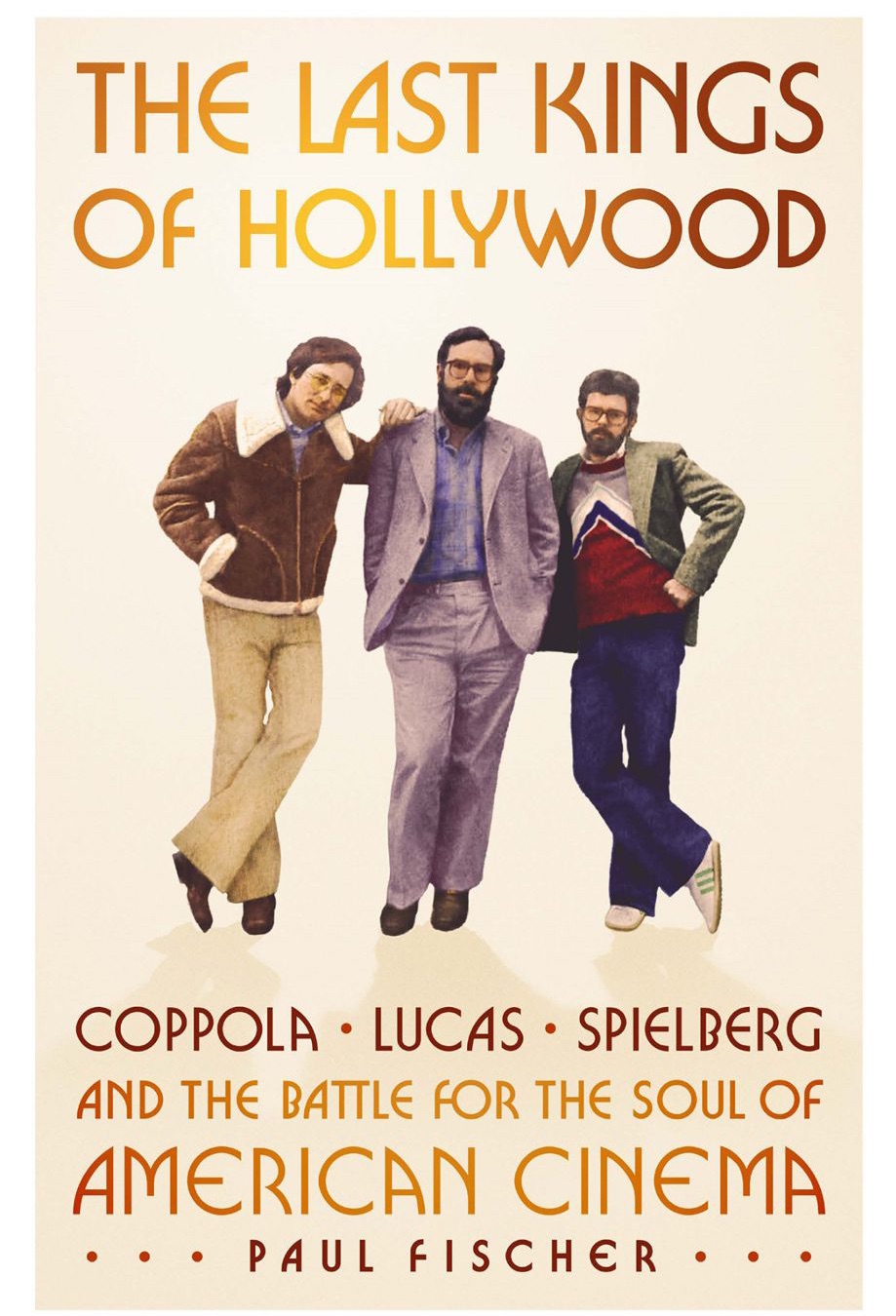
The Last Kings of Hollywood: Coppola, Lucas, Spielberg and the Battle for the Soul of American Cinema by Paul Fischer (2026, Celadon Books) is probably not a book you’ll run out and purchase. The book is well researched and written, kudos to author Paul Fischer, but do we need another dive into the lives of three filmmakers who have been written about ad nauseam? Fischer writes about the films, but he spends more time on the relationships of Coppola, Lucas and Spielberg, and focuses mostly on the how these three changed the movie industry and impacted the kinds of films we see today. The big summer movie experience, the phenomenon of sequels, and the director as powerbroker – all products of these three.
First, I apologize for the length of this review, but I found the power dynamics of these three filmmakers to be extraordinary, and quite interesting when it was turned inward towards each other.
“Kings” may be an overreach, but certainly responsible for filling the vacuum when the studio system crashed under its own weight and changing times. All three started as film directors, but they were really filmmakers in the definition of French film critics who popularized the word “auteur” loosely translated as authors of their films, not just on-set directors. Auteurs developed their material, shaped the presentation and delivered the finished film, which contained their vision. According to this French definition, auteurs were the most important component of the film process. It was not the producer, the lead actor or the studio executives – it was the director. Auteurs may have existed back in the Cecil B. DeMille times, but they were still tied to studios. Even Hitchcock, in his most powerful years, still had people to answer to. In the early 1970s, as Old Hollywood was falling aside, studios invested in films made by this new wave of predominately film school grads who came with their own ideas and vision toward the making of films.
“What happened in the ’70s was that films that didn’t fit into anyone’s models started making money,” says Paul Schrader, then a film critic himself. Coppola, Friedken, Bogdanovich, Scorsese, Kubrick, Ashby, Altman and a bunch of SoCal film students descended on Hollywood and made movies.
Enter Coppola, and Lucas too
Francis Ford Coppola was the first film school student to make a Hollywood studio film. He was a few years older and the guy who broke through, he led the way, and mentored other young film school talents, especially Lucas, who worked for Coppola’s new company, American Zoetrope. Coppola got a contract with Warner Bros., and used the money to rent office/editing space in San Francisco, buy equipment and hire other film school grads to write their screenplays. “Like the ‘pied piper,’ Matthew Robbins says, Francis led the way to the Bay Area, and to the Bay Area, the others followed.” Being away from the suits in Hollywood felt like freedom.
Imagine Coppola, Lucas and Spielberg as the three largest planets in the solar system, with a group of other bodies that also orbit the sun, not the magnitude of the larger ones, but powerful forces of their own. In the universe of Coppola, Lucas and Spielberg is another group of young filmmakers who also arrive by way of L.A. area film schools in the late 1960s and early 1970s, as the Old Hollywood is crumbling away and a new and hungry set of filmmakers are angling for a chance. New Hollywood was greatly influenced by Coppola, Lucas and Spielberg, who gave opportunities to the next wave of film students get traction in the film industry. John Milius (writer/producer) Willard Huyck (writer/director), Howard Kazanjian (producer) Walter Murch (editor/writer), Caleb Deschanel (cinematographer/writer), Carroll Ballard (writer/producer), Matthew Robbins (writer/director), Hal Barwood (writer) and Fred Roos (producer) were the youngsters, who are now in their 80s, except Spielberg who is a youthful 79.
In the early 1970s, the community of young filmmakers was very small. Add contemporary writer-directors Martin Scorsese, Brian De Palma and Paul Schrader to that film universe. This book is not just about names, but consider Lawrence Kasdan, Kathleen Kennedy, Robert Zemekis, Bob Gale and Frank Marshall, all successful filmmakers and producers from the 1980s onward, who worked primarily for Spielberg and Lucas companies, or on their films. Total the films that all of those listed above have been a part of, and that’s the post-1970s film industry.
“If you’re not willing to risk some money when you’re young,” Coppola said to his assistant, George Lucas, “you’re certainly not ever going to risk anything in the years that follow.” Build the bridge in front of you before they burn the one behind you. Coppola would certainly roll the dice a few times in his career – win some and lose some. “Francis had no concept of failure whatsoever, George recalled. “He was convinced we were going to take over the world.”
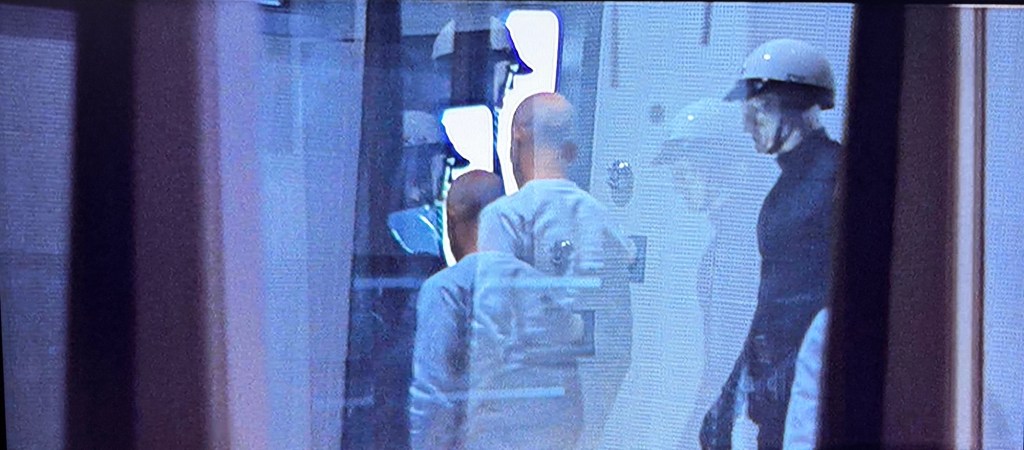
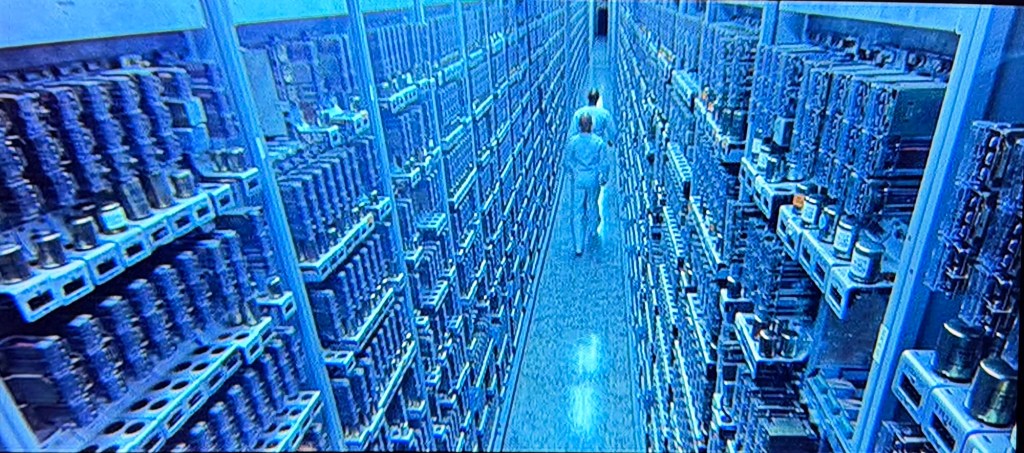
Lucas used his Coppola connection to turn his legendary film school project THX 1138 into a feature film. Upon release it made no money and got peer comments like “it’s got no emotion” to explain why audiences could not connect with it. Wanting to prove people wrong, Lucas’s next Coppola produced film was American Graffiti. I found THX 1138 to be a very mature, dystopian tale with incredible images and convincing production design, but as many have said, it repels the viewer instead of allowing a way into Lucas’s story. It’s shocking that American Graffiti, a totally different film was his next project.
Fischer focuses primarily on the big three, but you can’t tell their story without showing the connectiveness of the other film school students, many of whom stayed in the Coppola-Lucas-Spielberg universe through the years.
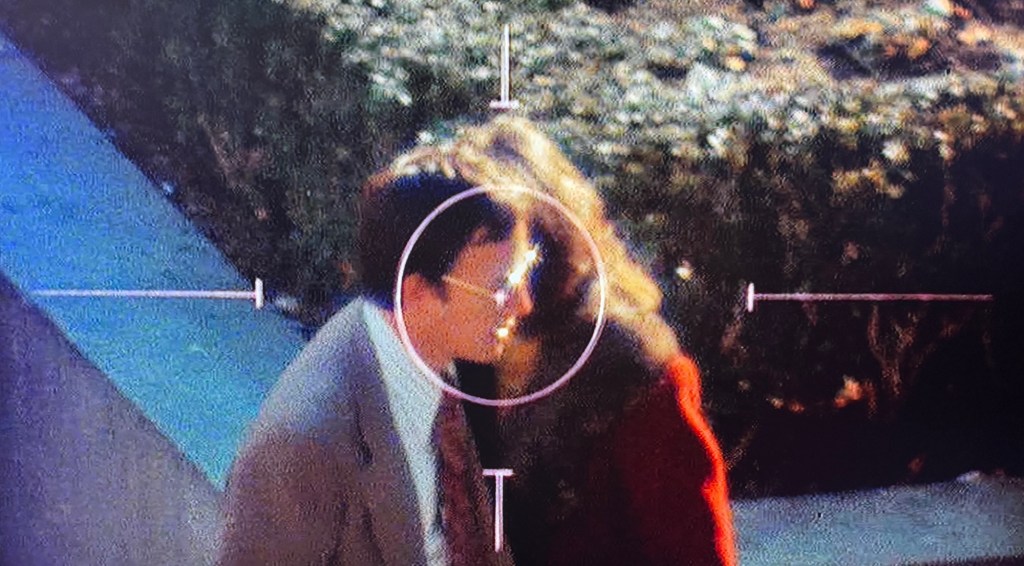
Not to be outdone, Coppola had been writing and prepping The Conversation before The Godfather materialized. Coppola didn’t really heed his own advice to Lucas about needing a film to connect with the audience. The Conversation, though it was praised for its technical aspects and overarching theme, was not a crowd pleaser with audiences. It does show how deeply Coppola and Murch understand the power of sound and the danger of the disassociation of sound and image into something totally unexpected. Like Lucas’s THX 1138, Coppola got absorbed in the technical aspects of film and abandoned his audience.
Deschanel recommended watching Amblin‘, Spielberg’s self made film that many in Hollywood were talking about. Lucas was impressed and recommended to Francis to meet young Spielberg.
Enter Spielberg
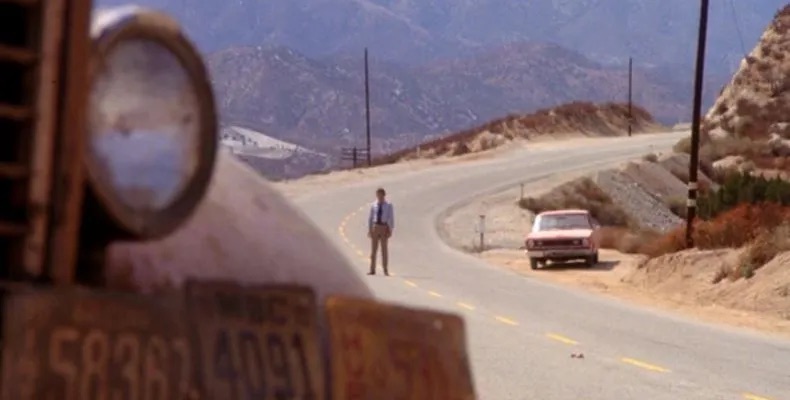
Spielberg was a kid in a candy factory when he became a young director at Universal, after his homemade film, Amblin’ catch industry attention. His early TV work was on the series Night Gallery and Columbo, before he got his chance to direct the TV film, Duel.
More names join the story. Harrison Ford, Robert DeNiro, Melissa Matheson (Ford’s future wife and Coppola’s mistress) and a variety of Hollywood agents/producers/studio execs and it’s a very small world. The whole story of Matheson was new to me, and the fact that she was part of Coppola’s life for years before her involvement with Ford shows the funkiness of this crowd.
Apocalypse Now was a film that Milius wrote based on the Joseph Conrad novel, Heart of Darkness. It was developed under Coppola’s Zoetrope umbrella for Lucas to direct. Coppola ended up rewriting and directing it himself while Lucas was making Star Wars and preparing Raiders of the Lost Arc, but it was a big thorn in the ever-changing Coppola-Lucas relationship.
Lucas was the junior partner in the Coppola-Lucas relationship, until he scored big with Star Wars, he not only produced the film that overtook Jaws to be the top grossing film of all time, Lucas had negotiated a contract with 20th Century Fox that made him very wealthy and led to the development of LucasFilm, Industrial Light & Magic, Skywalker Ranch and other large assets. Even though Coppola was the first to establish his own company in Zoetrope, LucasFilm was far more successful.
Coppola and Lucas fall out
“Francis isn’t just a filmmaker,” Lucas said. “He’s an Italian opera. He’s the kind of person who would’ve built the Vatican or, before that, the pyramids. He thrives on chaos and tumult.”
Coppola’s original pitch to Warner Bros. for seed money was simple: Coppola would bring a batch of young filmmakers just like him to make films aimed at a younger audience. Warner would invest in Lucas’ film, and give Coppola money to set up Zoetrope. THX 1138 didn’t impress Warner execs, who demanded cuts to make it more sellable. Lucas refused and accused Coppola of not push back. Changes were made, but the film bombed anyway. Lucas felt betrayed. Under the deal, Warner would have right of first refusal to the scripts Francis pitched, including The Conversation and Apocalypse Now, drafts of which were expected to be ready to read around the time THX 1138 wrapped filming. That didn’t exactly happen and Warner pulled out, demanding their money back.
The Godfather and the deal Coppola could not refuse
Then Paramount came calling. They offered Coppola The Godfather. Coppola didn’t know what to do. “Francis,” George said, “we’re going broke. They’re gonna chain the door. You have to do this, we have no other alternative. We need the money.” Paramount envisioned a low budget, over the top gangster film, but that’s not what they were going to get. The Godfather was not a cheap gangster film, but a family chronicle. “A metaphor for capitalism in America.”
“Everybody who knew Francis felt he was selling out,” said Caleb Deschanel.
“My life before and after that film,” Francis remembered, “—it was night and day.”
Coppola envisioned Lucas as his heir apparent, to take over Zoetrope when Coppola was making his films. It was Coppola who felt betrayed when Lucas turned his attention to his Star Wars project. “Everybody utilized Zoetrope to get going, but nobody wanted to stick with it,” Francis complained. “Zoetrope was picked clean. Everyone had used it, no one had contributed.”
The original dream was freedom, to develop and finance their own projects, to control distribution, and own the films.
“We were aware,” says Walter Murch of the opening of American Zoetrope, “from a cinematic point of view, that we were putting our flag on the moon.”
The dream didn’t quite materialize as envisioned. Lucas and the others criticized Coppola for his lavish living while paying everyone else peanuts. That’s really why they sought deals elsewhere and left. Lucas would leave as well after Coppola announced that he, not Lucas, was going to director Apocalypse Now.
“Back when Reagan was elected, the mood of the country changed, and the studios changed,” says Walter Murch. The failure of Heaven’s Gate nearly bankrupted United Artists and really opened the door to the MBA crowd taking over studio leadership, and the emphasis changed from art to blockbusters.
Money problems
Coppola purchased Hollywood General, a ten-and-a-half-acre movie studio on Santa Monica Boulevard and Las Palmas, on March 25, 1980, for $6.7 million. Renamed Zoetrope Studios, Coppola put his Godfather and Apocalypse Now profits into his down payment. Coppola also planned to put together “a whole studio in San Francisco. He was going to take over North Beach and make it a cultural protected zone,” according to Murch.
Coppola first went to Lucas to borrow the money. Murch said that Lucas considered it but turned Coppola down. This was after Star Wars when Lucas was knee-deep in profits. “I made you!” Coppola protested. “You wouldn’t be rich if it wasn’t for me! And now I’m trying to do something great. It’s an investment, George! It’ll be a huge success!” Lucas told his mentor that it was was just too large of a financial risk. This was another knock in their relationship.
After Coppola made money from Apocalypse Now, he poured it into his studio and couldn’t raise the funds for his next film, One from the Heart. as George was paying for the Star Wars films, so, for all his talk of independence, he immediately had to return to the studios for cash. Coppola borrowed money from Paramount, who was distributig the film, and various banks, plus a Canadian real estate investor, who would swoop in and take the Zoetrope studio lot when Coppola couldn’t repay the loan.
Coppola had put up his house and Napa Valley winery as collateral to his loans, and the banks were demanding repayment now, too. He entered Zoetrope Studios into Chapter 11 proceedings and filed for personal bankruptcy. Zoetrope Studios was shuttered.
First with Apocalypse Now, then One From the Heart, and later with Megalopolis, Coppola would overshoot. Coppola would dig himself out of debt, several times, and would prosper through his various investments, especially his wine business, and becoming a director for hire. Eventually, he gave in to an offer he couldn’t refuse to make The Godfather III, a film everyone seemed to do for the money.
Coppola’s wife Ellie, long his supporter, even when he carried on affairs with very little discretion, summed it up when she told him he was out of control during the shooting of Apocalypse Now. She told him “what no one else was willing to say, that he was setting up his own Vietnam with his supply lines of wine and steaks and air conditioners. Creating the very situation he went there to expose. That with his staff of hundreds of people, carrying out his every request, he was turning into Kurt going too far. I called him an asshole.”
In his 80s, Coppola would self finance a grand film project, Megalopolis, pouring a reported $120M of his own money into what turned out to be a major box office failure. Once again, he gambled and lost, the result was to sell the vineyard and wine business along with other assets.
The Adventures of LucasFilm
Even though Zoetrope struggled, Lucas found his footing, but in the 1980s, money proved to be tight for him. His divorce from wife Marcia cost him $50M, and he was in development on his next Star Wars film. Word came down that Lucasfilm would go quiet for a little while. Many employees moved on. A few months after Jedi’s release, George called another company meeting, telling his remaining employees that things were going to change. “This isn’t a family,” he said. “This is a business. You work for me. Sometimes, I feel like I’m working for you.”
“I’m not having fun,” George told journalist Audie Bock when she visited the set for the New York Times. “I’m only doing this because I started it and now I have to finish it.” It’s pretty clear that George Lucas didn’t care to direct, and he didn’t see himself as a writer. He envisioned projects and guided their development, but even running his company wasn’t always fun when business replaced artistry.
Lucas could be very business astute and it made his fortune. In his negotiations with 20th Century Fox for the original Star Wars, Lucas smartly got control of merchandising, which Fox execs assumed would be nothing on this little space-fantasy film. Wrong. His contract with Fox made Lucas very wealthy. In 2012, he sold Lucasfilm, its holdings, and its intellectual property to the Walt Disney Company, in exchange for an estimated $4 billion. According to Forbes list of wealthy entertainers, Lucas is only second to Spielberg’s 7.1 billion worth.
Star Wars a tough sell initially because the adventure was in Lucas’ head. Even after the initial cut was shown to Lucas’ friends, not everyone understood what they had just seen. Brian De Palma began peppering Lucas with questions about what the stormtroopers were supposed to represent, what was a tractor beam, why didn’t people bleed when shot with a lazer, why was Leia’s hair in the buns? De Palma was really piling it on when he started joking about “the Force’, what the hell was that? Lucas wasn’t happy.
For Lucas, Star Wars was not just a film. “George had this whole plan,” De Palma says. “He wanted to build a business that had nothing to do with Hollywood.” Fischer writes that Lucas envisioned sequels, and he needed them to be at least as successful as Star Wars, which Fischer points out is exactly how the studio execs, which Lucas loathed, approached their business. Welcome to becoming a suit.
George’s sense of superiority stung; he had become “too good for everyone,” Milius said, and “very, very distant. George has his entourage around him. Could do no wrong. Everything was for George.”
George showed him plans for a complex he called Skywalker Ranch. He had bought land in the woods north of the Golden Gate Bridge, and wanted to build a campus for filmmakers, with everything they needed in an idyllic setting. Like Zoetrope, but bigger and better. “This is what this film will pay for,” he said. “This will only happen if Empire works.”
According to Fischer, Fox would pay Lucasfilm $10 million upon delivery of the final cut—and then pay George’s company 52.5 percent of Empire’s profits up to $20 million, 12.5 percent up to $100 million, and 77.5 percent thereafter, in perpetuity. Nicely done.
But even the maker of personal films, whose vision was to be something more than just the bottom line, became focused on the profit/loss spreadsheet. “He ran into trouble with Empire and probably decided, with that point of view, that, I’m not spending my own money anymore. I’ll spend my money on other things, but not that. I’m gonna make my money where all the money came from,” which was toys, T-shirts, games. “He set Lucasfilm up as a business to be run by business people,” former Lucas attorney Jake Bloom adds, “whose backgrounds were in business and licensing and merchandising.
Just Amblin’ Along
Spielberg, even as a veteran director seems to possess that boyhood excitement about making movies. Like Tom Cruise, Spielberg probably leaps from his trailer every morning shouting “we get to make a movie today!”
Spielberg went from overzealous student filmmaker to Universal’s top money producer. Spielberg continues to receive a portion of each ticket to Universal’s theme park. The book gives Spielberg the least amount of print, probably because he leaves a money trail instead of a drama trail, and he seemed to not repeat the missteps of his brother filmmakers.
Spielberg wasn’t part of Coppola’s group of young film grads, but he was of the generation, and his films kept competing with Coppola and Lucas for top of the box office ranking. Spielberg would team with Lucas on the Raiders of the Lost Ark films.
Spielberg set up Amblin’ Productions and would later partner in creating DreamWorks SKG, but would develop films with different studios.
The story of Jaws has been told many times – a difficult shoot with many location problems, but Spielberg delivered. Universal knew they had something special on their hands so they changed their marketing strategy. Instead of a slow rollout, they would book Jaws into four hundred, five hundred cinemas nationwide, simultaneously. Instead of booking more theaters, Universal head Lew Wasserman “wanted a balance to be struck: enough cinemas the film was available everywhere, yet few enough that the screenings would still be sold out and news stations could show footage of lines around the block, a visual representation of the film’s popularity that would drive people to want to see it more surely than any paid advertising.” The summer blockbuster was born.
Final thoughts
The student film rebels changed Hollywood, but it changed them in the process. Coppola, Lucas and Spielberg turned from filmmakers to powerbrokers and beholden to the same old studio paradigm they tried to change. Each started their own production company and grew them into studios as their film became successful and they became wealthy. Each understood the reality of putting their own money into their films, and the financial pressures it caused. Coppola got badly burned several times. Lucas and Spielberg avoided going over the cliff like Coppola, but they relied on the same watchful, conservative guardians of their money. The late 1960s mantra about spreading the wealth, watching the screen not the bottom line, and despising the studio management, turned into wealth accumulation and squeezing every dollar out of each deal.
Of the three “kings” only Spielberg emerges mostly unscathed. Coppola, the “big brother”, wore his own demons, gambled and lost, and soiled his own legacy. Lucas, for his quiet and benevolent facade, appears to have changed the most. Success does strange things to people.
There’s a great deal of Hollywood history in this book. Fischer makes it easy to read even if the focus bounces around and time jumps.



Leave a Reply