
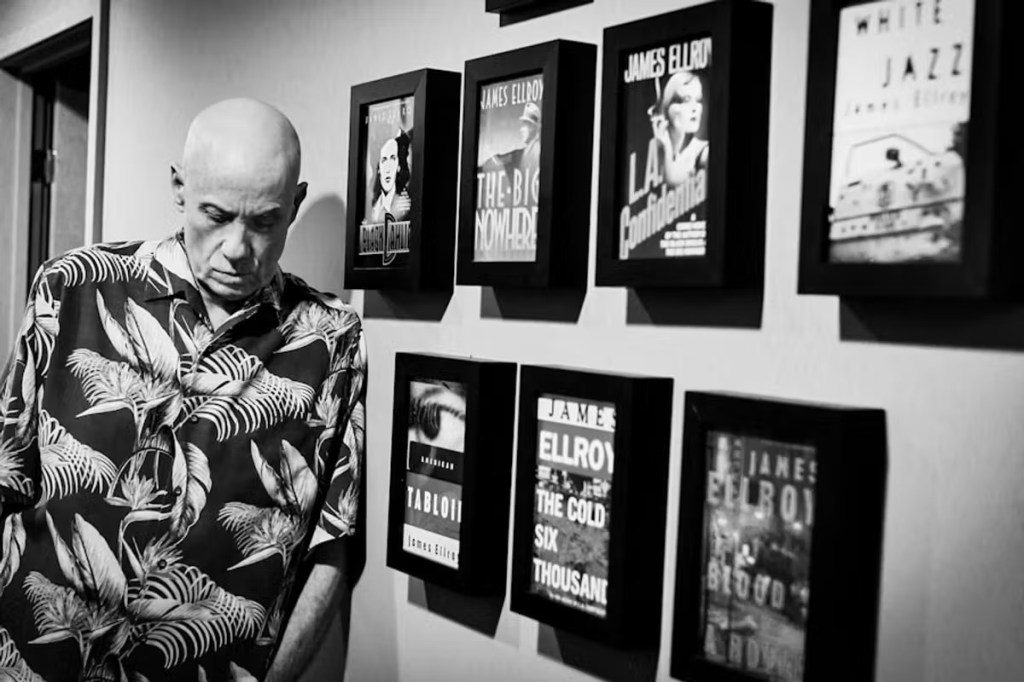
Best crime writers. Raymond Chandler, Dashiell Hammett, Jim Thompson, Mickey Spillane, James M. Cain, Elmore Leonard, Edgar Allen Poe. Add modern writers: Michael Connelly, Don Winslow, Lee Child. It’s all very subjective, so don’t fret if I didn’t list a favorite.
Add James Ellroy to the list. Born Lee Earle Ellroy in Los Angeles, 78 years ago. A very different era. An only child in an unhappy household, his parents divorced, his mother was murdered and he became a fucked-up kid. His father died while Ellroy was a teen and he was left to fend for himself. So began his adventure.
Ellroy writes in a choppy, blunt, staccato style. His books were too long, so to mollify his editor, Ellroy didn’t trim the story, he edited words out of sentences. Ellroy-speak.
Ellroy did not finish high school, was briefly in the military, and was in and out of jail on minor arrests. His consisted of drinking and drugging, a sex obsession, few positive prospects, and living hand to mouth. A story for one of his books – My Dark Places. But I’m getting ahead of the tale.
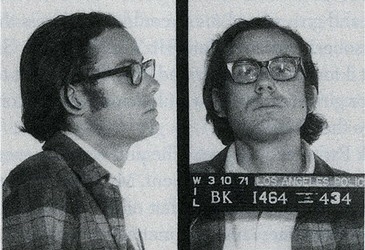
Ellroy’s early adult years were tough. A variety of bad jobs, frequently evicted for back rent, stealing, and caddying for meal money. The future is nowhereville. He was raging, his mother’s brutal murder, he hated her. He read, crime stories. He thought, I can do this.
Enter Jack Webb
Jack Webb. James Ellroy. These two names are forever linked in L.A. law enforcement, but neither were cops, prosecutors or judges. Webb’s Sgt. Joe Friday popularized and promoted a romanticized L.A. cop on the beat, hardworking, low paid, driven by the words behind the badge. Ellroy looked under the badge and inside a cop’s battle of good verses evil. Not all cops were good and the L.A.P.D. had a dark past.
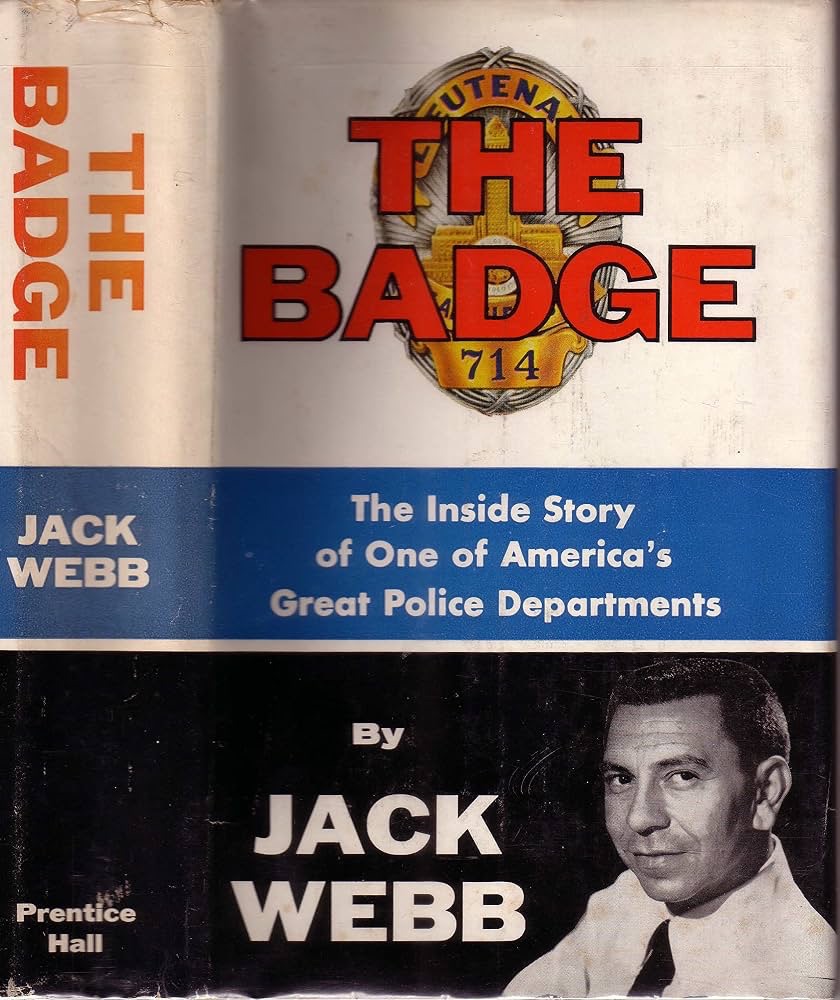
Ellroy was enthralled by Webb’s book, The Badge: The Inside Story of One of America’s Great Police Departments. Many years later Ellroy would be presented the Jack Webb Award by the LAPD Historical Foundation. Webb would have had a hard time recognizing the cops Ellroy wrote about – drug users, killers, sex addicts, political animals. The LAPD has had multiple scandals in recent history, even before the Rodney King and Rampart Division events, cops with hats, and cops with heavy badges, inflicted their own brand of justice on the streets of L.A.
Then-LAPD Chief William Bratton (2002-2009) said that Ellroy’s depiction of the department was a “more realistic side, 40s, 50s and 60s, very corrupt and brutal, and not particularly well respected.”
Webb and Ellroy approached telling stories from the opposite ends of the night stick. Even their narratives styles have very different cadences.
Ellroy’s writing style is the most challenging I’ve ever discovered. Short bursts of cool-kat wording, then long state of consciousness passages. You read it, then read it again. It’s not just a scattergun of jagged phrasing, there is a rhythm and urgency, an undercurrent of danger. Decoding Ellroy-speak is a challenge, and I have failed more than once.
“I just love the American idiom,” Ellroy explains. “And as the books have evolved, the language has evolved. I love racial invective, Yiddish, black hepcat jazz patois, alliteration, cop bullshit, penal code abbreviations… I love putting it all together. I love living in a world of language from days gone by.”
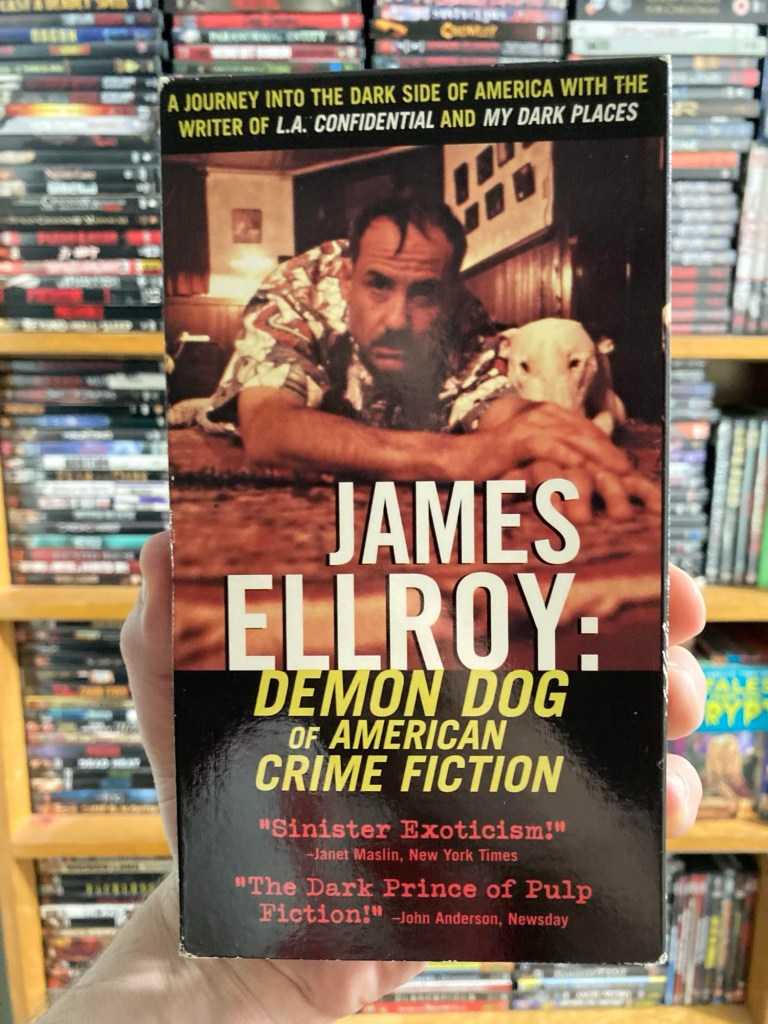
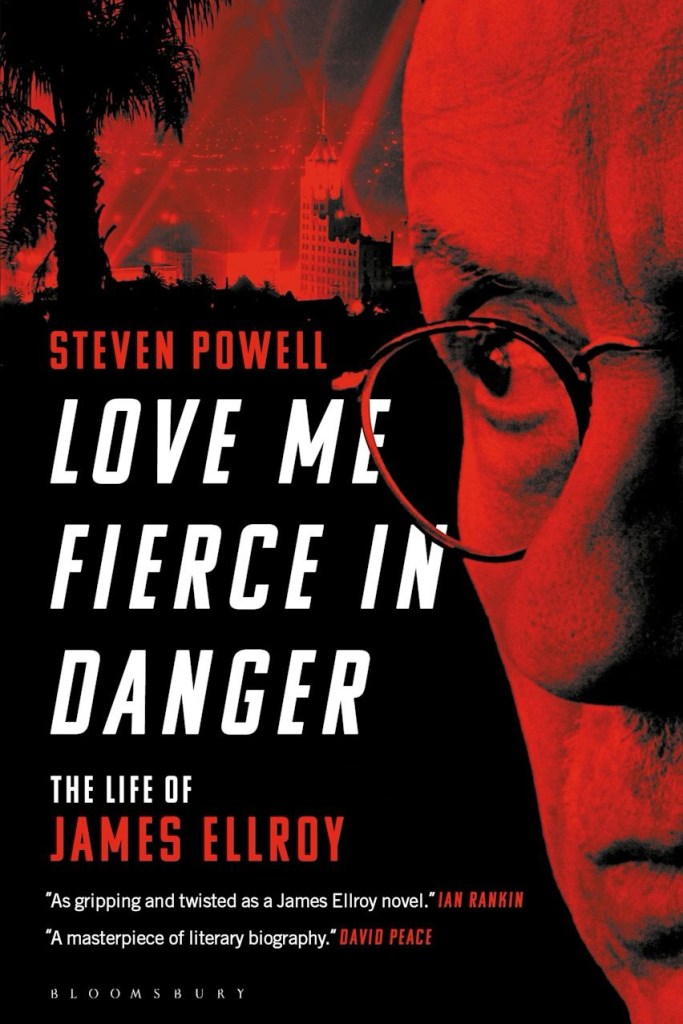
Reinhard Jud’s James Ellroy: Demon Dog of American Crime Fiction (1993) profiled Ellroy, who gave himself the nickname “Demon Dog.” This documentary takes the viewer on a dark journey into Ellroy’s L.A., where he discusses his mother’s murder and his fascination with Elizabeth Short, The Black Dahlia. There are other documentaries that take you into Ellroy’s world, and a book, Steven Powell’s Love Me Fierce in Danger: The Life of James Ellroy, will submerge you deep into the Ellroy abyss.
In Webb’s book, that a young Ellroy read, a section talked about Elizabeth Short, the Black Dahlia, who would stand in for Ellroy’s murdered mother. They became one in his mind.
“I was sexually obsessed with my mother,” Ellroy says. “My mother gave the gift and curse of obsession.”
When Ellroy told his mother of his desire to live with his father, she slapped him and he cut his forehead falling on the coffee table. “From that moment on, I hated her and wished she was dead.” Two weeks later, she was.
Even though Ellroy knew that his mother and the Black Dahlia might be joined in his mind, they were different murders and different stories, but he had to “get down and dirty with Elizabeth Short first.” His book on the Black Dahlia would come after he had written a handful of other books first, but he would get there.
Enter Bill Stoner
Bill Stoner was a retired LACSD detective, who Ellroy approached to help him reinvestigate his mother’s murder. Stoner had access to the murder file and carried a lot of weight in re-interviewing witnesses. After some soul searching, Stoner agreed to take the job. This was a very cold case. Her death formed him. Saw the murder file and wanted Stoners’s help. There was a book in it. My Dark Places.
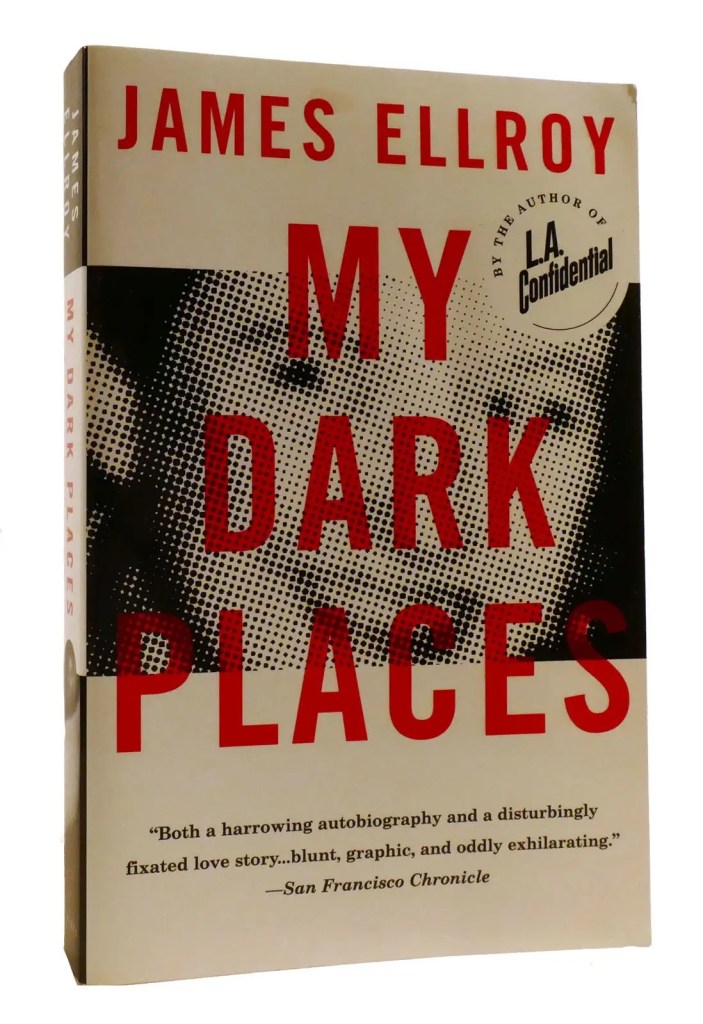
The reinvestigation allowed him to know his mother, to honor his mother and to love her. He learned a great about “simple human compassion” and said that his books will show more diversity of character and motive.
Meeting James Ellroy
I met Ellroy when he published The Cold Six Thousand at a book signing not far from his then-home in Mission Woods, Kansas, an unlikely address for him. A ritzy, old money suburb in the Kansas City metro, he lived with his second wife, writer Helen Knode.
Ellroy is everything you’ve read about and more. Women find him charming, he has a performance art shtick that he does for audiences. He’s tall and imposing, his voice can boom and his eyes are intense.
Good evening, peepers, prowlers, pederasts, panty sniffers, punks, and pimps. I’m James Ellroy, demon dog of American literature, the foul owl with the death growl, the white knight of the far right, and the slick trick with the donkey dick. My books are written in blood, seminal fluid, and napalm. They will leave you reamed, steamed, and dry cleaned, tied, dyed, swept to the side, blued, screwed, tattooed, and bah-fongooed.
His spiel is tempered over decades of book tours around the world. Although he tried hosting some TV mystery shows, the filmed Ellroy and the in-person Ellroy are quite a different effect. He’s used to working a crowd, the trick is to decide what is real and what is performance.
I tried, but I couldn’t make it through The Cold Six Thousand, it was thick and the writing style was dense and hard to decipher. Like everyone else, I had seen the movie L.A. Confidential, based on his novel. If you told him that you loved the film he would automatically ask if you had read the book. For most people, the answer was no and he would give you an angry response. In later years, he reportedly would not answer questions about that film.
I told him I liked the film, but I was also holding a copy of L.A. Confidential, the book, and I also had My Dark Places. No nasty look. Royalties, baby!
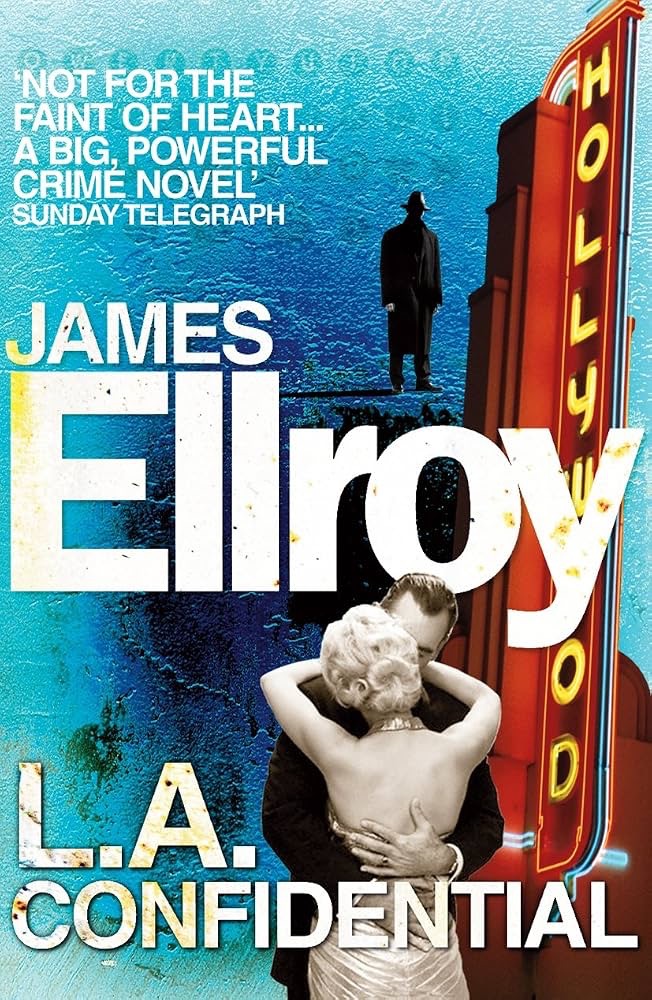
Naturally, he had issues with the film, and his view of Hollywood was mixed. He enjoyed the money from options on his books, but his view of what Hollywood did to his books, and the arrogance of film people in general, made him sick.
His book, The Black Dahlia, a fictionalized telling of Elizabeth Short’s grisly murder, made Ellroy’s career. Six prior crime novels had allowed him to eke out a living, while impressing an endless stream of women in short-term relationships, but kept him on the hamster-wheel of cranking out low-selling books.
Elizabeth Short and Jean Ellroy were forever seared into his psyche as connected murders. No, not by the same evil mind, but the psychology and impact were tied together. His mother’s never-solved murder, got only a brief mention in the news and was forgotten. To Ellroy, it changed his life. The Black Dahlia primed Ellroy for investigating his mother’s cold case, with the help of Stoner.
Ellroy’s My Dark Places will do what nothing else will, take you there by his own words and tangled memories. Do I recommend it, only at your own risk.
Where is Ellroy today? He divorced Helen and skidattled from Mission Hills 20 years ago for L.A. In recent years, he reconnected with Helen, moved to Denver to be with her, but in separate apartments in the same building. A dog must have his space. So far, the arrangement has seemed to work.
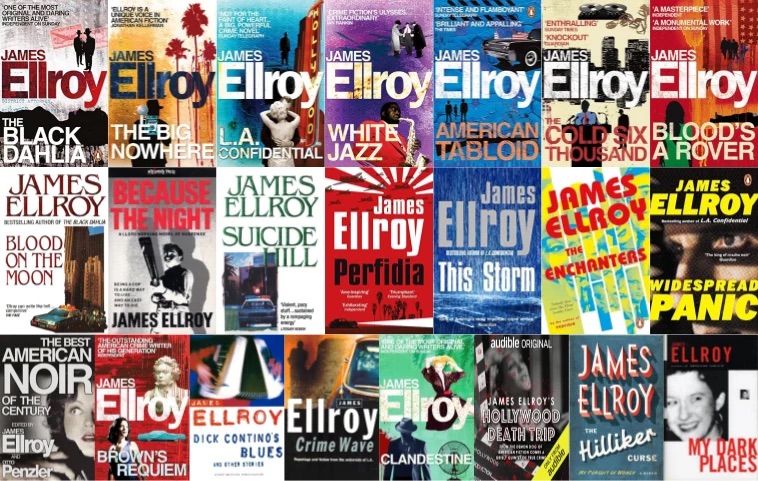
Ellroy’s latest book, Red Sheet (2026), another L.A. crime mystery that involves communism, drugs, the film industry and even Richard Nixon, who is running for governor of California. It’s a wild ride. My review.
I’m working on a review of The Enchanters (2023), which involves Marilyn Monroe and the Kennedys.


 Ticket 2 Ride
Leave a comment