
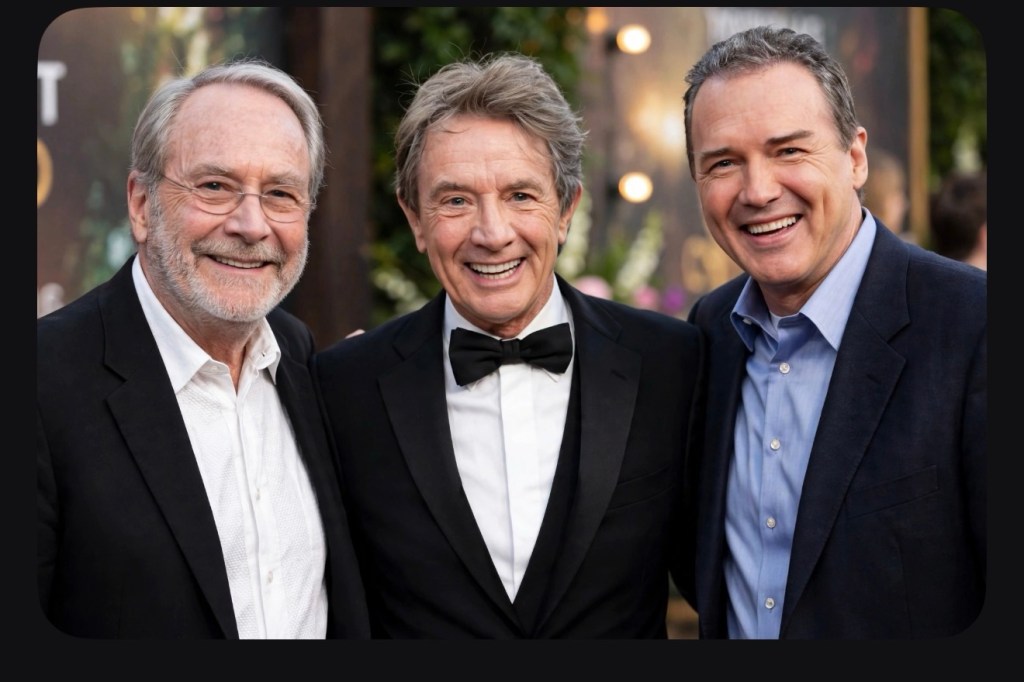
Netflix offers many film documentaries. I would recommend these to anyone familiar with or aware of these three comedian/actors.
Norm: The Tale of Norm Macdonald
Judd Apatow’s documentary on Norm Macdonald, the late comedian who was famously fired by NBC Network President Don Ohlmeyer from SNL’s Weekend Update. Norm said his obituary would always lead with that fact. He was correct. From the Weekend Update desk, Norm had targeted O.J. regularly with caustic jokes. Reportedly, Ohlmeyer took offense to this barrage and called Norm unfunny and fired him. Ohlmeyer was a close friend of Simpson and threw a party for jurors after the acquittal.
I was never a big fan of Norm MacDonald’s humor, but I enjoyed this film. I found his jokes often cruel, but usually spot-on. I can see why he was fired, not that I agree with it, but I did find him one of the least engaging of the SNL Weekend Update anchors. Other people found him brilliant.
The documentary is comprised of clips and interviews during Norm’s life, there are no new interviews in the film. Norm was certainly beloved by the community of comedians who had great respect for his humor, deadpan delivery and “I don’t care attitude. He is referred to as a “comedian’s comedian”, whatever that is. His snarky style and the acerbic tone of his jokes, can be a turnoff.
Many of the clips are from his later years, when he was doing a lot of talk shows and his video podcast, and he had put on weight, a condition that is frequently noted in the film. What wasn’t universally known at the time was Norm battled leukemia for nine years leading to his death. That fact for me is important to unraveling the story of Norm MacDonald – what did we really know about him?
I admit, I knew almost nothing about him. Apatow frequently cuts to internet searches on things people didn’t know about Norm. Why was he fired from SNL? Was he ever married? Does he have any kids? Why the weight gain? Where has he been?
Watching interviews and talk show clips, one is never sure of whether his comments are genuine or part of a joke routine. Many comedians hide behind that veil, Norm MacDonald being a master. He often gave conflicting answers in replying to answers about himself. Why he did that is unclear.
So what did I learn? Norm was sick for many years and few people knew. He had a son that Norm protected from public exposure. When Norm was asked to participate in a roast of his friend Bob Saget, Norm could only make vague, impersonal jokes, which left the crowd mostly sitting silently. He couldn’t say mean things about his dear friend. Norm quit college and worked unskilled labor jobs, which he enjoyed. Did fame mean anything to him? Who knows. At times he gambled away a lot of money including a $400k Super Bowl bet.
Norm seemed to walk to the edge of something and couldn’t decide whether to stop or keep going, knowing the risk but continuing anyway. When he was fired from SNL, he could have avoided that, but he kept going. When he made comments in support of Roseanne Barr and Louis CK, he didn’t understand, or care, about the fallout he received. He kept talking and making it worse.
Ohlmeyer tried to keep Norm off of other NBC programs and banned advertising of Norm’s film, Dirty Work. Norm said he didn’t like acting, he thought he was terrible at it. How many other comedians with that kind of profile pivoted from standup to mainstream success in TV or film? A lot. Norm had moderate success, but he settled for less. Was he bothered by it? Hard to tell.
That last chapter of the film shows a Norm who seems to understand his mortality and had somewhat softened his attitude. That’s what I read into what Apatow presents. There was a side of Norm that I hadn’t seen before. The scenes with his mother, who lived next door in another apartment, are sweet. Sweet in a film about Norm MasDonald? Yes, you heard it here.
Marty: Life is Short
Directed by Lawrence Kasdan, longtime friend of Martin Short, and produced by Imagine Entertainment, this is a sweet and sometimes sentimental look at Martin Short’s life and career. More often, the documentary is funny, heartwarming and a celebration of the life that surrounds this man. Not only him, but his family, his universe of friends and colleagues. Tom Hanks, part of Martin’s universe, sums it up with the word, j-o-y. That’s Martin’s world.
But there is tragedy and loss. Martin’s older brother died when Martin was 14, then his mother died four years later, then his father two years later. Those events brought the four surviving siblings tighter together. After 30 years of wedded bliss, wife Nancy passed from cancer. Family and friends surrounded him. The film is full of what friends called the marriage that everyone envied; their happiness fills the documentary.
Even if you aren’t a big fan of Martin Short, this film will rub off on you, your soul will feel lighter. Kasdan has created a loving story for his friend. You also get home movies, including one of Tom Hanks and Martin reenacting a scene (Steven Spielberg cameraman) from Butch Cassidy and the Sundance Kid – but as Forrest Gump and Ed Grimley – when they jump off a cliff into a roaring stream below – but instead they jump from a yacht into the ocean. This is just one example of the behind-the-scenes look into the Martin Short universe.
Not covered in the documentary is the February 2026 death of Martin’s daughter, who struggled with mental illness. Filming of the documentary was already completed. A clip from CBS Sunday Morning.
I can’t think of anything negative to say about this film. One might suppose it’s a bit too sweet with all the love and laughter, but Martin and cast are quick with their sarcasm and reminders of how they temper their success and opportunities with life in the real-world. Death will do that.
Who is Martin Mull?
That name might draw a blank. The face is probably familiar because in the late 1970s, he was a very well-known comedian/actor. You might have seen him on Fernwood 2Night, that talk show parody where he teamed with Fred Willard as his sidekick and Frank De Vol as the band leader.
Martin Mull’s career was much more than that blip on the comedy radar. Who was he? This documentary answers that question.
Martin was a painter, he grew up drawing pictures and attended college to study painting. Along the way he taught himself to play guitar and started writing funny songs. That earned him a contract to write songs and he toured doing music and comedy act. That paid the bills, but he always painted. His music/comedy act was very popular, he open for artists Bruce Springsteen, Billy Joel and Monty Python.
While in L.A. he got noticed by producer Norman Lear who developed Fernwood 2Night for him. That was his first big break. Film roles followed along with TV and comedy albums. Along the way he met Steve Martin who talks in the film about his long friendship with Martin.
His second big break occurred when he started appearing on The Tonight Show and eventually was asked to guest host, which he did 30-plus times. That job brought him into America’s homes.
The film naturally delves into Martin’s early life, an area where Martin declined to talk about. Martin’s brother relates how their father was physically and emotionally abusive to his children. Later, when Martin discusses the evolution of his paintings, we hear how it plays a therapeutic role in exorcising much of the pain from that period. The abuse is rooted in his problem with alcohol, which dogged Martin until he became a father. A first marriage, a grand mistake he says, left him reeling and deeper into the alcohol.
The film is the audience’s search for who Martin Mull is, but as we see, it wasn’t until late in his life that he accepted who he was. This journey of self-discovery led to his recognition of painting as his primary vocation. His life had been a challenge of what he did to earn a living, when painting was his true passion. Most of us would be happy to have creative success with one form of art, and Martin achieved great success with three.
Comedian/actor/director Bob Saget began this film in 2018, as a series of interviews with Martin. Saget died four years later, leaving the film to be completed by filmmaker Neil Berkeley. While Martin talks about this journey of examining what he did, others including his wife of 42 years and his grown daughter, reflect on who he is, and was – a friend, a husband, and a father.
As the film was being made, Martin knew his clock was ticking down. He was reflecting on his own mortality, which is a scary thing to any of us. Martin laughed about of his shrinking list of friends, and not having enough left to carry his casket.
Late in life Martin had his first showing of his art. Hard to believe. That showing was followed by several other sold-out showings. People were shocked to learn that he painted, and was so talented. His paintings were a hot item, and a big seller with serious collectors. At that point, a complete stranger surprised him by knowing his name – not as an actor or comedian – but as that painter. Validation. Finally.
The film ends after Martin has passed. His studio has been emptied, with his wife looking out the window where light once filled the space where he painted.
The documentary left me feeling sad. I’m not sure why, perhaps it’s my own mortality, or that question – who am I?
Final thoughts
If you are still with me, great! I saw all three documentaries within a two-day period. The two Martins were contemporaries of each other, with Norm a few years behind them, but also a large comedic figure.
Each film offered a different kind of journey into each subject, yet all three tried to answer the same questions: what defined each person and what was their impact on those around them? Each man had his own measure of career success, but all three films were focused on their personal exploration and achievement as human beings
I’m a big fan of documentaries because a well-made one can succeed without the viewer already being a fan of the subject matter (although that helps). The skill of the filmmaker can create interest, engagement and revelation. Apatow, Kasdan and Saget/Berkeley can check those boxes.
Enjoy!
P.S. Hug your family and friends, and tell them how much they mean to you. Not later clown, right fucking now!



Leave a Reply