
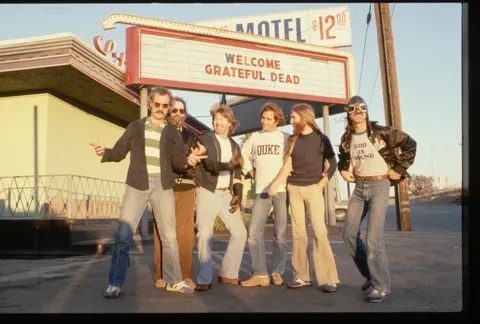
The Grateful Dead pop stars? Who’d have imagined, but for a short time the Dead were pop-trendy, at least according to a new book.
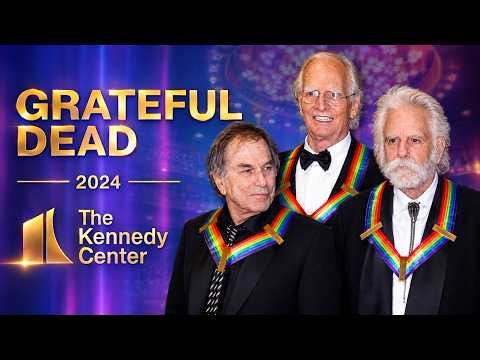
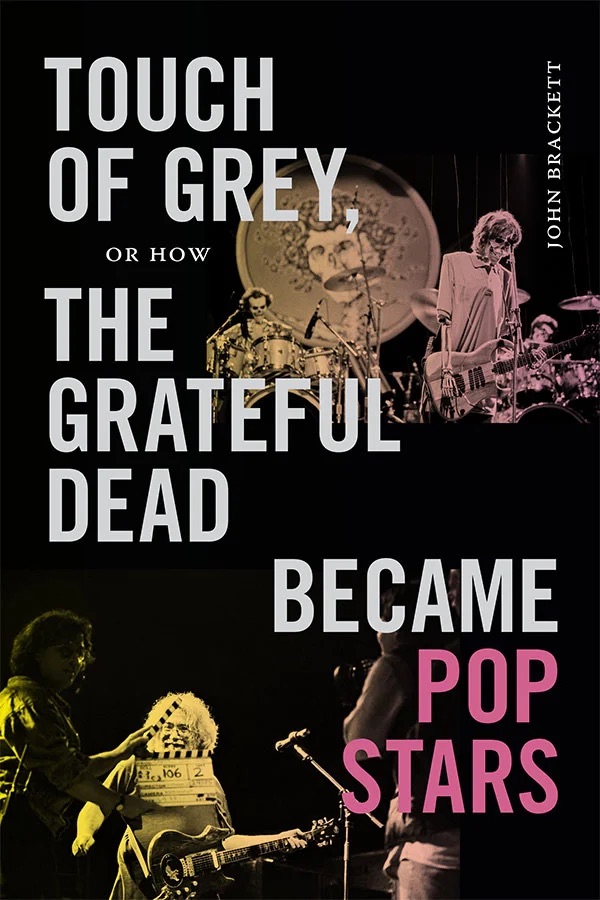
This isn’t a book review per se, but I am using Touch of Grey or How the Grateful Dead Became Pop Stars by John Brackett (2026, Duke University Press) as a reference, so I’ll comment on the book as I go.
Thinking about the Grateful Dead today, they were, and still are, a very successful brand, even though for many years they existed on the fringe of the music industry. As recording artists, their albums sold to a devoted fanbase, although they only had a few Gold Records in their library, and until “Touch of Grey”, no Top 40 singles. Granted, they had a loyal following and made their money through touring and merchandise, not from record sales. Sound familiar? That’s what legacy artists do today. Even the Rolling Stones, The Who and Rod Stewart have only respectable record sales, it’s touring, merchandise and licensing of songs for ads/films/TV that brings in the big bucks.
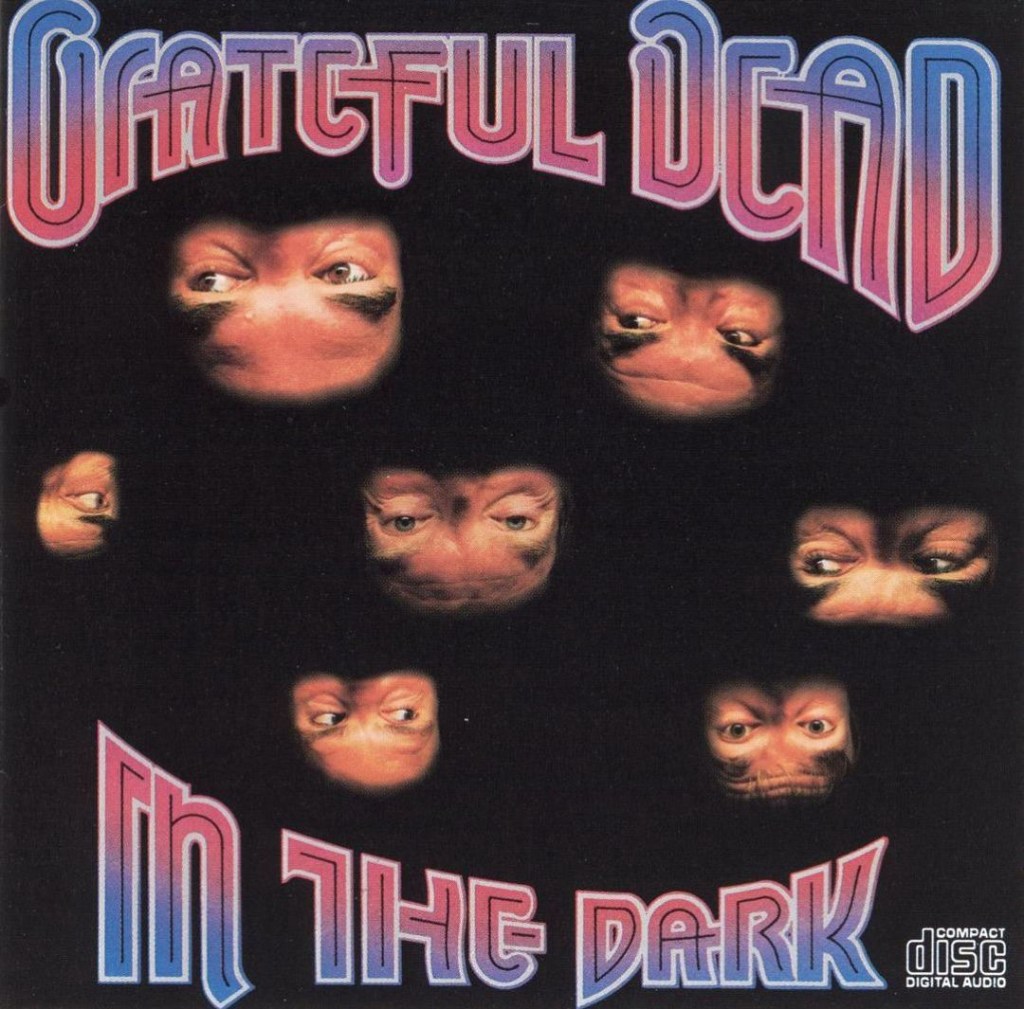
I’m no expert on the Dead and their business empire, but with the release of In the Dark (1987), the band’s music profile rose considerably and they crossed over into the mainstream. Brackett’s book explores the post-1980 period in detail, the galvanizing event being the song “Touch of Grey.”
The Early 1980s
In the early-mid 80s, the Dead were primarily a touring band. Although they had an active recording deal with Arista Records, their recording output was mainly live albums selling to their fan base. Their last studio album was Go to Heaven (1980), with “Alabama Getaway” as the single, which never got close to the Top 40. Although Bill Kreutzmann has said time has been kind to the album, he seemed not very proud of the cover, the band in white disco suits. Even then, the band was accused of recording an album with the record buying public in mind. Looking at comments from critics, fans and the band themselves, no one at the time seemed pleased with the result. Seven years would pass until the next studio album.
In 1986, Garcia was getting increasing pressure to improve his health and diet. He simply wasn’t at his best. To punctuate that, he fell into a diabetic coma for several days, but miraculously recovered, and promised to behave.
Enter “Touch of Grey”
Also in 1980, songwriter Robert Hunter began performing a song he had written called “Touch of Grey” as part of his setlist. Hunter had written the song following a night of heavy cocaine use and was paying the price the next morning, as he struggled to write the lyrics to his song. I will survive, he wrote, hoping that he would.
Hunter, and then his writing partner, Garcia, would tweak the lyrics and Garcia would overhaul the music entirely. Hunter’s lyric “I will get by, I will survive”, became “We will get by, we will survive” would help this song turn into the Dead’s anthem. The band began playing versions of this song in concert (for five years), continuing to tinker with it even during recording sessions for In the Dark. They, and fans who grooved to it in concerts, knew they were onto something special here.
We Need a New Album!
With Garcia back among the living, the band decided they needed a new album. The already had a start since they had been performing s few songs that would make the album.
Recording started in an empty Veterans Memorial Auditorium in Marin County. The idea was to simulate playing live, which they were most comfortable with, then add overdubs in the studio. So they played to empty seats but found their vibe.
Dead keyboardist Brent Mydland started learning the DX 7 and a Yamaha TX816, rack-mounted synthesizers, opening up possibilities for creating a variety of sounds used on In the Dark. Synthesizer technology made was rapidly advancing and would especially help a band that’s on the road as much as the Dead. Synths were heard all over the top 40 charts in the 1980s.
Arista got behind the album and paid for a “Making of” video along with the famous music video of the skeletons performing “Touch of Grey.” The Dead weren’t interested in MTV, but it was inevitable that the two worlds would meet.
Arista’s marketing push, a busy touring schedule, and exposure on MTV would give the Dead something they had never really sought – a hit. “Touch of Grey” broke into the Top Ten. The album would surpass platinum status and reach No. 6 on the Billboard chart. The Dead were a hit, they achieved that dreaded pop-star status.
Research by Arista had shown that females and teens in general were a small part of the Dead fanbase. Arranging features on Entertainment Tonight, The Today Show, a Rolling Stone cover story, and even a story in Forbes lifted their profile, but the MTV “Day of the Dead” programming special and showing of the “Touch of Grey” video would work on those underrepresented demographics.
The concern was in alienating the hardcore fans, who were important in the evolution and survival of the band. During the summer of 1987, the band toured hot and heavy, including many dates with Bob Dylan. If the box office was any indication, fans, including new ones, were showing up.
Too many new fans according to some accounts. The downside of success caused concert staging issues, security concerns and a backlash from some hardcore Deadheads.
Robert Hunter, who started all of this with the first version of “Touch of Grey”, called this era of “Mega Dead-dom.” That was not really a compliment, but the Dead organization would see a surge in everything Dead.
The Dead had gotten a major spike in popularity and new fans joined the party, but this was a change that would cool. The band wouldn’t release another studio album, but they would continue touring.
Creating the brand
Decisions were made along the way — allowing fans to tape live concerts, setting up a mail-order ticketing service to guarantee easier access to tickets as well as reasonable prices, bringing in vendors from the parking lots as official licensees and investing millions of dollars in state-of-the-art sound and light systems — that had a profound impact on customer devotion and, thus, on extending the brand.
In the early 1970s, the members of the Grateful Dead formed the organization Grateful Dead Productions, Inc. with a board of directors and committees. The band’s publishing enterprise, Ice Nine Publishing Company, Inc., was formed in 1970 in order to license musical compositions by the band, and Grateful Dead Merchandising was formed to oversee merchandise sales and licensing. Two independent record labels, Grateful Dead Records and Round Records, were created by the band members in 1973 in order to gain more creative control over the production and distribution of albums by group and solo projects, respectively. These two labels disbanded after the band signed with Arista Records in the mid-1970s. In 1997, Grateful Dead Merchandising merged with Grateful Dead Productions, which continues to oversee the band’s merchandising and album distribution. Besides music publishing and merchandise, the Dead had an in-house ticket operation and tour travel business.
The Dead organization needed approximately $235,000 a month in the 1980s, but grew to $600,000 at the time of Jerry Garcia’s death.
“The Dead established a long-term personal relationship with their customers and that was the basis of the brand — it was sustained development against a single segment,” Sam I. Hill, chief marketing officer at Booz-Allen & Hamilton in Chicago explained. “That’s what marketing should be about, rather than glitz and tricks.”
The band earned its “incredible trust” from fans by never wavering from its original musical credo, said Peter McQuaid, the head of Grateful Dead Merchandising Inc., a key part of the Dead’s business empire. “The group never packaged itself,” he said.
Bill Graham, the famed rock promoter who was an early backer of the Dead, once said, “They are not the best at what they do, they are the only ones who do what they do.”
The glue that bonded the Dead to their Deadheads was the group’s live performances. What they did was for that night, for that moment,” McQuaid said. It resonated with their fans.
They picked a customer group, remained true to it, close to it and didn’t branch out. Until “Touch of Grey.”
In the same article, band publicist Dennis McNally explained that the Grateful Dead average about 75 concerts a year, generally embarking on two-to three-week runs of up to 13 shows each. McNally remarked how “over the past two or three years, the Dead were in the top three box office sales, growing $18M each year (in the early 1990s), without new new albums.
From 1973 until 1976, for example, the group established and operated their own record company. Even when they were signed to major labels (Warner Bros, from 1966 until 1973, and Arista since 1976), the Grateful Dead would often make decisions that seemed to go against the conventional wisdom of the contemporary popular music industry. While the band had scored some FM radio hits in the early 19702, their sustained success and longevity derived, not from being popular recording artists, but from their commitment to performing live and touring.
Between 1982 and 1986, the group had limited contact with executives at Arista. Although the band did spend some time in the recording studio in 1984, there was no real incentive for the Grateful Dead to produce a new album, as the money that they were earning from live performances-along with royalties from publishing and merchandise sales—was enough to sustain their general business operations.
The world had changed a lot since the Dead’s last studio album in 1980 as they planned for an album and single release. By the mid-1980s, CDs were gaining ground in sales, which would prove highly profitable when they began to release material from their vault.
As Bob Weir explained to a radio interviewer in 1973, he was fine with fans taping and trading recordings of the band’s concerts just “as long as they don’t try to make a lot of bread off of it.” The Dead’s policy was, “If they want to tape and take it home and listen to it and roll one, it’s perfectly fine by me,” Weir explained.
Given the widespread appeal of the tapes, the group also recognized the commercial potential of their own large (and growing) library of unreleased recordings. Before signing to Arista in 1976, the band had produced, manufactured, and distributed albums as part of their own independent company, the Grateful Dead Record Company. Formed in 1973, the Grateful Dead Record Company included a booking agency (“Out of Town Tours“), a travel agency (“Fly by Night“), and two record labels. One label, Grateful Dead Records, was reserved for recordings by the band, including the albums Wake of the Flood (1973), From the Mars Hotel (1974), and Blues for Allah (1975). The other label, Round Records, was dedicated to solo recordings and side projects, such as Kingfish, a group that featured Bob Weir, and Old & In the Way, a bluegrass band that included Jerry Garcia and mandolinist David Grisman.
1985, the group hired Dick Latvala, a longtime Dead Head and tape aficionado, to assist Legate in the vault. Although the band was still unable to produce and market their archival recordings, the Dead continued to prepare for a time when that possibility became a reality. Dick’s Picks was a successful series of releases from the vault. In the wake of their expanded popularity and profitability following the success of “Touch of Grey” and In the Dark in 1987, the Grateful Dead held all the cards when it came time to renegotiate their contract with Arista. Given how long they had been considering the possibility of “Concert Tape Marketing” (dating back to 1976 and plans for “Ground Records”), it is perhaps unsurprising that they would insist on the right to produce and sell recordings stored in their vault. Although the Dead and GDP would not release any archival recordings for a few years, clearly they knew the value of their past performances.
After Jerry
The death of Jerry Garcia stunned the Dead community. What would the band do? Suddenly the Dead as we knew them, was gone.
While the band grieved, business decisions had to be made. The $18-20 million they had been making annually from performing live was gone. Forced to cancel their upcoming tour, the group was in jeopardy of not being able to cover their basic operating expenses (approximately $600,000 per month). At the time of the meeting, the Dead organization barely had enough cash to cover the payroll that was due to employees. The decision was made to let go of many people and reduce the salaries of others. The people most affected, of course, were those who were affiliated with the touring side of the band, including members of the road crew, recording and sound engineers, everyone at Grateful Dead Ticket Sales, and some employees of the band’s merchandising division, Grateful Dead Merchandising (GDM).
The Grateful Dead employed some smart people to protect their business interests and assets. Currently, 72 Trademarks are owned by Grateful Dead Productions for the marketing of merchandise and other products.
The music will survive
The Grateful Dead’s contract with Arista was effectively terminated following Garcia’s death, and Phil Lesh inquired about signing a distribution deal with Bertelsmann Music Group (BMG) to release vault recordings. Given the circumstances, Lesh and others were anxious to “start digging into the recent vault tapes as soon as possible.” By 1995, the Grateful Dead and GDP had already produced and released a handful of live recordings from the vault. Although Arista had originally granted the band the right to market their archival recordings in 1988, the first vault release did not appear until 1991. Titled (appropriately enough) One from the Vault.
In 2017, the Dead re-signed with Rhino Entertainment and extended the licensing agreement to 2039. At the time, Lemieux outlined the planned schedule of vault releases for the foreseeable future, explaining, “We know for sure that every year we’re going to release four Dave’s Picks, which are the three-CD complete live shows, quarterly. We know we’re going to do one big box set each year, whether that’s an eight-CD set or an 11-CD set…. This gives us one other big thing to focus on every year?”One of the most popular and anticipated
Between 1998 and 2009, members of the Grateful Dead, including Kreutzmann, performed together and toured under various names, including the Other Ones (from 1998 until 2003) and, simply, the Dead (from 2003 until 2009). From 2009 until 2014, Phil Lesh and Weir performed songs by the Grateful Dead as part of Furthur, a group that also included guitarist John Kadlecik (a founding member of Dark Star Orchestra, one of the premier Grateful Dead tribute acts in the United States) and keyboardist Jeff Chimenti (who had also played with Weir in RatDog). In 2015, Dead & Company formed with a lineup of former Grateful Dead members Weir, Hart, Kreutzmann, along with John Mayer (guitar and vocals), Oteil Burbridge (bass, percussion, and vocals), and Jeff Chimenti (keyboards) Jay Lane who replaced Kreutzmann in 2023.
The death of Bob Weir in 2025 might have been as seismic as the passing of Jerry Garcia. Weir was just a kid when he joined Garcia and others for this long, strange journey. Although Dead & Company had parked the bus, his passing does marks the end. Or does it?
After all, they sang “We will survive!”




Leave a Reply