
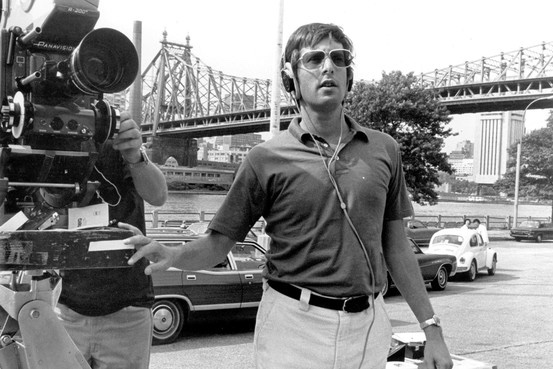
Of the wave of young filmmakers that revolutionized cinema in the early 1970s, William Friedkin was one of a handful of incredibly successful directors. There were Spielberg, Coppola, Bogdanovich, Altman, Pollack, Pakula, Kubrick, Polanski, Allen and Friedkin.
“Probably the end of that Golden Era of the 70s was Heaven’s Gate, made by a guy highly regarded as an auteur (Michael Cimino),” when Friedkin was asked about why the 1970s is considered a special period of film. “I never thought of myself as an auteur, more a working director who loved the process, just like my contemporaries. We didn’t set out to make movies audiences wouldn’t see because they were too difficult, we just only made films we believed in.”
William Friedkin died on August 7, 2023 at age 87. Fifty years ago he directed two of the greatest films of the era: The French Connection (1971) and The Exorcist.
Unfortunately, Friedkin’s career peaked with those two films, although he continued to work into his 80s. Friedkin did what other directors fell victim to, their own success. Sorcerer, his first film following The Exorcist, was a grand and problematic production that bombed and set back his career. Sorcerer was like Spielberg’s 1941, or Coppola’s One From the Heart, or Cimino’s Heaven’s Gate, or Bogdanovich’s At Long Last Love. All bombs, but a few made it out alive, especially Spielberg.
“It would be years before I would again experience [the same] self-confidence on a film set, a belief in a kind of divine intervention,” Friedkin would later say.
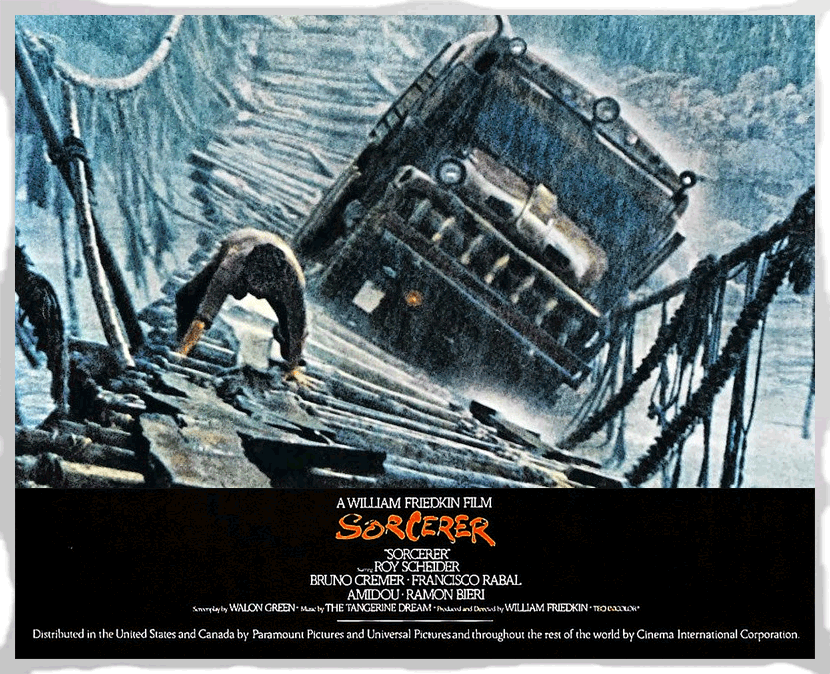
Friedkin went from white-hot to yesterday’s flavor. He would direct a few decent films, some that were far beneath his talent, work in television and the theater, and mainly fly below the radar.
“I’ll admit something. If that came up today, I would have done anything he wanted,” Friedkin said to Deadline in talking about trying to get Steve McQueen for Sorcerer, a film written specifically for McQueen, who wanted a job for his new wife Ali McGraw. Friedkin turned him down. “I was so arrogant at that time. I thought I was the star of that film. So I didn’t think that a close-up of Steve McQueen was worth a shot of the most beautiful landscape. A close-up of McQueen was worth more. When McQueen dropped out, I lost Marcello Mastroianni and Lino Ventura, who were big European stars and were known in America as well. Only my arrogance cost me that cast.”
He was reflective and talked about his mistakes, including passing on an opportunity to direct a Prince music video:
“I’ve burned bridges and relationships to the point that I consider myself lucky to still be around. I never played by the rules, often to my own detriment. I’ve been rude, exercised bad judgment, squandered most of the gifts God gave me, and treated the love and friendship of others as I did Basquiat’s art and Prince’s music. When you are immune to the feelings of others, can you be a good father, a good husband, a good friend? Do I have regrets? You bet.”
Friedkin’s story is well-known around Hollywood. Hotshot, young director drunk on his success, blows it all on a self-indulgent bomb (Sorcerer, 1977). Just a few years earlier he was turned onto a great project, Robin Moore’s book, The French Connection. Adapting it into a film was problematic: no studio wanted to finance it. When Richard Zanuck finally bought it, Friedkin wanted Jackie Gleason as Popeye Doyle, but Zanuck said no. A lot of other actors were considered until at the last minute they hired Gene Hackman, who was way down on the list.
The French Connection was not Friedkin’s first film, but it was something special, even if the end result was unsettling and stunned. Critic Pauline Kael would call Popeye Doyle an existential hero. She also said, “Popeye is a brutal son of a bitch who gets the dirty job done. So is the picture.” Roger Ebert wrote, “Doyle himself is a bad cop, by ordinary standards; he harasses and brutalizes people, he is a racist, he endangers innocent people during the chase scene (which is a high-speed ego trip). But he survives. He wins, too, but that hardly matters. The French Connection is as amoral as its hero, as violent, as obsessed and as frightening.”
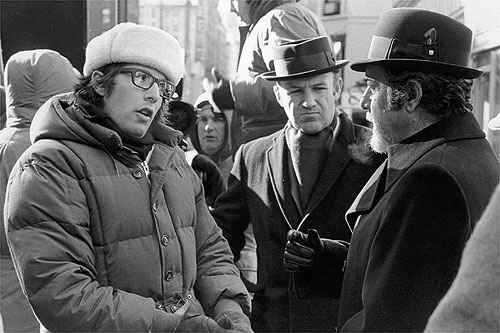
The French Connection would win Oscars for best picture, lead actor, director, screenplay and editing. It’s a gritty, unvarnished and unseemly view of detectives following a drug shipment into the country. The car-train chase through New York City is famous and was done without permits or closing public streets. It made the careers of Friedkin, Gene Hackman and Roy Scheider.
If you compare that film with contemporary crime thrillers, you might wonder why The French Connection was so popular. It’s a slow-moving, police procedural format, with unlikable characters, virtually no music, a confusing plot and a downbeat ending. Perhaps audiences were more patient then, or as the film progressed they knew this blend was really quite captivating and delicious.
Filming of The French Connection was reckless to say the least, but the film’s success catapulted Friedkin to the front of the line. Then came The Exorcist, written and produced by William Peter Blatty. The film was beset with production issues including a fire, pushing the film over budget. Fifty years ago, the subjects of exorcism and demonic possession were controversial subjects. The publicity and controversy only helped the box office receipts.
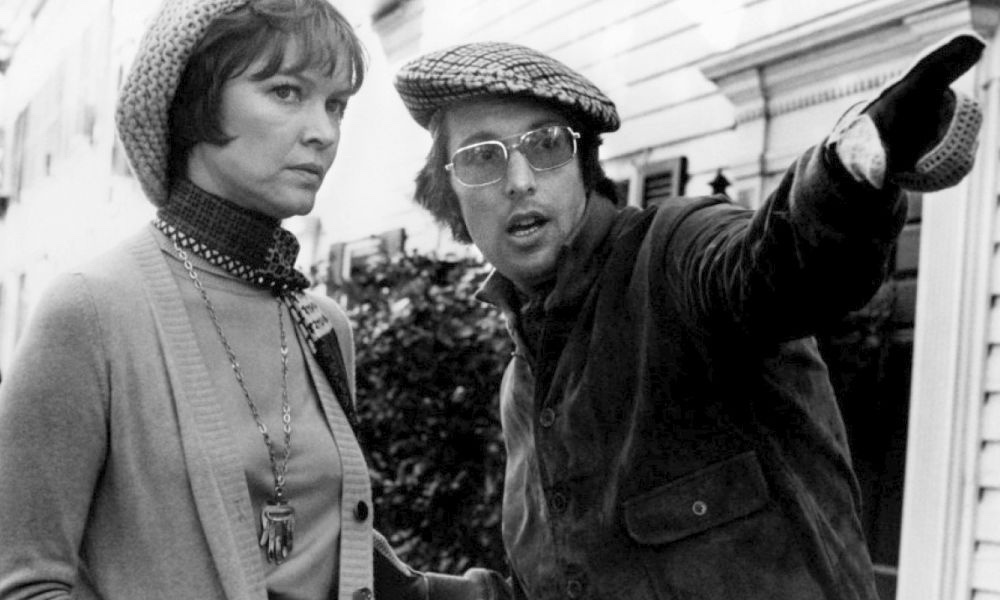
Despite scaring the hell out of people, the film was a blockbuster at the box office. On a $12m budget, the film has earned almost half a billion dollars. Back in the early 1970s, X ratings were given to films with unusual violence or themes too controversial for children. Think Midnight Cowboy, Medium Cool and A Clockwork Orange, all studio films initially given the X rating. Films will trim just enough to get an R rating from the review board. Friedkin kept sending the film back until his edits were acceptable for the R.
Mike Oldfield’s opening soundtrack notes, from the song “Tubular Bells,” would become as terrifying as John Williams’ musical notes from Jaws. Those notes still make the hair stand up on my arms.
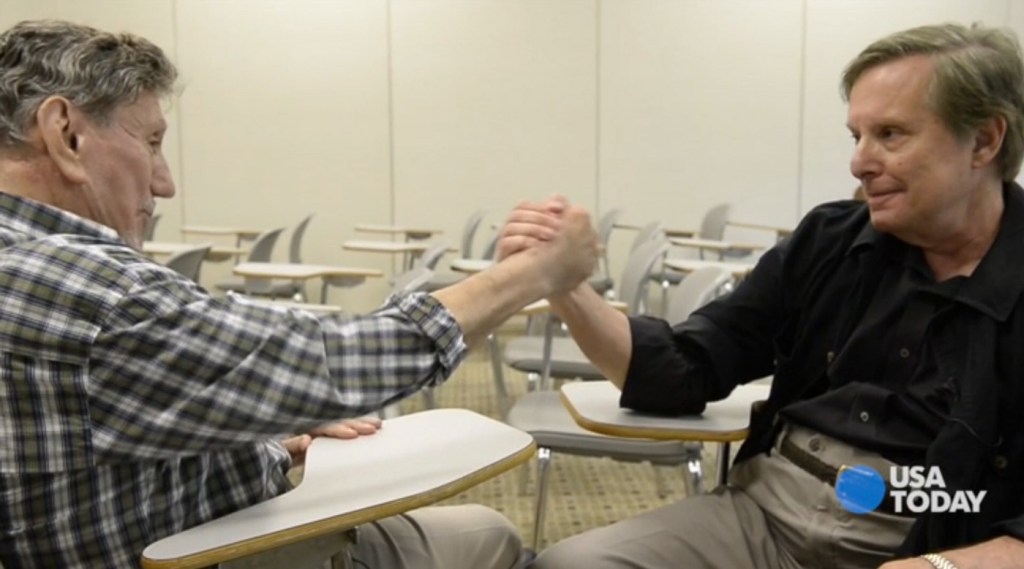
“But none of us in the 70s thought we were operating in a golden age; we all had been influenced by Godard, Fellini, Truffaut, Kurosawa,” Friedkin said in an interview with Deadline.
Rest in peace, and thanks for some thrilling and sometimes head-scratching film moments.


Leave a Reply